A marriage that needed an exception
In January 1830, Thomas Day married Aquilla Wilson in Virginia. North Carolina, where he ran his cabinetmaking business, barred free Black people from entering the state. Aquilla could not simply move there to live with her husband.5
Day secured the support of sixty-two white neighbours, and a special bill allowed her to join him. The state’s attorney general also vouched for Day, citing his ownership of enslaved people among the reasons to grant the exception.5
The episode brings two parts of his life into the same room: Day faced racial restrictions himself, and he exercised power over people he enslaved. Both belong to the history of his successful workshop.
Curves customers could recognise
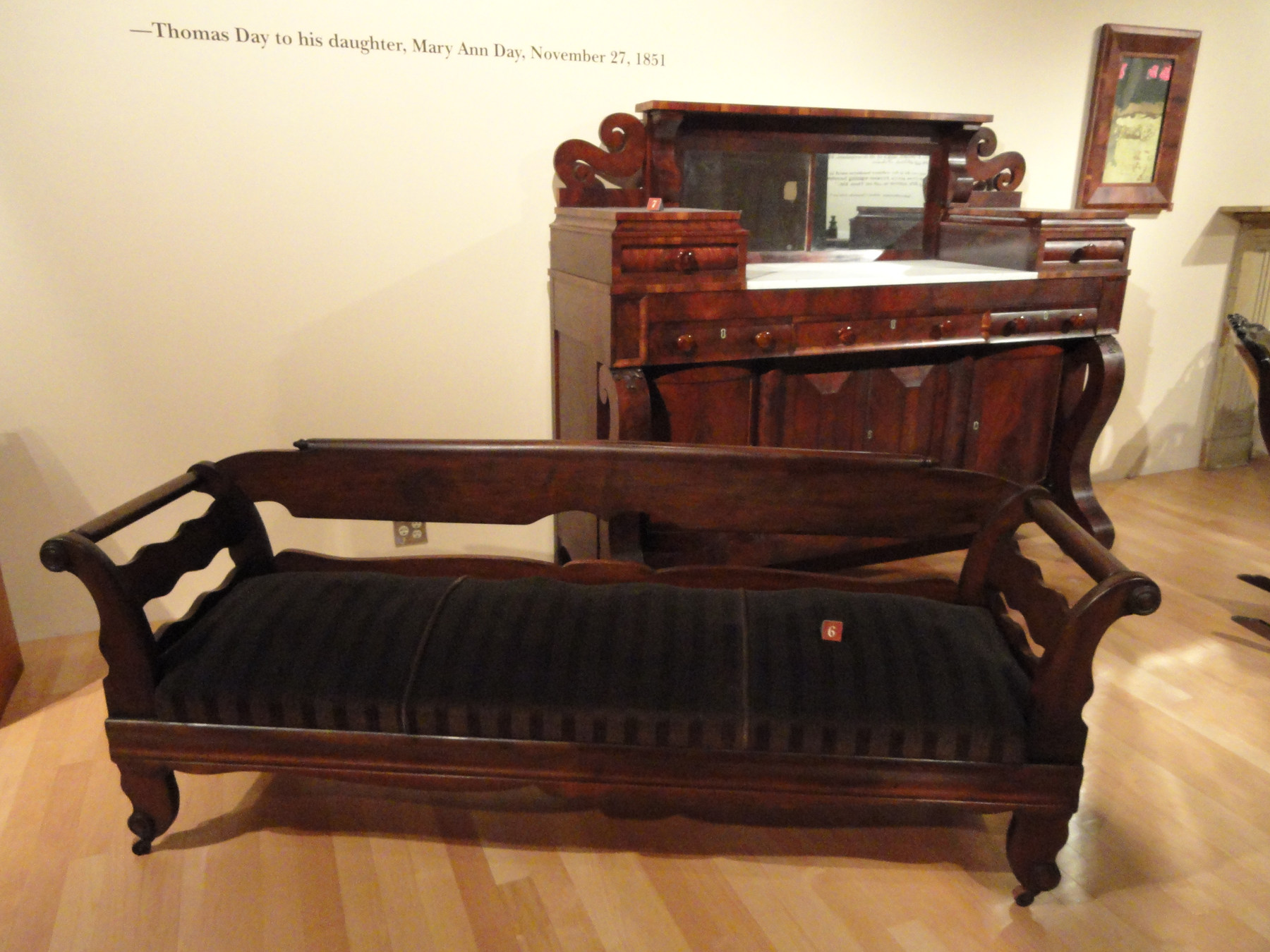
The furniture offers a much more immediate introduction. In the museum photograph, the settee’s arms turn into broad scrolls, while curved outlines animate the storage pieces behind it.1
The Smithsonian describes the sculptural forms and distinctive curves of Day’s production. Made for prosperous interiors, the furniture gave familiar types a forceful presence.2
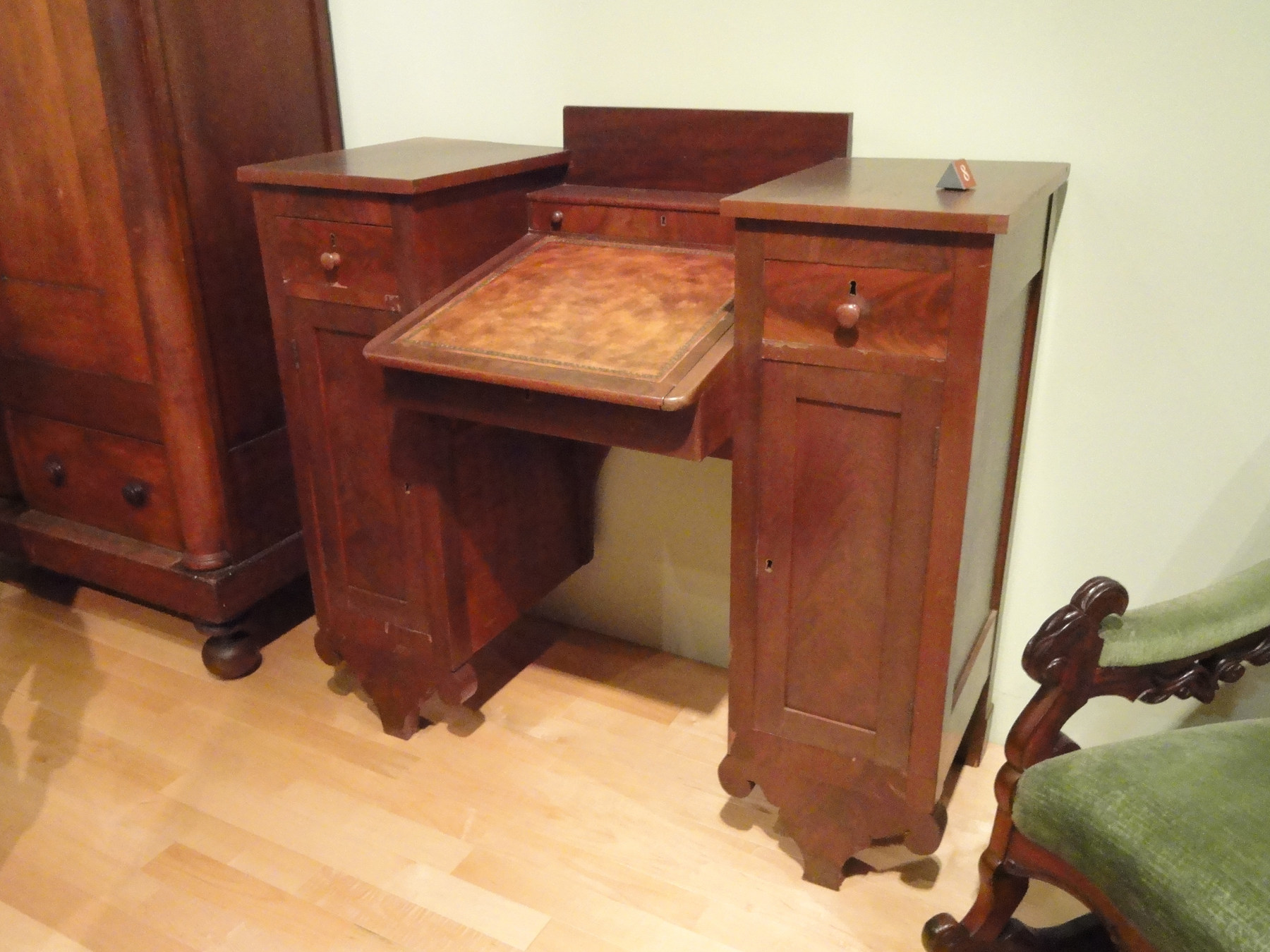
The writing desk pictured below shows a different use of that confidence. Its sloping work surface sits between tall storage sections, with strongly shaped feet underneath. Useful compartments and an emphatic outline share the same object.4
Steam power and many hands
Day was established in Milton by 1827. His business had steam-powered machinery by 1847 and was North Carolina’s largest furniture workshop by 1850. Apprentices and enslaved people worked there.3
This scale of production changes how we read a maker’s name. Preparing timber, cutting joints, assembling furniture and finishing surfaces are separate tasks. The name attached to the workshop cannot tell us which person performed each one.
The strong family resemblance between pieces is evidence of organised production and design decisions. It does not turn the whole workshop’s labour into the work of a single pair of hands.
The cost of the workshop’s collapse
Day’s financial collapse also fell on people he enslaved. The state historic site records their sale in 1858.3 The business history becomes a history of people whose lives could be uprooted to meet its debts.
That fact changes the meaning of the polished furniture. Day’s achievement as a Black cabinetmaker under racist laws was substantial. Enslaved labour was part of how his business operated, and ownership of people had even helped his family obtain an exception to those laws.
The curves remain striking. What becomes harder to see as simple is the name on the label: it marks a designer, a business and a workshop whose makers did not all share its owner’s freedom.

