The wall becomes part of the chair
A deep upholstered armchair usually hides whatever stands behind it. Its arms, back and seat create a solid volume even when nobody is sitting there.
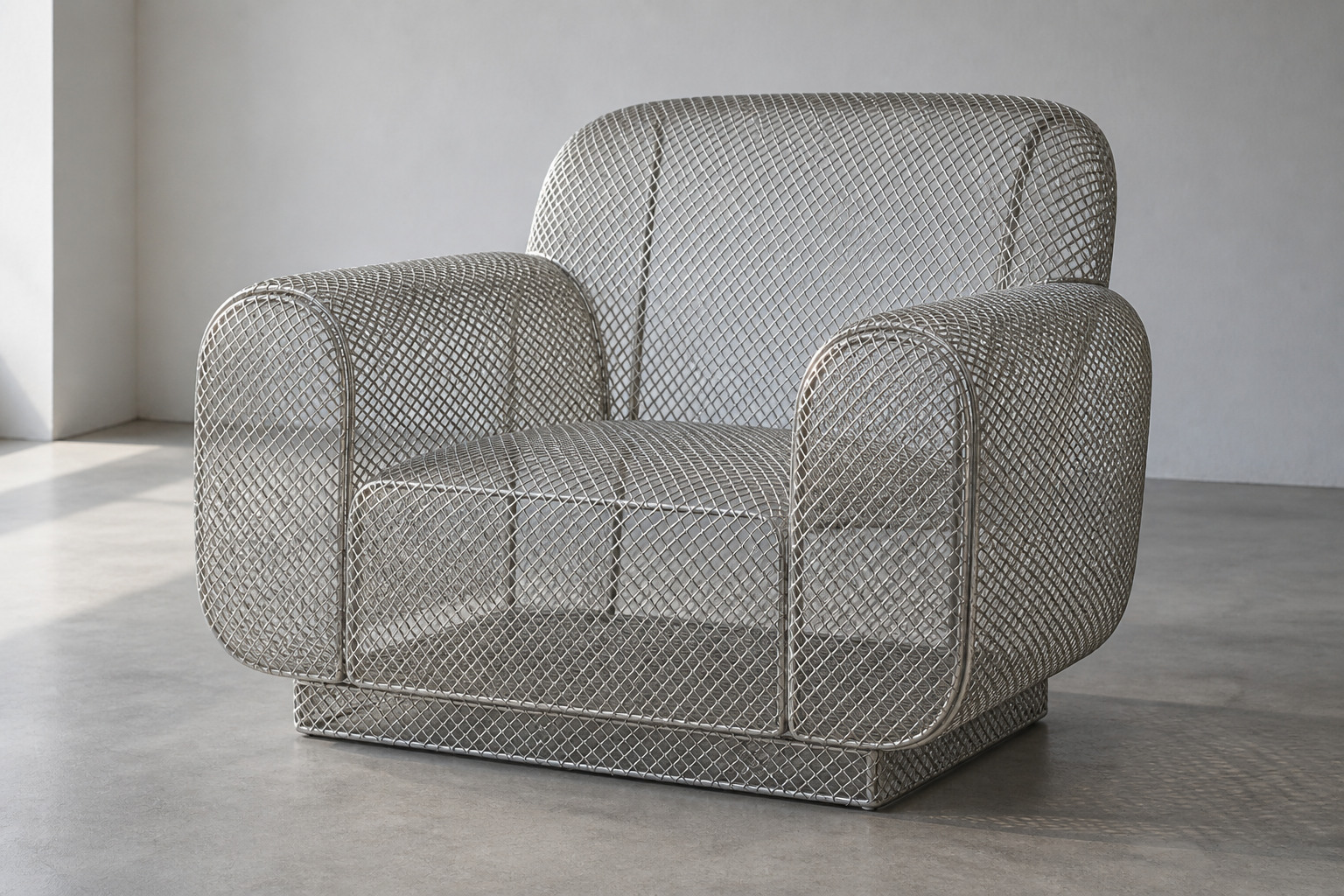
How High the Moon keeps that recognisable sense of bulk while changing the surface. The mesh lets light and background pass through. An edge may look definite from one angle and become less distinct as the eye moves across it.
MoMA records the 1986 chair as nickel-plated steel mesh, manufactured by Vitra. Those simple material facts explain the beginning of its visual trick: metal supplies a structure, while the openings interrupt the impression of a continuous skin.1
The surrounding room is no longer just a setting for the object. Its colours and lines participate in what we see through the chair.
Give a cupboard an uncertain edge
Kuramata explored a different kind of uncertainty in his drawer furniture. Side 1 and Side 2, dated 1970 in Cappellini’s collection, keep the repetitive business of drawers but place it within differently shaped outlines.
The fronts remain legible as storage. The container seems less obedient. A curving edge makes the stack feel as if a familiar piece of furniture has briefly become pliable.
Cappellini groups these pieces within Progetti Compiuti, alongside other drawer designs. It is worth keeping their identities clear: the unit with forty-nine asymmetrical drawers is PC_12, not one of the two Side cabinets.3
The interest lies in that balance between recognition and surprise. If the object stopped looking usable altogether, the tension would disappear. We need to recognise the ordinary task before we can enjoy the extraordinary form.
Industrial materials, personal effects
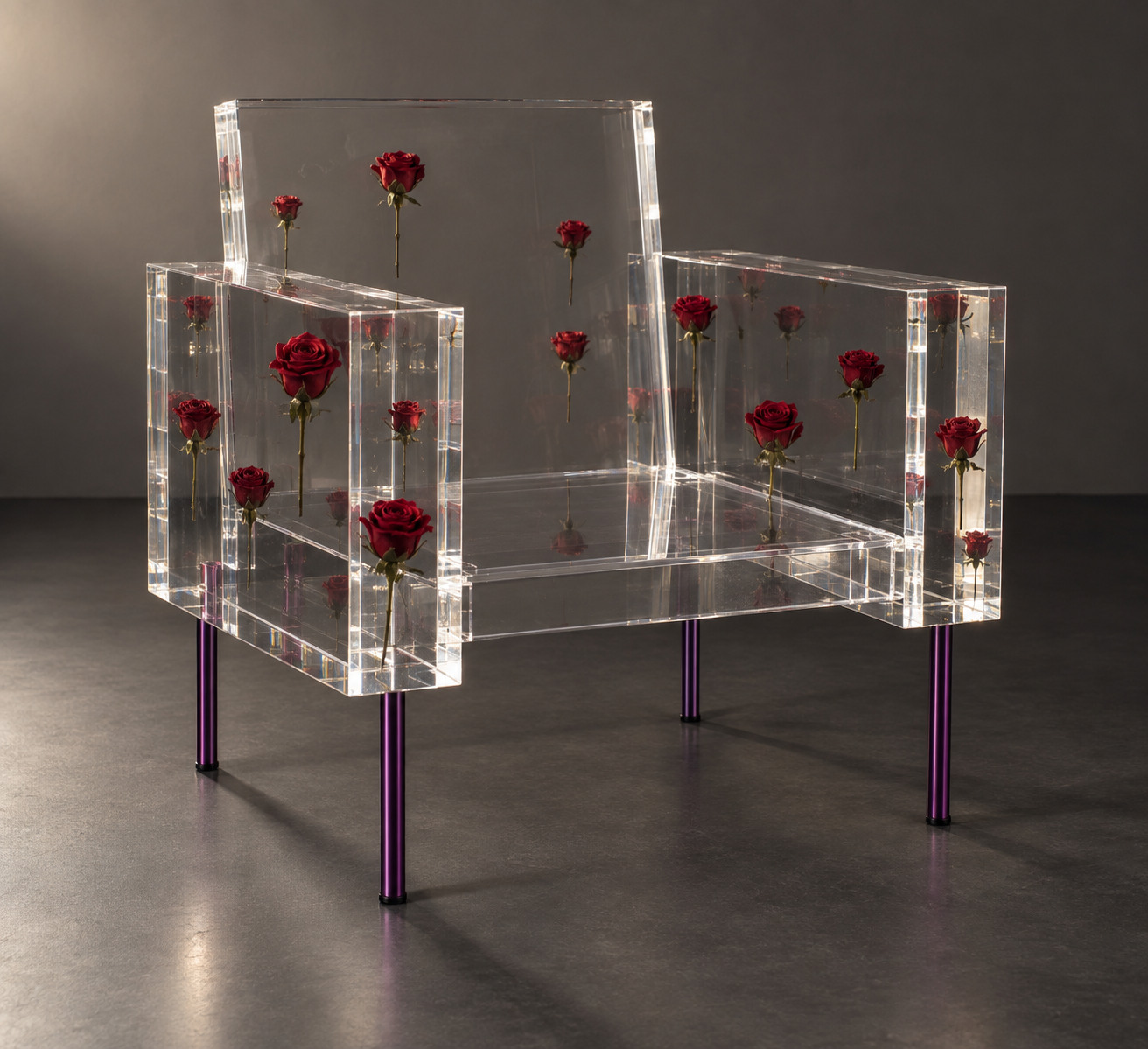
Vitra Design Museum’s exhibition of Kuramata brought furniture together with drawings and photographs of interiors. Its account highlights his use of expanded metal, glass and acrylic, as well as his collaboration with Issey Miyake and participation in Memphis.2
These materials do not automatically produce poetic furniture. In an ordinary setting, metal mesh might simply be a screen and acrylic a transparent panel. Kuramata’s decisions about outline, repetition and what to leave visible give them another role.
The effect can be delicate without depending on delicate-looking craft materials. A manufactured surface becomes a means of asking how much of an object has to be visible for us to believe in its shape.
Look through, then look back
There is an easy experiment to make with the mesh chair. First concentrate on its outer contour. Then look at the room through the openings. Finally try to hold both views at once.
The chair keeps moving between substantial furniture and a kind of open drawing. Nothing has physically changed, yet your attention has altered the object. That is one of Kuramata’s most generous qualities: he leaves some of the work of making the furniture happen to the person looking at it.