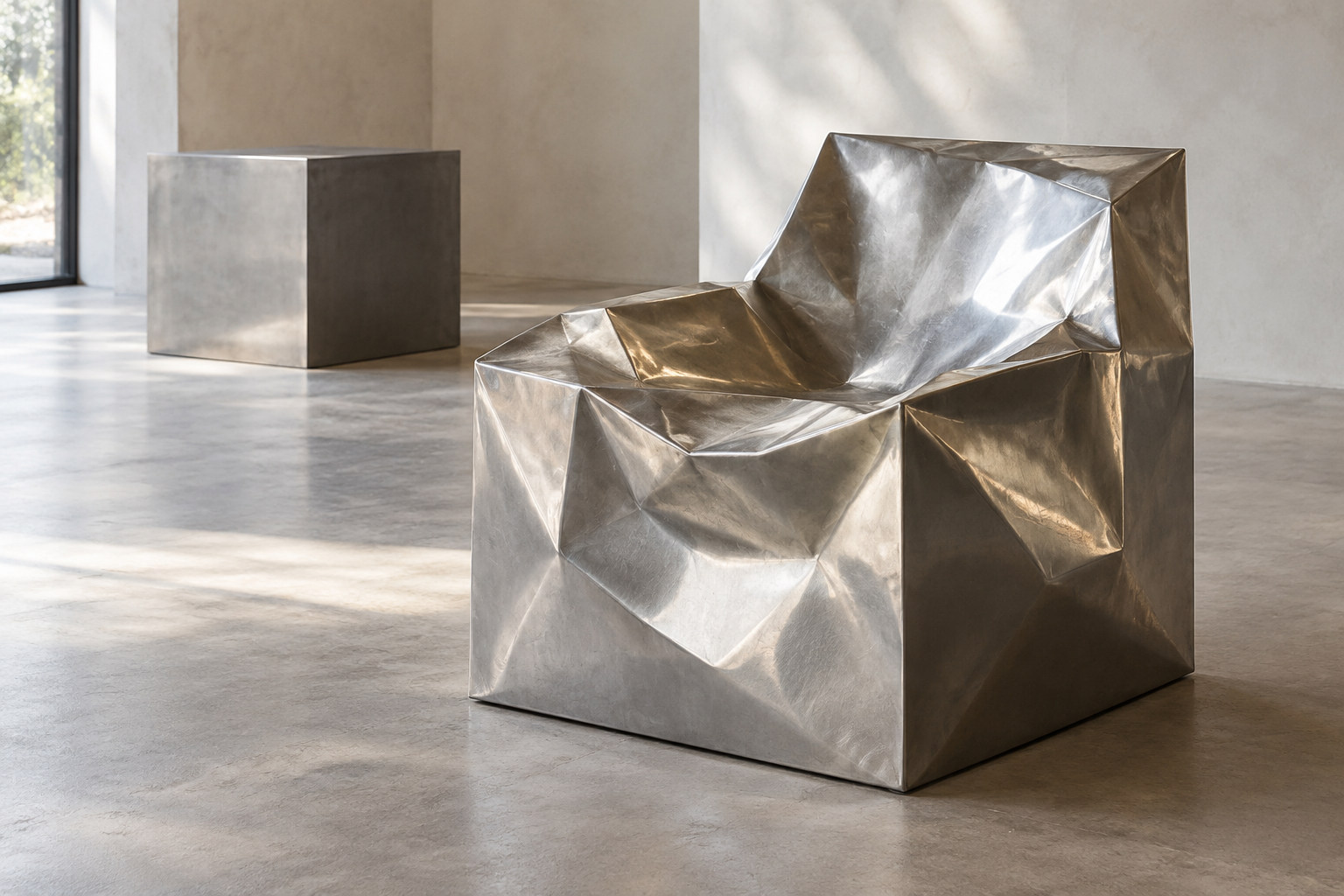
Ask what the user can add
Do Hit gives the future owner an unusually consequential role. Its steel starting volume and final formed state let one design concept result in different individual objects. SFMOMA’s artist page records the Dutch designer Marijn van der Poll, born in 1973, alongside museum-held Do Hit works.1
The interest is larger than a surprising chair. Participation changes the relationship between the design proposal and the final object. It asks which decisions the designer needs to make and which can remain open for someone else.
Carry curiosity into the workplace
Ahrend’s designer account describes Do Hit as a student-period project and records van der Poll’s 2002 graduation. It describes Jetstream as a desk shaped like an aeroplane wing and Kaigan as a chair inspired by a nostalgic beach chair.2 The profile therefore extends beyond the one participatory object for which he is often recognised.
A workplace product faces a different encounter from an individually formed chair. Familiar associations still offer a starting point, but they must become furniture within a shared setting. The company’s account helps follow this movement between an arresting idea and a practical product context.
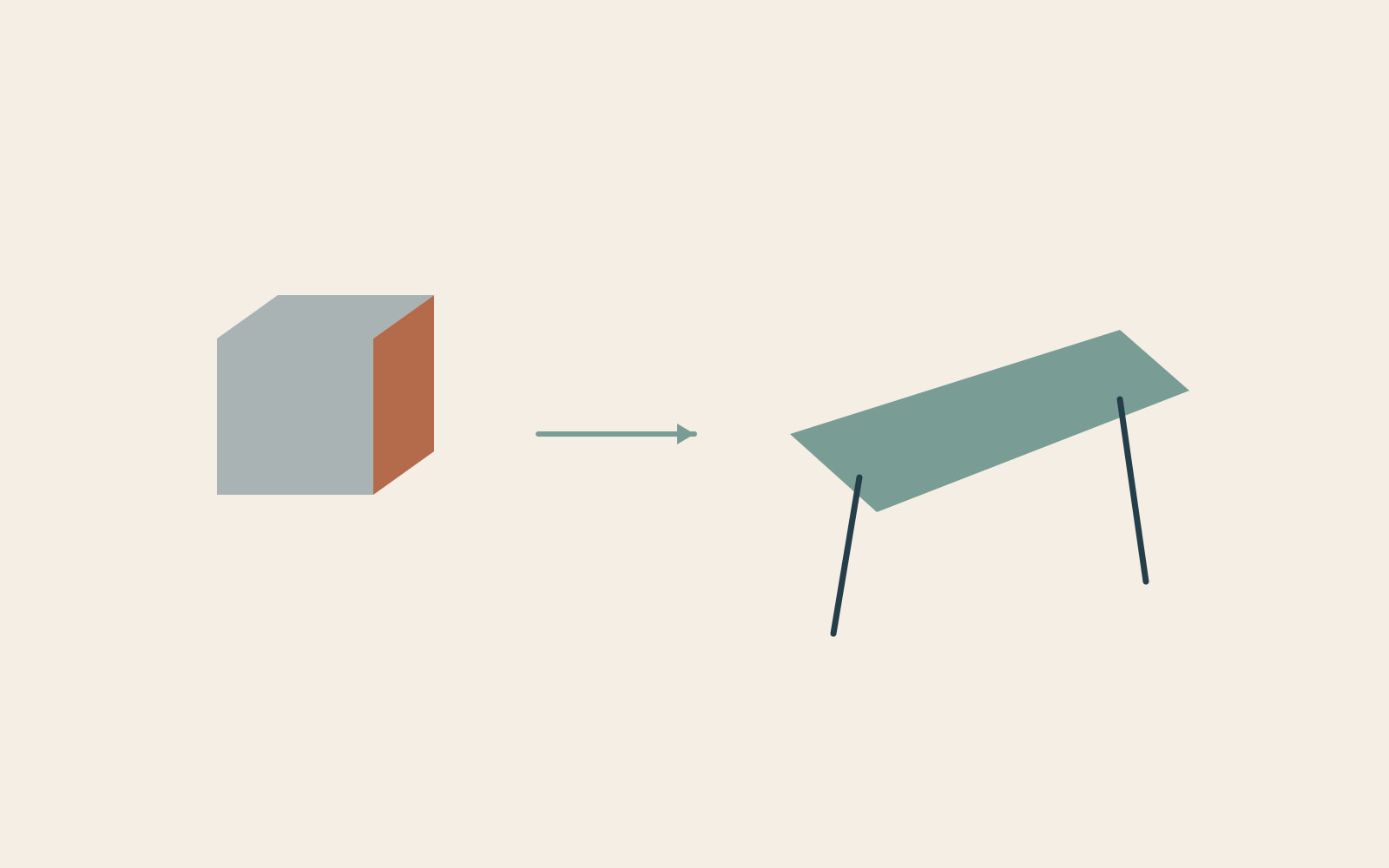
A method can hold different outcomes
Ahrend mentions a Good Design award in 2008 in its discussion of Jetstream.2 An award is a point in a product’s reception, not automatically its first design year. Keeping that distinction makes room for the work’s development rather than compressing everything into one date.
Across these examples, the useful continuity is an openness to what familiar things can suggest. A steel box can invite participation; workplace furniture can begin with another recognisable form. The designer’s curiosity gives each setting a different outcome.