Designer profile

Lilly Reich: the room begins with a curtain

At a Berlin fashion exhibition, visitors could sit inside the fabric display. Lilly Reich and Mies van der Rohe’s Velvet and Silk Café used curtains to turn textiles into the room itself.

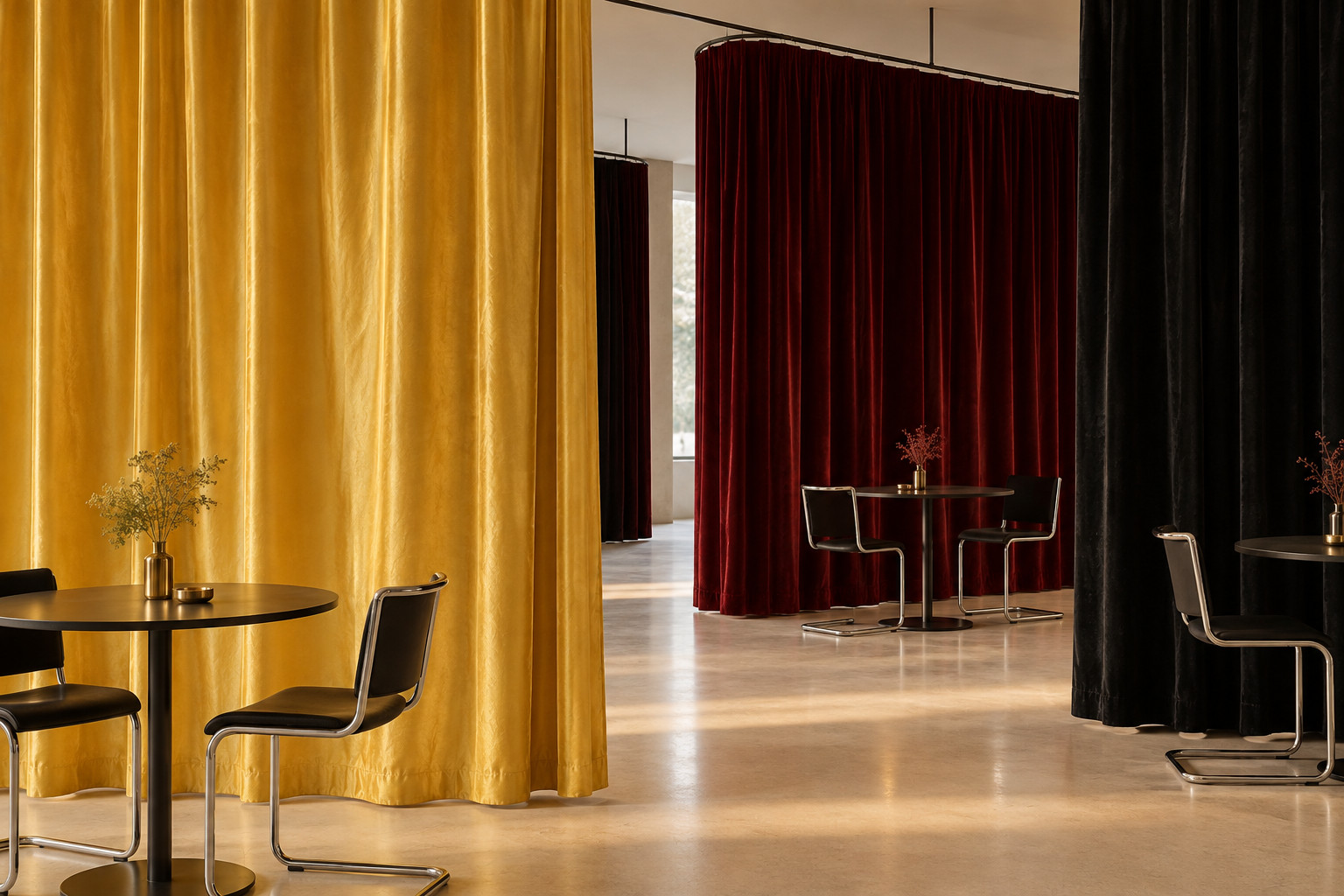
An interpretive café interior is divided by luminous yellow silk and dark red and black velvet screens, with openings between them.
PatinaHall editorial reconstruction. It is not a documentary photograph. Silk and velvet shape seating areas in this interpretation of the café; the historic plan is not reproduced.
On this page
Key facts & takeaways

At a glance

Subject
Lilly Reich
Entry
Designer profile
Last reviewed
10 September 2026

Three things to remember

  1. The 1927 café let visitors encounter textiles at the scale of an interior.
  2. Reich and Mies collaborated on the café; the curtains helped organise its spaces.
  3. TECTA credits Reich’s work with a basket maker on the Weißenhof chair’s weave.

Coffee inside a fabric display

The Velvet and Silk Café was part of a women’s fashion exhibition in Berlin in 1927. Lilly Reich and Ludwig Mies van der Rohe made an interior where visitors could sit among the textiles being displayed. Long curtains shaped the spaces around the tables.1

That changes the job of an exhibition sample. A small swatch lets you feel a fabric between your fingers. A curtain large enough to enclose a seating area lets you judge its fall, colour and effect on a room. Visitors encountered the material at the scale at which an interior designer would use it.

A curtain edge can mark an entrance

MoMA’s account describes golden yellow, black velvet and red silk. It also connects those colours to the flag of the young Weimar Republic: the café’s colour was part of its public setting.1

The difference between the fabrics matters as much as their colours. Velvet’s dense pile and silk’s sheen catch light differently. A dark hanging length can screen the tables behind it; a bright one can draw the eye across the room. Where the curtain stops, an opening appears without a doorframe.

This is how cloth can organise a café. Its edges help a visitor find a way through; its folds soften the outline of a seating area. The materials remain on display while doing the work of dividing space.

The part of the chair you actually touch

Reich’s work on a woven chair brings that attention to material closer to the body. TECTA’s history credits her and Mies with the idea of weaving for the Weißenhof chair, and Reich with developing it alongside a master basket maker.2

The later TECTA example pictured here shows why that is a substantial contribution. Metal tubing outlines the chair, but the weave makes the broad surface beneath the sitter and behind their back. Choosing how it spans the frame helps determine what the chair feels like.3

In 1932 Reich went on to direct the Bauhaus weaving and interiors workshops. MoMA’s 1996 catalogue and exhibition place those responsibilities within her career as a designer and architect.45

The café curtain and the chair seat make that career tangible. One places fabric around people; the other supports them directly. In both, the material between the structural lines is doing essential work.
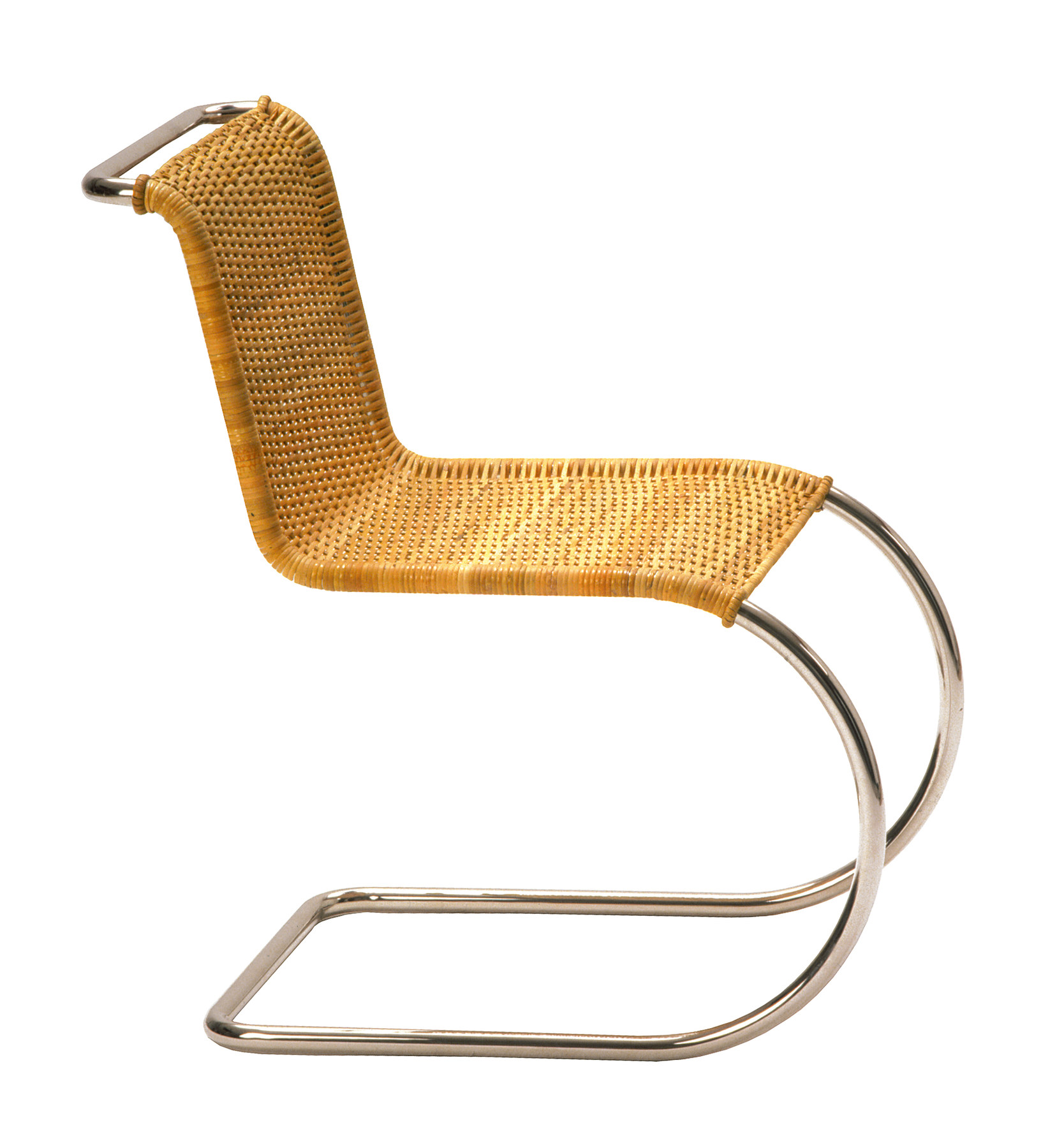
A later Weißenhof chair combines a continuous woven seat and back with a curved tubular metal cantilever frame.
A later TECTA Weißenhof re-edition shows the woven seat and back beside the metal frame. Image by TECTA. Public domain.
Research notesEvidence, connections and limits

MoMA’s 2016 café evocation and the opening reconstruction are later interpretations. The TECTA photograph shows a later re-edition, not a chair from the original café; Reich’s documented weaving contribution is distinct from attribution of the whole chair.

Evidence map

Connected subjects and evidence

Reviewed connections

  • Lilly Reichcollaborated withLudwig Mies van der Rohedocumented

    MoMA credits Reich and Mies together on the Velvet and Silk Café.

    Reviewed 10 September 2026 by PatinaHall editorial.
    • Source 1Object description and historical account
  • Lilly Reichparticipated inVelvet and Silk Café, 1927documented

    Reich designed the 1927 exhibition café with Mies.

    Reviewed 10 September 2026 by PatinaHall editorial.
    • Source 1Object description and historical account
  • Woven Weißenhof chairdesigned byLilly Reichdocumented

    This relation specifically records Reich’s contribution to the woven seating surface with a basket maker, not sole authorship of the steel chair.

    Reviewed 10 September 2026 by PatinaHall editorial.
    • Source 2Object description and historical account

Research trail

Sources and further reading

  1. Lilly Reich and Ludwig Mies van der Rohe: Velvet and Silk Café, 1927The Museum of Modern ArtAccessed 10 September 2026
  2. B42 / D42: Reich’s work on the woven seatTECTAAccessed 10 September 2026
  3. Later TECTA Weißenhof chair with weaving associated with Lilly Reich — photograph and public-domain rights recordWikimedia Commons / TECTAAccessed 10 September 2026
  4. Lilly Reich: Designer and Architect, exhibition catalogueThe Museum of Modern ArtAccessed 10 September 2026
  5. Lilly Reich: Designer and Architect, 1996 exhibitionThe Museum of Modern ArtAccessed 10 September 2026

Last reviewed 10 September 2026. Found an error or a stronger primary source? Contact PatinaHall.