Designer profile

Kiki van Eijk: keeping the sketch in the finished object

A sketch can feel alive because it still carries the movement of a hand. Kiki van Eijk’s practice explores ways to keep that quality when an idea becomes furniture, textiles or a room-sized installation.

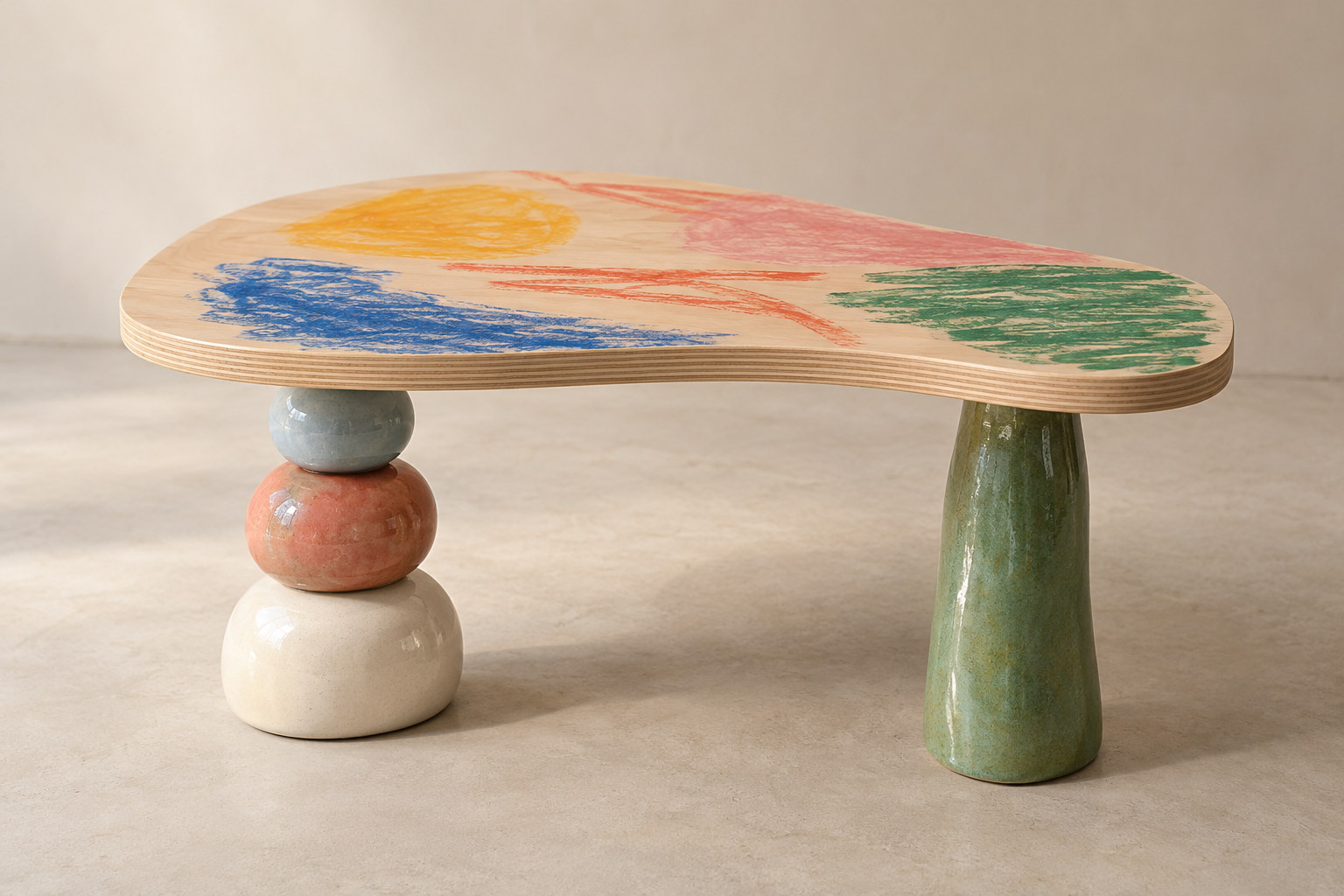
A hand-marked pale tabletop rests on different rounded and tapered glazed-looking supports.
PatinaHall editorial reconstruction. It is not a documentary photograph. A coloured surface and formed clay-like volumes bring drawing into furniture. The combination illustrates the material idea without reproducing one exact gallery table.
On this page
Key facts & takeaways

At a glance

Subject
Kiki van Eijk
Entry
Designer profile
Last reviewed
25 October 2026

Three things to remember

  1. Sketching and material experiments are connected in her practice.
  2. Specialist craftspeople bring their own skills to the work.
  3. TextielLab’s textile role is separate from Theun Mosk’s exhibition design.

Letting a mark remain

Kiki van Eijk's 3D Collage Tables give a drawn mark a place in furniture. Their studio account describes wax crayon applied by hand to wood and protected with varnish, alongside hand-built glazed clay. The finished object keeps several making actions close to its surface.3

The point is particularly clear in the coloured wood. Drawing contributes to the material finish, so the character of a mark can continue beyond the sketchbook.

The gallery catalogue places individual tables beside other work, including the Textilesketch Room Divider. The selection makes it possible to follow a practice across different materials and scales, rather than through one fixed type of object.4

Different hands, different knowledge

Van Eijk's studio biography places drawing early in her life in Tegelen and describes a practice spanning furniture, textiles, installations and works on paper. It also gives collaboration with skilled makers a central role.1

That makes the workshop a place where an idea can gain possibilities. A drawing can suggest a form, but wood, clay and textile each bring different ways of realising it. Specialist knowledge helps determine what the material can do.

Keeping the sketch's character does not require one person to make every part. It can be a shared task: deciding which qualities of a first idea should remain apparent as the work develops.
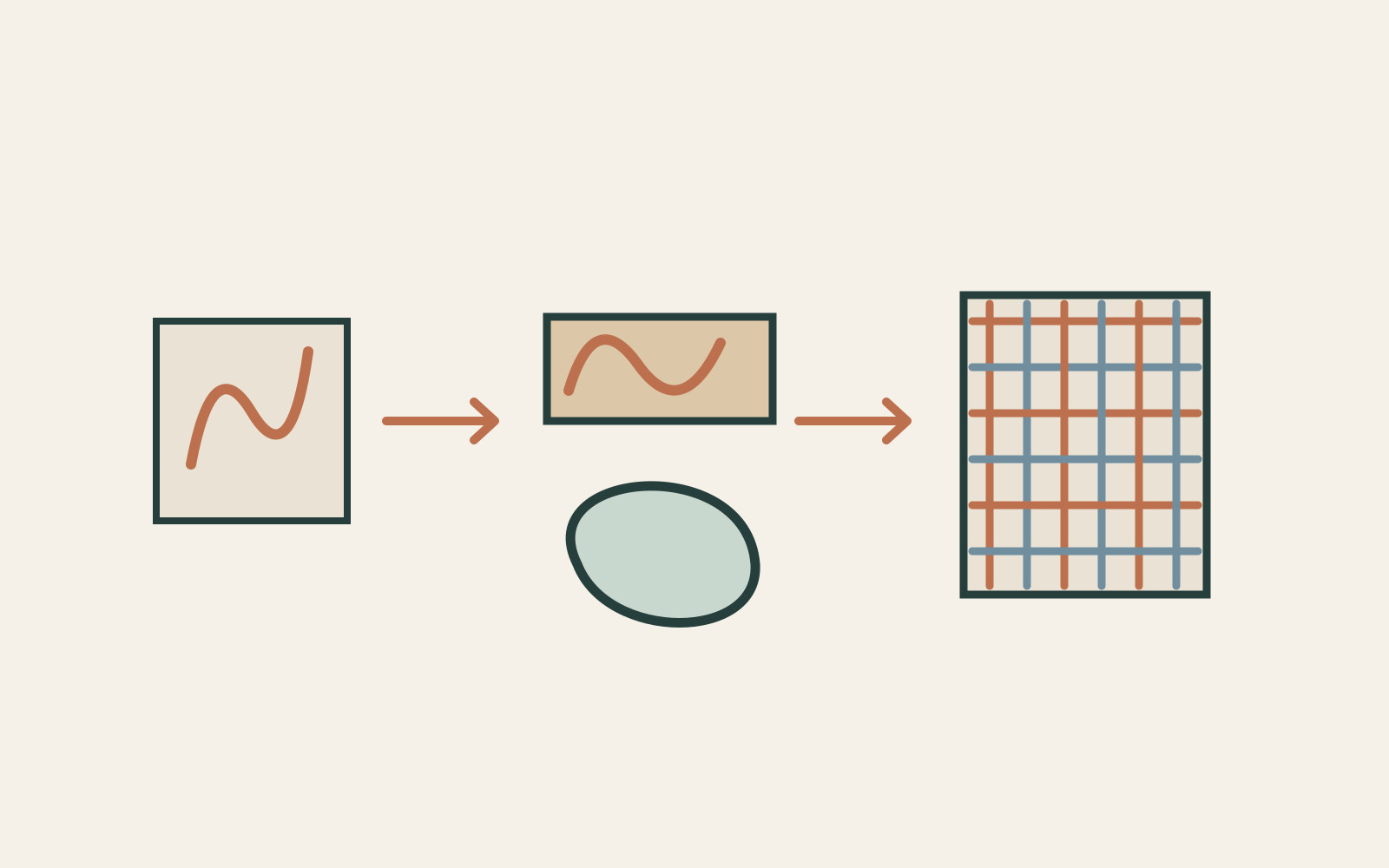
A drawn line connects a flat marked plane, a rounded form and a woven-like surface.
A sketch’s character can travel across materials and specialist making. Original PatinaHall schematic, not to scale; the shapes are illustrative rather than reproductions of Kiki’s work.

Making the creative process visible

For the exhibition Imaginings, TextielMuseum worked with Van Eijk and set designer Theun Mosk to bring viewers close to the process. Sketches could be examined through cameras, and the installation encouraged people to discover objects by moving through the space.2

The museum also identifies its TextielLab as the specialist workshop where many of her textile works were made. The exhibition design and textile making are different contributions to the same wider account of her practice.2

A useful way to approach Van Eijk's work is to look for what has travelled. A coloured line, a playful outline or an unexpected combination can pass from a first drawing into an object with weight and volume. The finished thing keeps a trace of the act that started it.

Research notesEvidence, connections and limits

Studio biography, individual project and museum exhibition accounts describe different roles. Shared Kiki & Joost branding does not make every work a joint design; textile production and exhibition design are not furniture-factory credits.

Evidence map

Connected subjects and evidence

Reviewed connections

  • 3D Collage Tablesdesigned byKiki van Eijkdocumented

    The studio credits Kiki van Eijk and labels the project 2020. The gallery catalogue lists individual tables dated 2021 with their own materials and measurements.

    Reviewed 25 October 2026 by PatinaHall editorial.
    • Source 32020 project, making, materials and variants
    • Source 4Printed pages 48–51, individual tables; 42–43, Textilesketch Room Divider
  • Textilesketch Room Dividerdesigned byKiki van Eijkdocumented

    The representing gallery's catalogue includes Kiki van Eijk's Textilesketch Room Divider as a separate work from the 3D Collage Tables.

    Reviewed 25 October 2026 by PatinaHall editorial.
    • Source 4Printed pages 48–51, individual tables; 42–43, Textilesketch Room Divider

Research trail

Sources and further reading

  1. Kiki van Eijk: AboutKiki van Eijk / Kiki & JoostAccessed 25 October 2026
  2. TextielMuseum: Imaginings, Dutch Design by Kiki van EijkTextielMuseumAccessed 25 October 2026
  3. Kiki van Eijk: 3D Collage tablesKiki van Eijk / Kiki & JoostAccessed 25 October 2026
  4. Spazio Nobile: Kiki van Eijk, The New HarvestSpazio NobileAccessed 25 October 2026

Last reviewed 25 October 2026. Found an error or a stronger primary source? Contact PatinaHall.