Designer profile

Gijs Bakker: following a material from the body to the chair

A piece of jewellery and a chair meet the body at very different scales. Gijs Bakker’s work makes it useful to look across that distance: a material can establish a form, a contact and a way to move around a person.

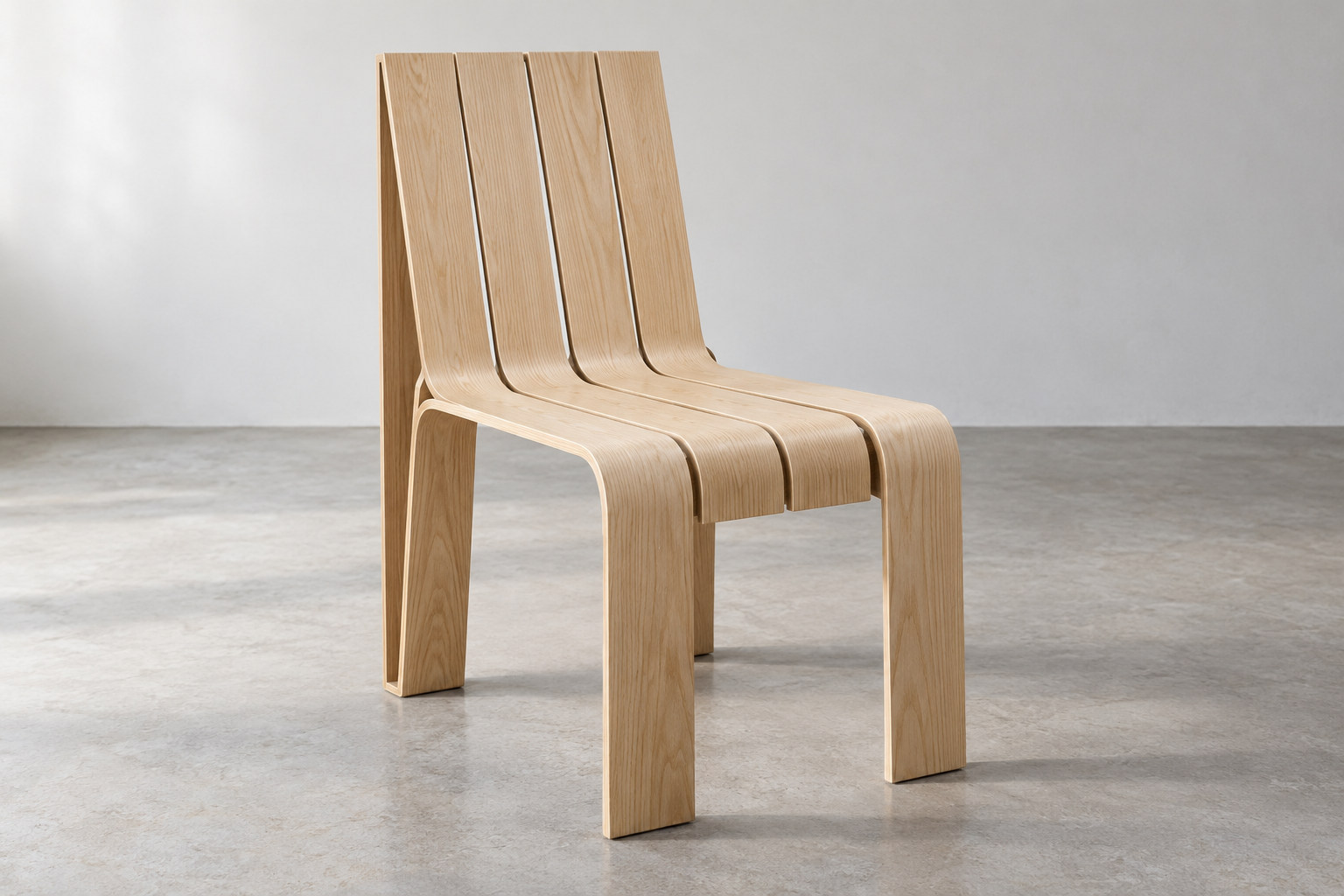
A chair formed from broad pale bent wooden strips has open intervals and a readable route from seat towards the floor.
PatinaHall editorial reconstruction. It is not a documentary photograph. The interpretation follows the six-strip SC idea. It is not the Twisted chair or an armrest variant, and it does not provide a measured strip layout, dowel detail or bending pattern.
On this page
Key facts & takeaways

At a glance

Subject
Gijs Bakker
Entry
Designer profile
Last reviewed
23 October 2026

Three things to remember

  1. Centraal Museum considered both fields in its 1989 exhibition.
  2. Bakker requested that industrial design be included with jewellery.
  3. The Strip Chair assigns different roles to six laminated strips.

Follow the material towards the body

Jewellery is worn, while furniture supports a person at a larger distance. Both can make material, contact and proportion unusually noticeable. Looking across the two fields can reveal questions that an isolated object does not announce.

Centraal Museum’s account of its 1989 Bakker exhibition says the presentation included industrial designs and theoretical positions alongside jewellery, at the designer’s explicit request.1 The breadth was part of the intended reading of his work.

Give a strip more than one job

The Strip Chair provides a furniture example. Bakker’s project record describes six laminated-beech strips, with different paths contributing to seat, back and supports.2 The chair makes a material element legible as it changes direction and takes on another task.

That is the productive connection to carry across scales. The question is not whether a chair resembles a necklace. It is how a material can organise its relationship with a person, and how much of that organisation should remain visible in the finished form.
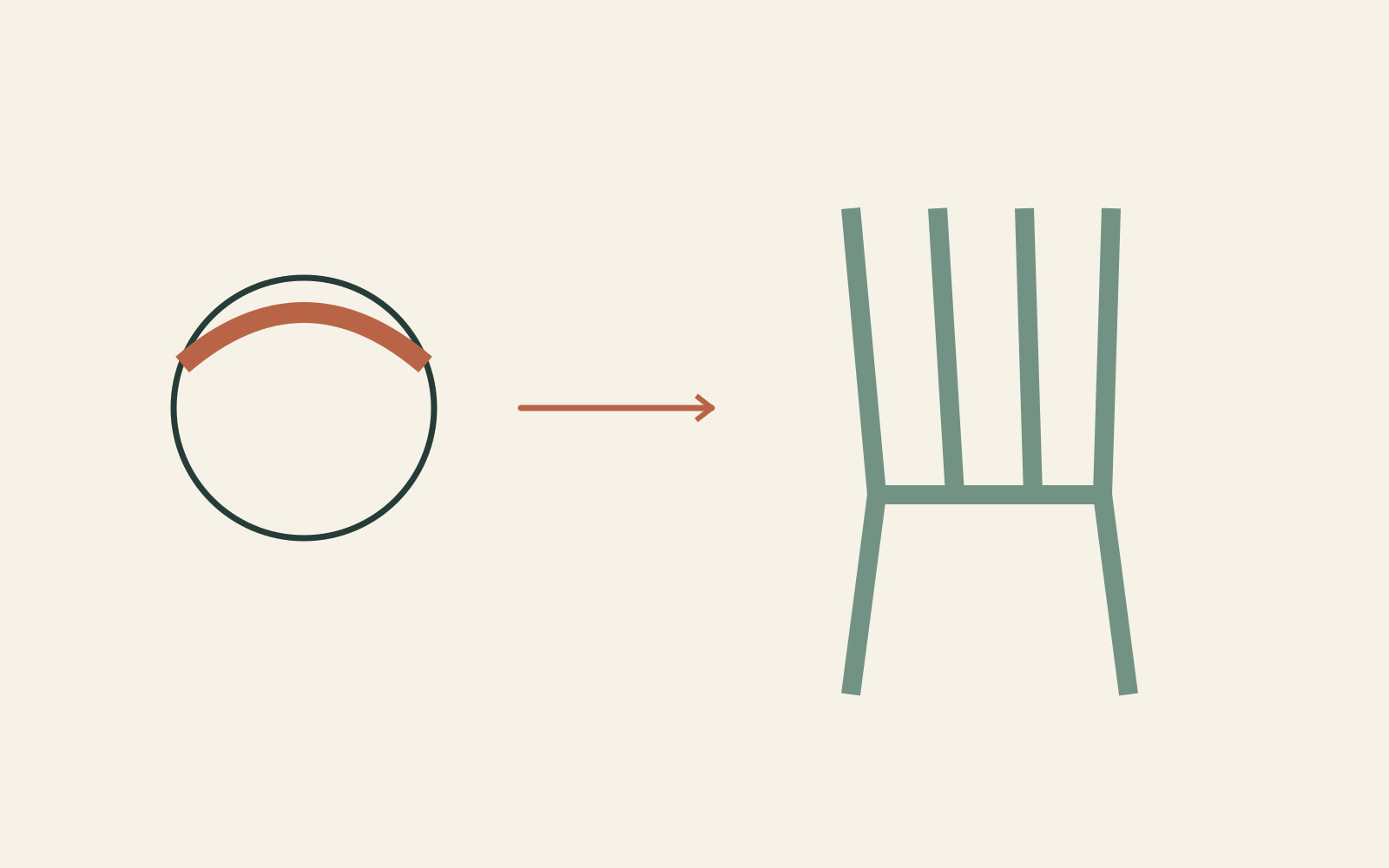
A loop at the left is paired with broad chair-like strips at the right, inviting comparison between wearable and furniture scales.
Original PatinaHall schematic, not to scale. A wearable-scale loop and broad furniture strips are placed in one visual conversation. The arrow invites a comparison of material and body, not a claim that one work caused the other or that this is a measured Strip Chair drawing.

Keep different fields in the same view

The museum’s maker record places Stripstoel SC alongside Bakker’s jewellery within one collection overview.3 It gives a reader a way to move between objects without dissolving their differences.

A chair still has to be a chair, and a wearable object has another relationship with movement and touch. Bakker’s work becomes richer when those distinctions sit beside a shared curiosity about materials. The useful connection is a way of looking, rather than a claim that one discipline simply produced the other.
Research notesEvidence, connections and limits

The museum’s 1989 exhibition account considered jewellery and industrial design together at Bakker’s request. The connection is an editorial reading of documented work, not a claim that one field mechanically caused the other.

Evidence map

Connected subjects and evidence

Reviewed connections

  • Strip chairdesigned byGijs Bakkerdocumented

    The cited record explicitly identifies this designer for the repeatable design or coherent project family.

    Reviewed 23 October 2026 by PatinaHall editorial.
    • Source 4Stripstoel SC, 1974, object 23087
  • Gijs Bakkercollaborated withDroogdocumented

    Centraal Museum identifies Bakker as co-founder of Droog. A curatorial and organisational role does not make him the author of every object shown by Droog.

    Reviewed 23 October 2026 by PatinaHall editorial.
    • Source 11989 exhibition; jewellery and industrial design considered together at Bakker’s request

Research trail

Sources and further reading

  1. Gijs Bakker, vormgever: Solo voor een solistCentraal Museum UtrechtAccessed 23 October 2026
  2. Strip Chair, 1974: six laminated-beech stripsGijs Bakker DesignAccessed 23 October 2026
  3. Gijs Bakker: collection overviewCentraal Museum UtrechtAccessed 23 October 2026
  4. Stripstoel SC, 1974, object 23087Centraal Museum UtrechtAccessed 23 October 2026

Last reviewed 23 October 2026. Found an error or a stronger primary source? Contact PatinaHall.