Design story

Strip: thin wood takes the long way round

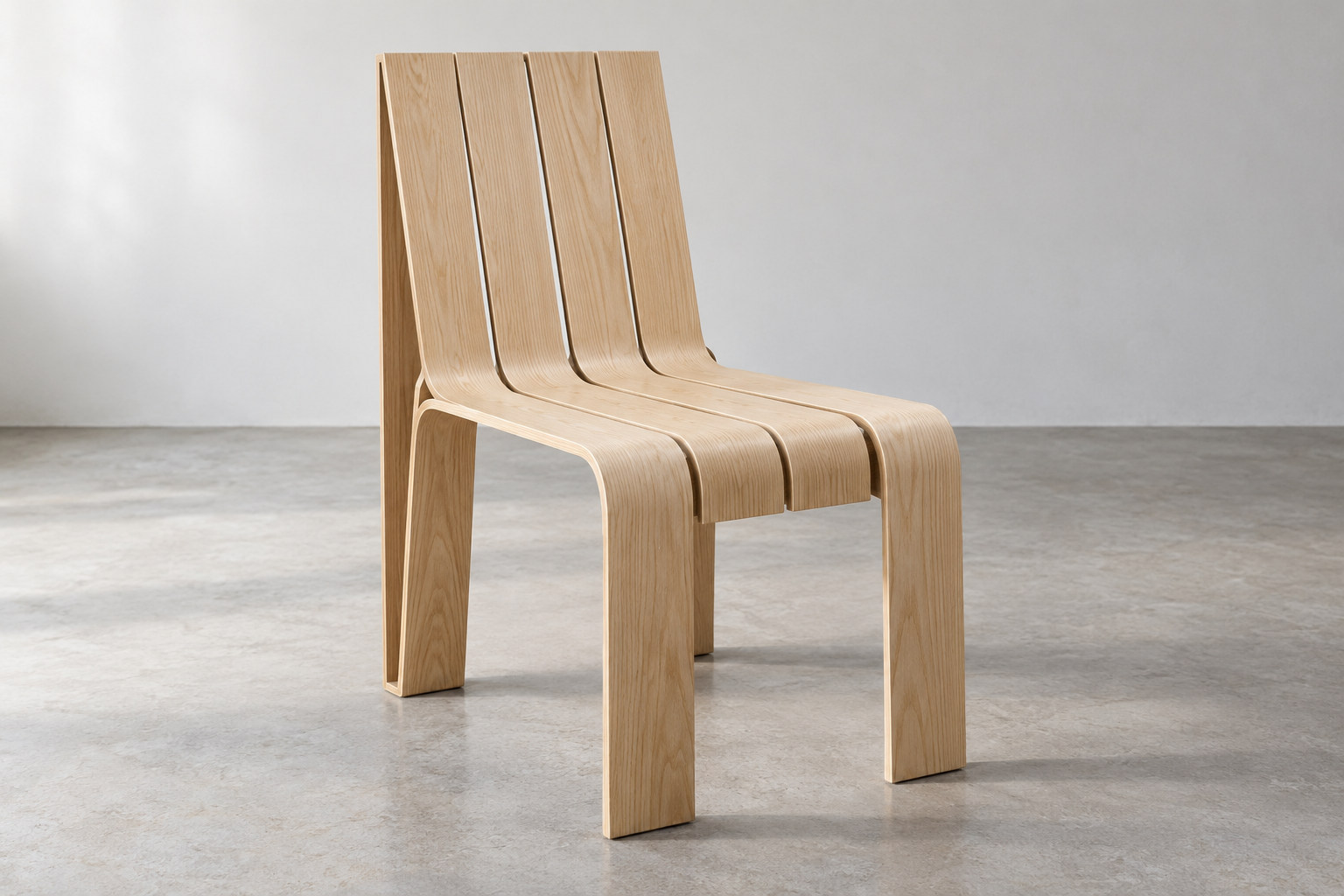
Strip makes a line useful by giving it width and thickness. Following the bent wooden strips gradually reveals how the same material can shape a chair and support the sitter.

A chair formed from broad pale bent wooden strips has open intervals and a readable route from seat towards the floor.
PatinaHall editorial reconstruction. It is not a documentary photograph. The interpretation follows the six-strip SC idea. It is not the Twisted chair or an armrest variant, and it does not provide a measured strip layout, dowel detail or bending pattern.
On this page
Key facts & takeaways

At a glance

Subject
Strip chair
Entry
Design story
Last reviewed
23 October 2026
Designed
1974documented

Three things to remember

  1. Centraal Museum records Stripstoel SC as a 1974 design.
  2. Its example is credited to Gijs Bakker and Castelijn.
  3. The museum lists laminated and bent beech and ash.

A strip takes a useful route

Gijs Bakker’s Strip chair makes the path of a wooden strip worth following. The studio describes six laminated-beech strips, joined with dowels and finished with ash veneer. Centraal Museum records its Stripstoel SC, made by Castelijn, as a 1974 design.21

The chair turns the idea of a line into something with width, thickness and a job to do. Looking along the bent material connects the surface a person meets with the supports beneath it. The route is part of the explanation, rather than a decorative flourish added to an otherwise conventional frame.

Bending changes the furniture vocabulary

Laminating and bending allow comparatively thin timber to follow curves that a straight board cannot simply adopt. The museum’s material record distinguishes beech and ash; the studio explains the layered strips and their joining. Together the accounts make the construction more intelligible without supplying a workshop bending pattern.

Follow one strip, then look at the space beside it. Repetition gives the object a rhythm, while the intervals keep the overall form open. The eye can move between individual paths and the whole chair. It is a physical idea that is easiest to appreciate when the wood remains visually legible as strips.
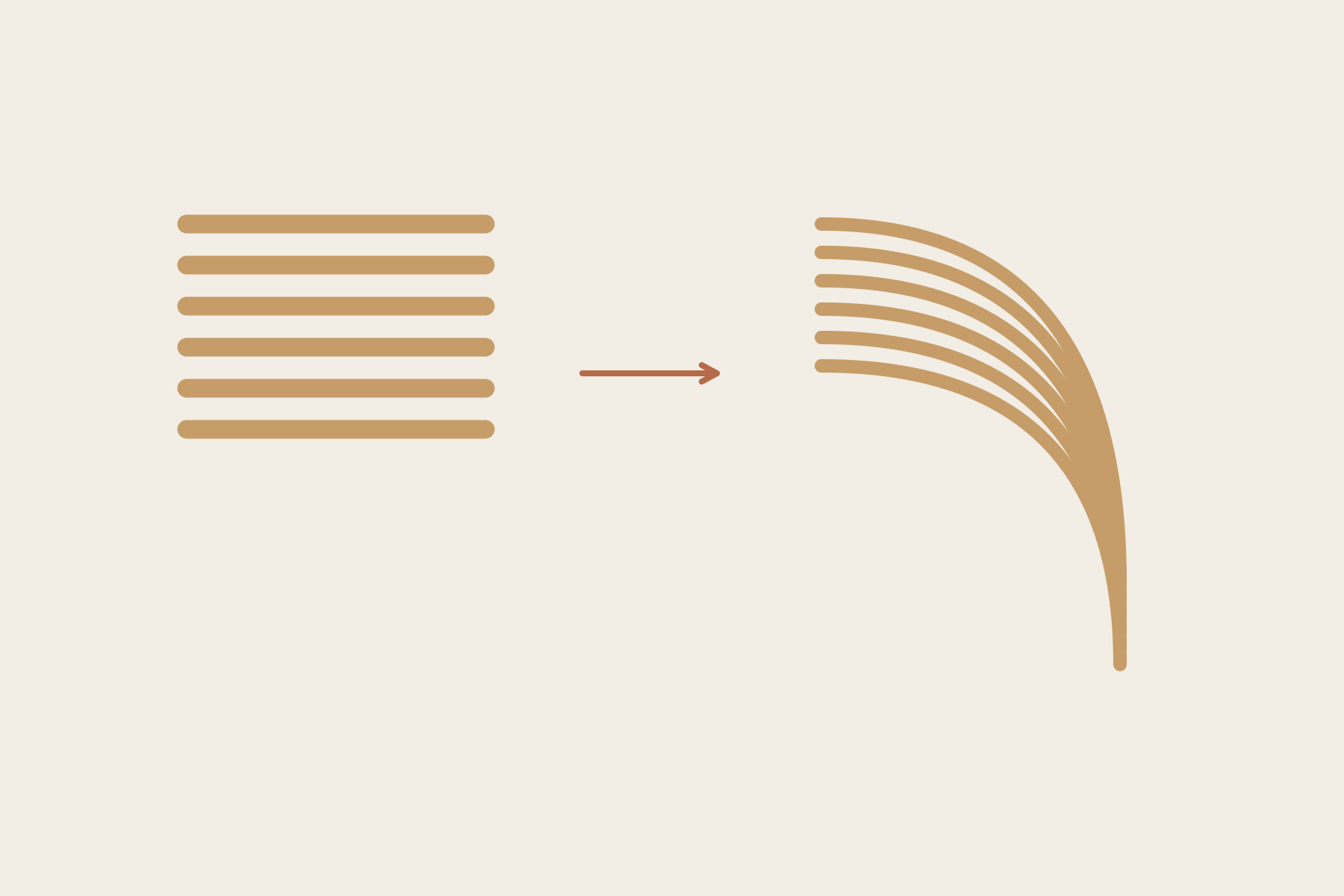
Six parallel wood-coloured lines are compared with a set of curved layered lines.
Original PatinaHall schematic, not to scale. Six straight band symbols and a curved layered group explain the idea of strips changing direction. This is not the SC assembly layout, bending template, dowel arrangement or a cantilever-chair proposal.

Enough structure to read the idea

The SC example has its own material record and dimensions. Those details should not be borrowed indiscriminately for another chair from Bakker’s bent-wood work or an armrest variant. Keeping the particular design in view makes its ingenuity clearer.

Strip asks a familiar material to change direction and a familiar object to reveal that change. A chair can look like an arrangement of lines while remaining a carefully assembled piece of furniture. The delight lies in being able to follow the route and gradually discover why it becomes a place to sit.

Research notesEvidence, connections and limits

The materials and dimensions describe Centraal Museum’s SC example. The studio archive identifies the broader design; the illustration is not a bending pattern, a joint detail or a certificate for an old chair.

Evidence map

Connected subjects and evidence

Reviewed facts

  • Designed 1974documented

    The materials and dimensions describe Centraal Museum’s SC example. The studio archive identifies the broader design; the illustration is not a bending pattern, a joint detail or a certificate for an old chair.

    Reviewed 23 October 2026 by PatinaHall editorial.
    • Source 1Stripstoel SC, 1974, object 23087

Reviewed connections

  • Strip chairdesigned byGijs Bakkerdocumented

    The cited record explicitly identifies this designer for the repeatable design or coherent project family.

    Reviewed 23 October 2026 by PatinaHall editorial.
    • Source 1Stripstoel SC, 1974, object 23087
  • Strip chairmanufactured byCastelijndocumented

    This production relationship is scoped to the source record. Later manufacture, current specifications and the date of the original design remain distinct.

    Reviewed 23 October 2026 by PatinaHall editorial.
    • Source 1Stripstoel SC, 1974, object 23087

Research trail

Sources and further reading

  1. Stripstoel SC, 1974, object 23087Centraal Museum UtrechtAccessed 23 October 2026
  2. Strip Chair, 1974: six laminated-beech stripsGijs Bakker DesignAccessed 23 October 2026

Last reviewed 23 October 2026. Found an error or a stronger primary source? Contact PatinaHall.