Designer profile

Clara Porset: a room made from pine and fibre

A cot, a chair and a cupboard ask different things of their materials. Clara Porset and Xavier Guerrero answered with pine and woven plant fibres in a proposal developed for farming families in Mexico.

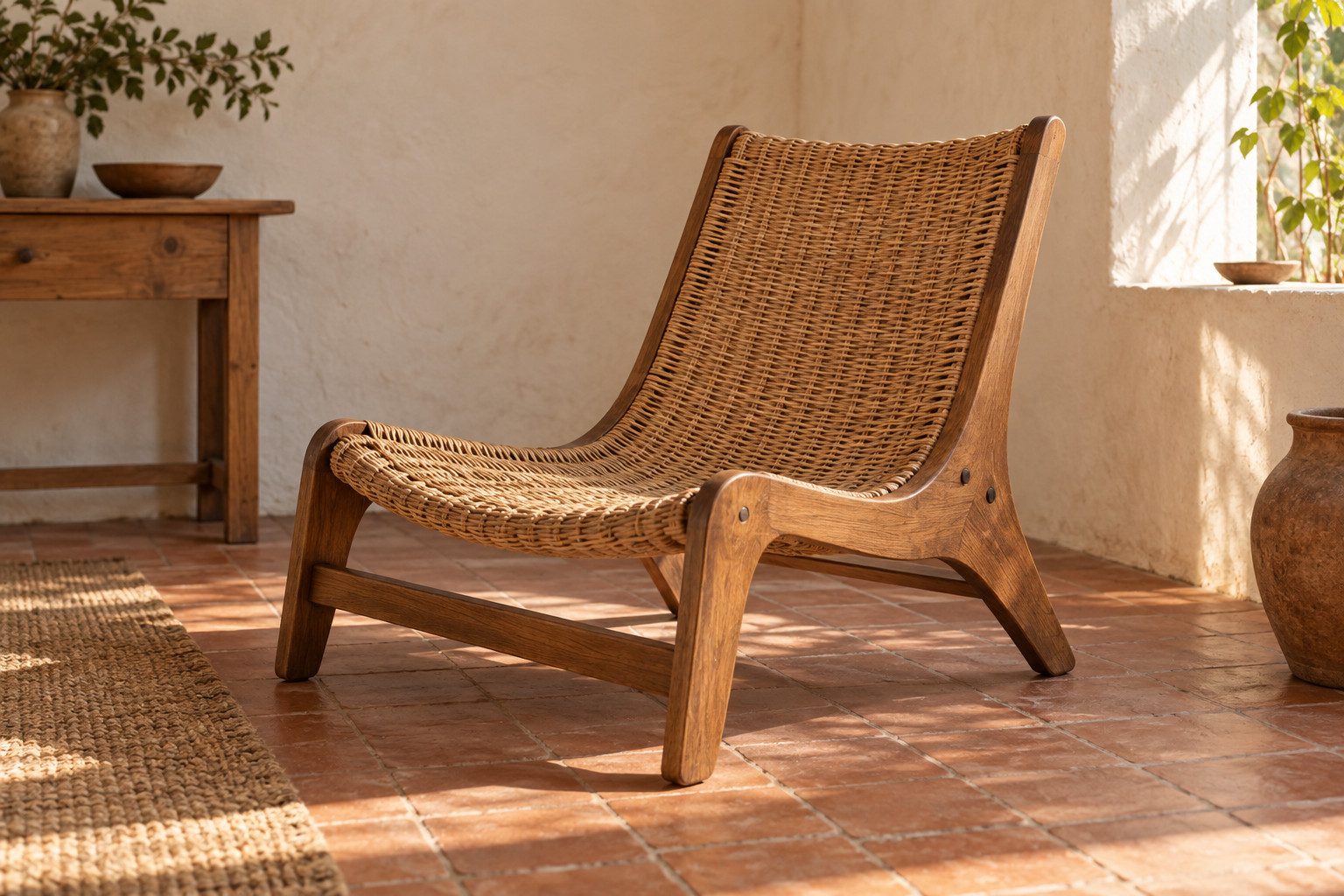
A low armless woven lounge chair follows a continuous curve within a wooden frame in a simple warm interior.
PatinaHall editorial reconstruction. It is not a documentary photograph. A study of the butaque’s curved frame and woven seat; the chair and room are approximate.
On this page
Key facts & takeaways

At a glance

Subject
Clara Porset
Entry
Designer profile
Last reviewed
10 September 2026

Three things to remember

  1. Pine, ixtle webbing and jute screening perform distinct jobs in the furnishing proposal.
  2. Porset developed versions of the established butaque, using its reclining form as a starting point.
  3. MoMA now credits Porset alongside Guerrero on a competition entry that initially omitted her.

Pine, webbing and a sliding door

In about 1940, Porset and Guerrero submitted a furnishing proposal to MoMA’s Latin American Competition for Organic Design in Home Furnishings. It became the basis for furniture developed for farming families in Coyoacán, Mexico, in 1947.3

The materials have specific jobs. Pine forms the furniture; ixtle, a plant fibre available in Mexico, makes the webbing of the cot and chair. Jute screens the wall case’s sliding doors and end.3

That last detail is easy to miss. A cupboard front need not be another solid board: woven screening can fill the opening within its frame. The proposal makes you look for where solidity is needed and where a stretched or woven surface can do the work. Sleeping, sitting and storing call for different answers, even within one room.
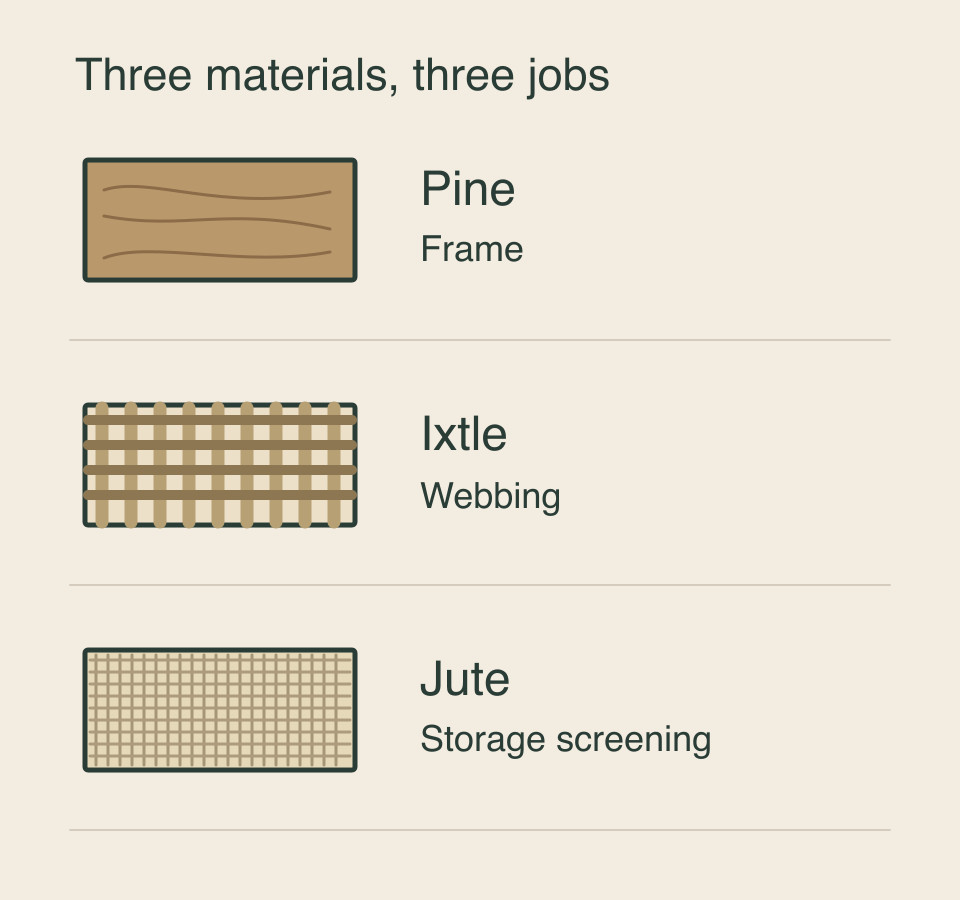
Three drawn material studies distinguish a solid pine frame, ixtle webbing and a finer jute storage screen.
Pine forms the structure, ixtle webbing supports the cot and chair, and jute screens the storage. Original PatinaHall schematic, not to scale.

The curve that receives the body

Porset was born in Cuba and worked in Mexico. Her furniture drew on forms already familiar there, including the butaque: a low chair with a reclining back. She designed versions of this established type.21

MoMA’s example, dated about 1957, combines laminated wood with wicker. The frame carries a curved woven surface that continues from seat to back. Follow that line and the design becomes easy to understand: the wood holds the outline while the wicker fills the space against the body.1

Set beside the earlier furnishing proposal, the chair makes a useful connection. Weaving can support a resting person or close a cupboard. Its role changes with its position, tension and frame. Familiar materials leave plenty for a designer to decide.

The second name on the drawing

Porset’s contribution was missing from the competition entry’s original credit. MoMA now names her alongside Guerrero.3

The correction matters to this particular project. A proposal about ordinary domestic life emerged from a collaboration, yet the record initially made one contributor disappear. Keeping both names beside the drawing restores a part of the work that the pine and weaving cannot tell us on their own.

The room is memorable for the care given to modest tasks: a body resting on webbing, possessions behind a sliding screen. Those everyday needs deserve deliberate design, whoever the room is for.

Research notesEvidence, connections and limits

MoMA connects the competition design to furniture for Coyoacán farming families in 1947. Its record does not establish production numbers, retail prices or how widely the furnishings were distributed.

Evidence map

Connected subjects and evidence

Reviewed connections

  • Clara Porsetcollaborated withXavier Guerrerodocumented

    MoMA credits Porset and Guerrero together on the competition panel.

    Reviewed 10 September 2026 by PatinaHall editorial.
    • Source 3Object description and historical account
  • Clara Porset’s butaquedesigned byClara Porsetdocumented

    MoMA attributes its circa-1957 butaque design to Clara Porset; this is a version of a pre-existing chair type.

    Reviewed 10 September 2026 by PatinaHall editorial.
    • Source 1Object description and historical account

Research trail

Sources and further reading

  1. Clara Porset: Butaque, ca. 1957, 178.2021The Museum of Modern ArtAccessed 10 September 2026
  2. Clara Porset: collection biographyThe Museum of Modern ArtAccessed 10 September 2026
  3. Clara Porset and Xavier Guerrero: Organic Design competition panel, ca. 1940The Museum of Modern ArtAccessed 10 September 2026

Last reviewed 10 September 2026. Found an error or a stronger primary source? Contact PatinaHall.