A familiar task takes longer to name
A small seat can be understood through the person who will use it. Bakker’s work adds another route: follow the shape first, then notice how a familiar task has acquired a less familiar body.
His studio biography describes independent work alongside commissioned pieces and small editions. That breadth matters because a particular form does not have to answer every production question in the same way. An individual work and a manufacturer’s collection have different settings.1
The interesting pause is one of attention. A person can see something usable without immediately reducing it to a standard set of parts. The object gains time to introduce its material and its own organisation.
The same use can begin from different forms
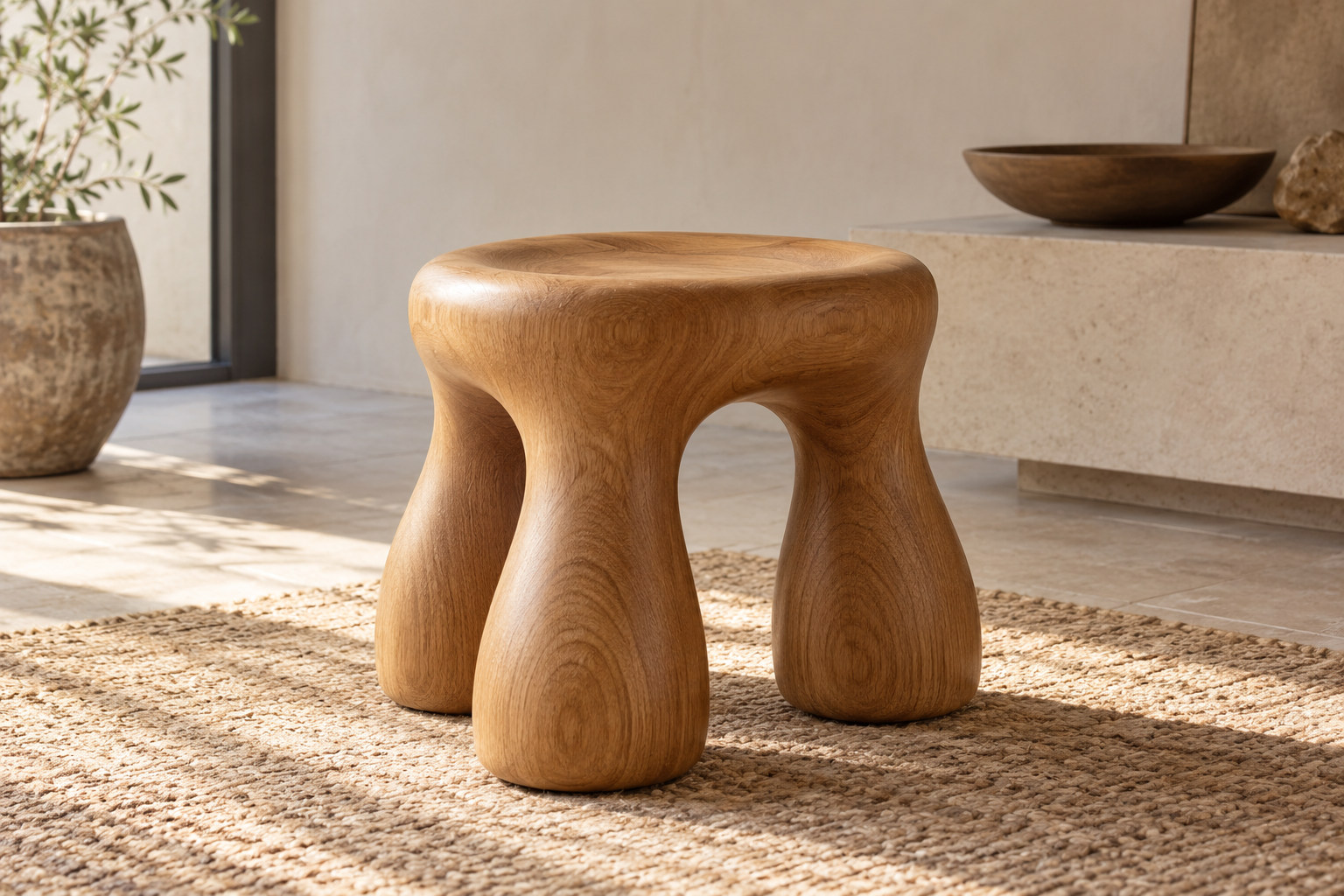
The studio’s wooden Tonus record identifies solid oak and credits Rutger Graas as producer. Its swelling transitions encourage the eye to read a continuous body rather than first separating a seat from its supports.2
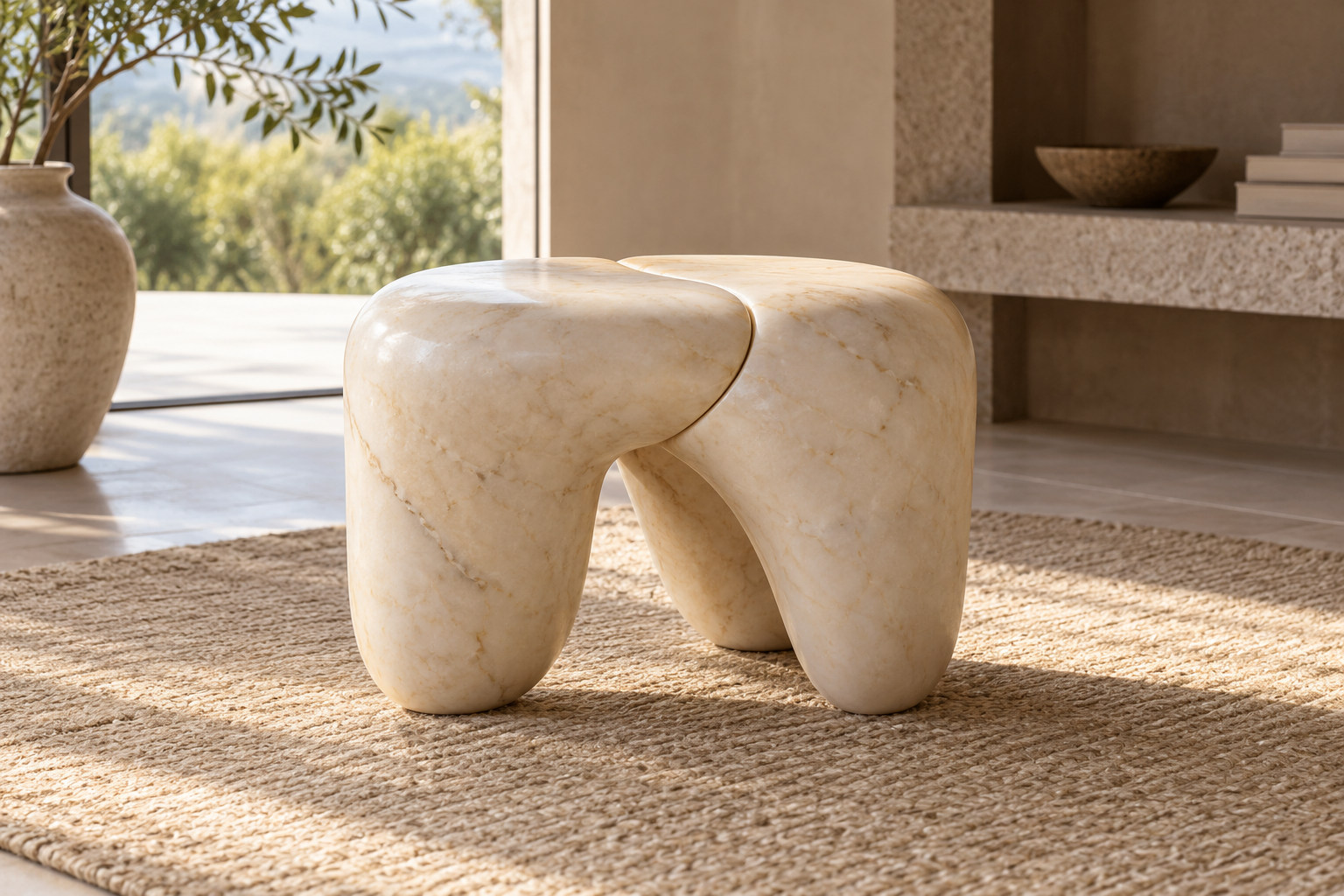
Three Pair offers another kind of reading. Les Ateliers Courbet describes three intertwining stone elements in its ivory-marble version and names Testi Fratelli as manufacturer. Here one apparent whole becomes clearer through recognising its components.4
Those two approaches make an instructive pair within the practice. Continuity can be the effect of a shaped wooden volume, or the result of several elements finding a relationship. The use remains familiar while the way of giving it form changes.
The making has another name beside it
Homo Faber’s Tonus Family account identifies Graas as the oak stools’ maker and Bakker as designer. Keeping both names in view connects a sculptural idea with the skill needed to realise it in timber.3
The same discipline applies to stone. A specific manufacture credit belongs to a particular version; it should not be extended to every object carrying a shared design name. The work’s visual unity does not erase the distinctions in its production history.
This makes collaboration part of understanding the furniture, rather than a line added after looking at it. A continuous surface can still be the result of several kinds of knowledge meeting.
Give the object another moment
Bakker’s furniture suggests a modest change in viewing habits. Before asking only what the object is called, follow where its mass gathers, where it changes direction and how its parts become a whole.
The question does not require unfamiliar use for its own sake. Sitting remains sitting. The form creates another moment in which the material and its making can become visible before familiarity closes the conversation.