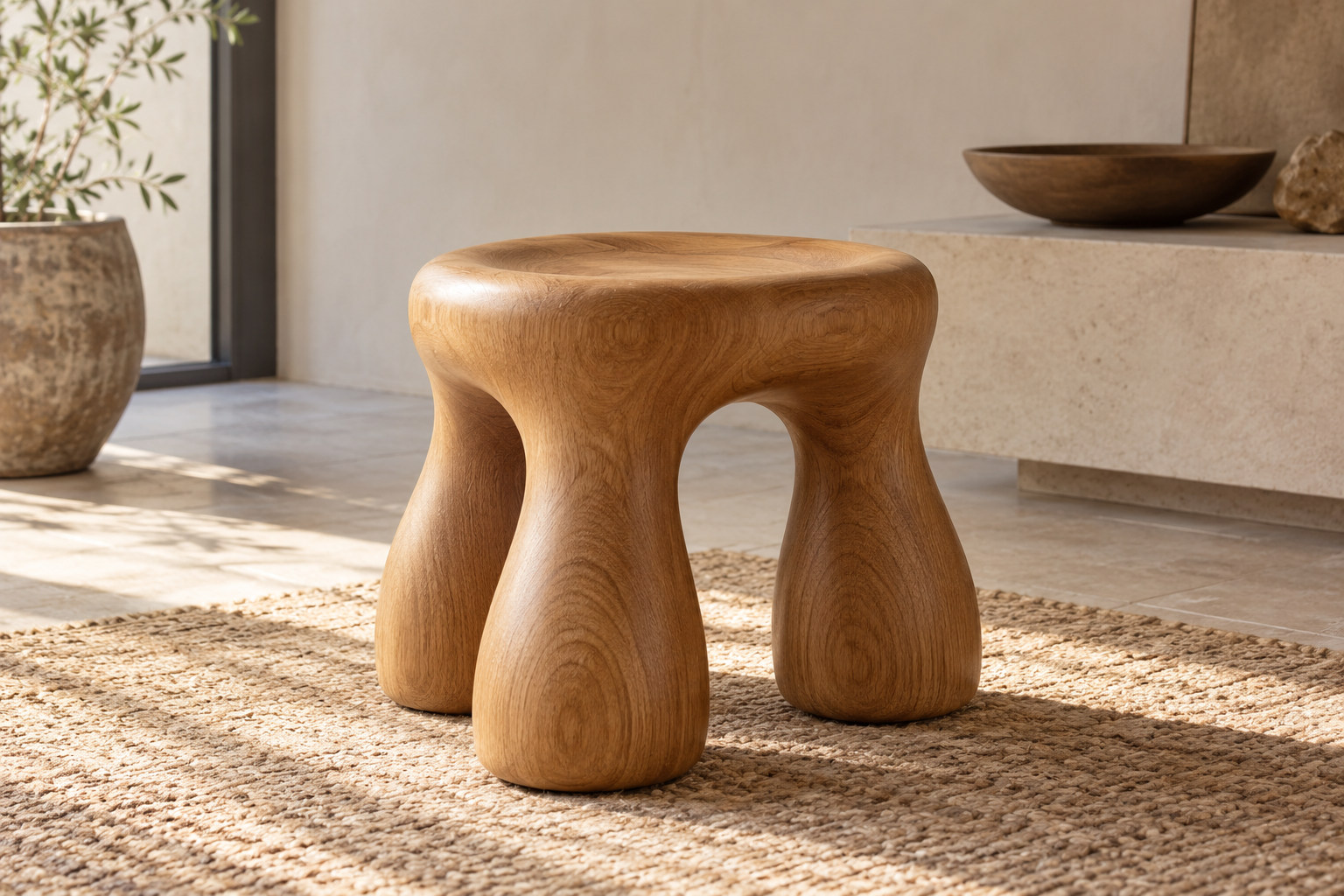
One volume, three participants
The eye likes to simplify. Faced with a small, smoothly rounded seat, it may register one object before it starts to follow how that object is composed. Three Pair gives that first impression something to discover.
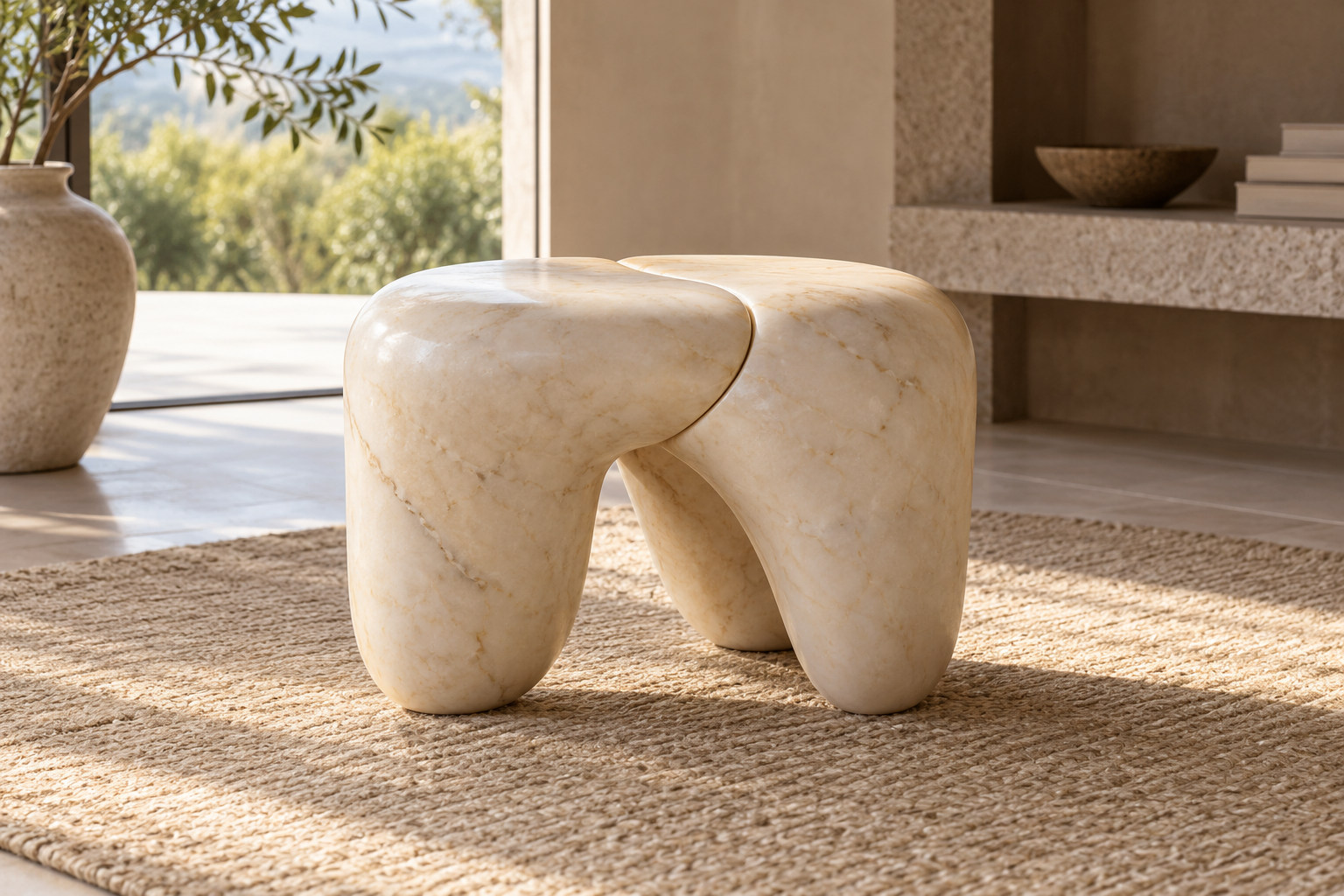
Les Ateliers Courbet describes its ivory-marble version as the intertwining of three separate elements. It credits Aldo Bakker as designer and Testi Fratelli as manufacturer, with a date of circa 2013.1
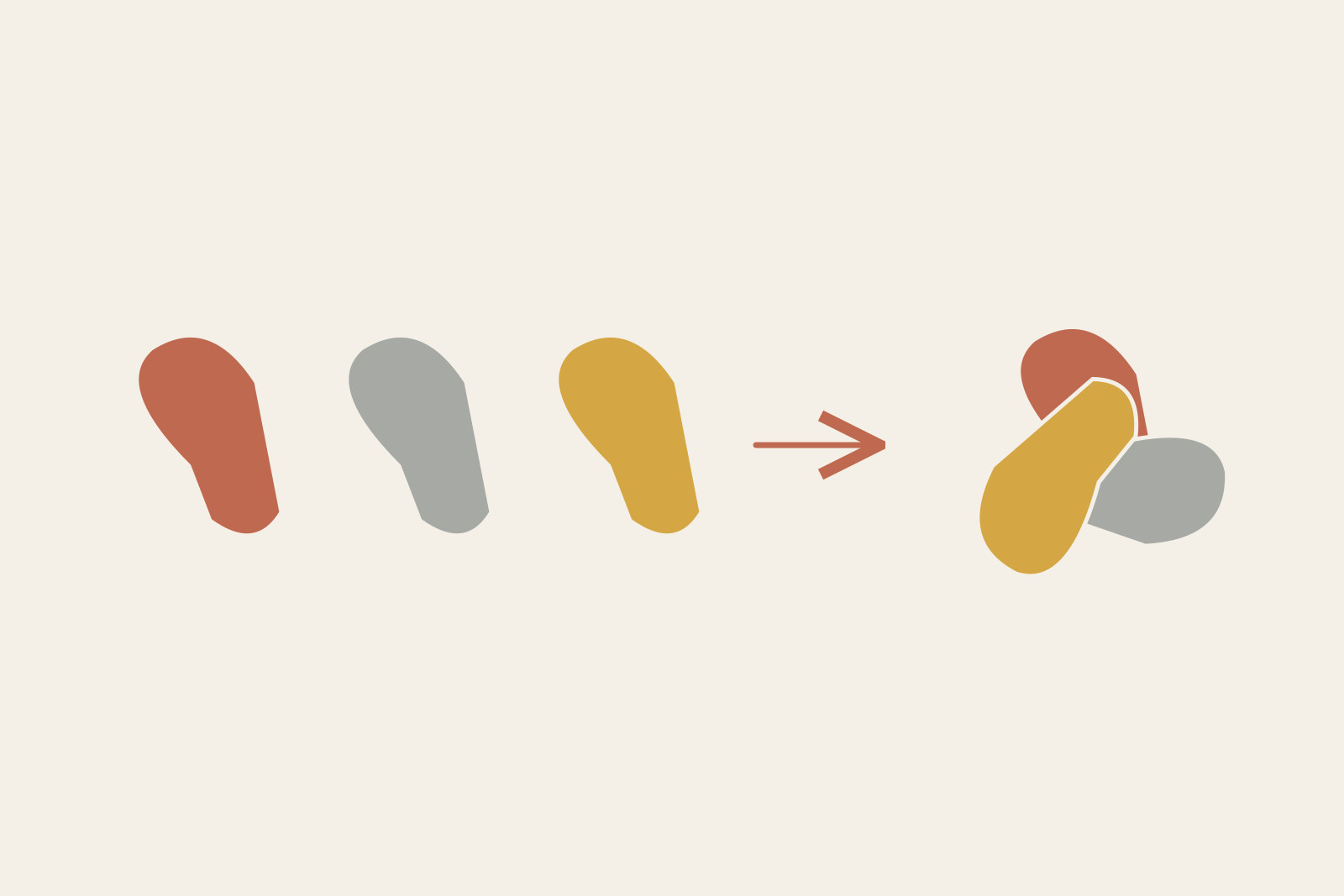
The components do more than occupy positions beneath a top. Their relationship makes the form itself. The design becomes easier to understand when the viewer starts to separate the apparent whole into its companions.
The seam is part of the shape
A division between parts can be something to disguise. Here it supplies a way to read the object. Following a boundary lets the eye discover where one curved mass gives way to another, then return to the combined seat.
That alternation is the visual pleasure of the design: first a whole, then the parts, then a whole understood differently. Assembly becomes an idea one can look at, rather than information confined to a workshop description.
The original schematic uses different colours to make that relationship legible. It explains the three-part principle without pretending to document hidden joints, stone tolerances or the order in which a particular example was assembled.
A material version has its own identity
Stone can make a continuous rounded form especially convincing, but a design name is not a universal material specification. Courbet’s record is explicit about ivory marble and its maker. Particles Gallery lists distinct Three Pair stone versions alongside other Bakker works.13
Boijmans’s annual acquisition record supplies a different kind of precision: a chair called Three Pair, dated 2013, with inventory V 2882 a-c. The record establishes that museum identity without proving that its material and production match the Courbet example.2
Keeping those records apart makes the design more interesting. The general idea can recur while a particular stone, edition and making history belong to one version. A family resemblance need not erase an object’s individual facts.
Recognising the company within
A little stool rarely needs a long explanation of its purpose. Three Pair uses that familiarity to make composition worth another look. The viewer can recognise a place to sit before deciding how its elements belong together.
Once the three parts have become visible, the apparent simplicity changes. It is no longer the simplicity of a single lump. It is the result of a relationship.