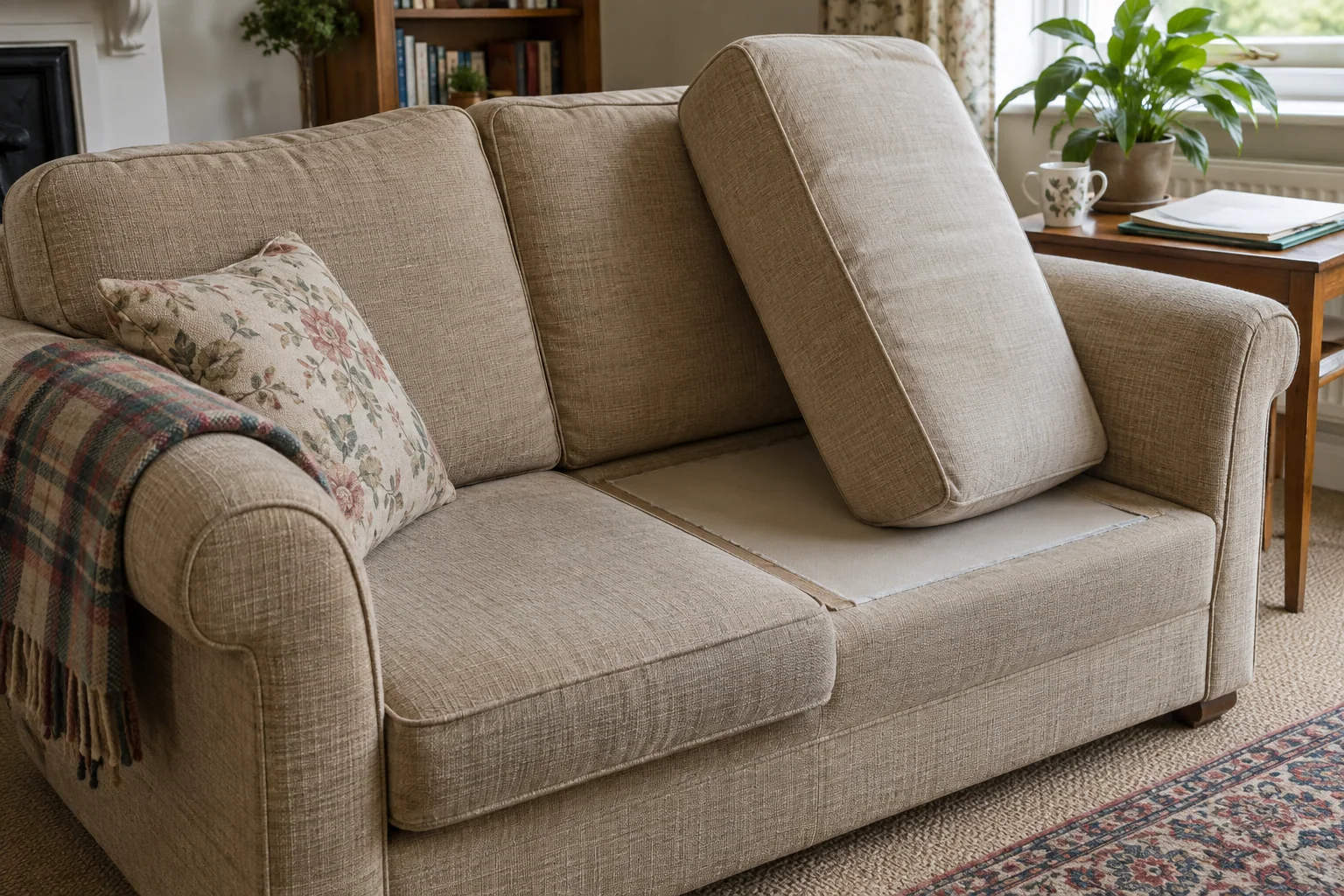
Find the original information without altering the sofa
Check the accessible cushion area, rear and underside, using help for any safe movement. Photograph the complete label where it is attached and a readable close-up. Keep manufacturer, model, purchase and reupholstery records together. Do not cut into fixed upholstery to continue the search.
Business Companion’s guidance for England, Scotland and Wales describes the permanent label as traceability information and advises expert enquiries where compliance cannot be established. A label is part of the evidence; it does not prove that every later alteration or the sofa’s present condition is acceptable.[1]
If the original label has detached, retain it with the sofa and ask the maker or intended recipient what evidence they will accept. Do not attach a bought label that has no verified relationship to the furniture. That creates a claim rather than resolving the missing information.
Choose the route before arranging a van
| Route | Next step |
|---|---|
| Donation to a furniture charity | Send the label and condition photographs and get acceptance before collection |
| Sale through a business or dealer | Resolve the applicable compliance evidence before the item is supplied |
| Genuine private disposal of your own sofa | Describe the missing label and condition honestly; check platform terms and the recipient’s needs |
| Rental or business furnishing | Get advice for that use; a private purchase does not remove the supplier’s duties |
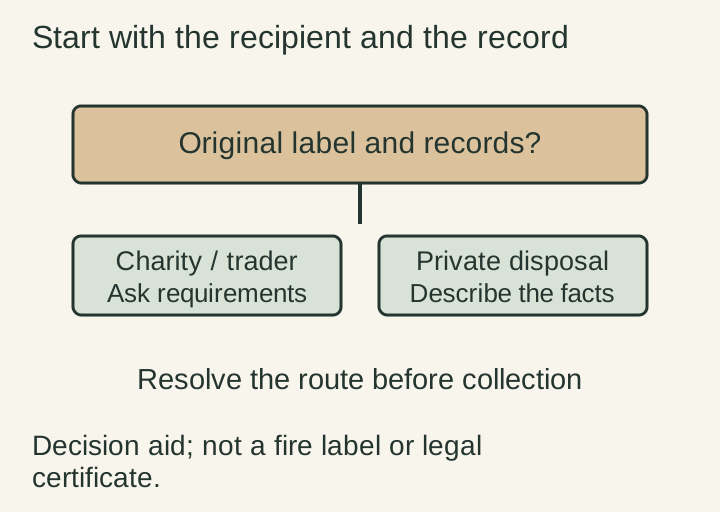
BHF requires attached fire-safety labels on upholstered donations and can refuse unsuitable items at collection. This is its published acceptance policy. Asking another organisation is reasonable, but do not assume it operates the same policy or that a driver can waive it.[2]
The Consumer Protection Act’s section 46(5) confines the relevant supply wording to supply in the course of a business. That is the basis for distinguishing a genuine private disposal from business supply. Regular buying and reselling, or supplying furniture for a rental, should not be treated as an ordinary private household sale merely because the account has a private label.[3]
A private route does not make an unknown sofa safe or remove every possible responsibility. Tell the recipient what is known, what has changed and what remains unverified. If your role or proposed use is uncertain, take the facts to Trading Standards or the relevant local advice service before listing.
Two dates that are often misunderstood
Business Companion lists furniture made before 1 January 1950 among the exclusions from these controls. “Vintage”, “antique-style” or a seller’s broad decade guess is not evidence for that date. Ask about later work too, and obtain advice where the history or intended supply makes the position unclear.[1]
The amendment effective from 30 October 2025 removed the requirement for display or swing labels. Government guidance explicitly retains permanent labelling, including requirements relevant to second-hand supply. Losing the shop’s hanging card and lacking the permanent label are therefore different situations.[4]
The consultation published on 31 March 2026 proposes further changes, including the treatment of second-hand furniture. A consultation proposal is not an enacted exemption. This Guide was checked on 11 September 2026; use the current official guidance again when arranging a later transaction.[5]
Give the recipient enough information to answer
Message to a charity, dealer or maker
I have a sofa described as ___, with these purchase and reupholstery records. I have checked the accessible areas and found [this attached label / a detached label / no label]. These photographs show the label and condition. Can you accept it or advise what evidence is required before collection or sale?
If the intended organisation cannot accept it and the position cannot be resolved, ask your council about an appropriate collection or recycling route. Do not book a charity collection hoping that the missing evidence will be overlooked. A clear answer before the van arrives saves everybody a wasted trip.