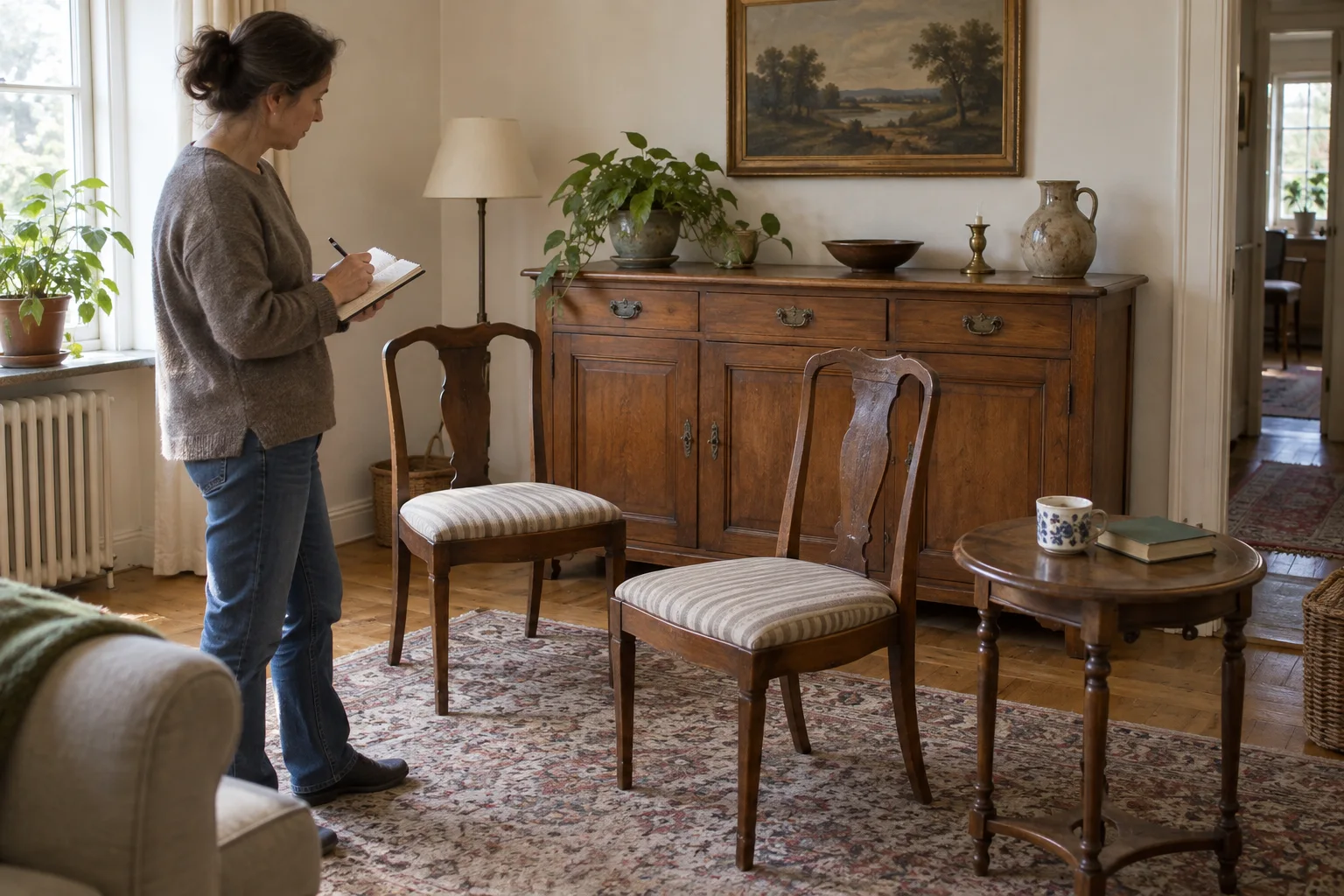
Make a modest inventory
Give each item a simple number and take a complete photograph. Add dimensions, marks, visible condition, known repairs and any associated invoice or family account. Keep uncertain stories labelled as such. A remembered maker name is a useful lead, not a reason to put that attribution into every enquiry.
Confirm that the people entitled to decide have agreed what can be sold. Set aside documents, personal contents and objects being retained before arranging a collection. This Guide concerns the practical sale route; an unresolved estate or ownership question needs the appropriate professional advice first.
Do not restore, paint or strip items to “help them sell” before getting opinions. A buyer may prefer the existing surface, and work can cost more than it adds to the achievable price. Basic orderly presentation and a clear record are a better starting point.
What does each route ask of you?
| Route | Useful when | Terms to resolve |
|---|---|---|
| Dealer buys outright | You want a defined payment and collection date. | Exact items, amount, payment timing and who removes them |
| Consignment | You can wait and want someone else to handle the sale. | Commission, pricing authority, term, insurance and unsold return |
| Auction | The objects suit a sale and you accept timing and outcome uncertainty. | Estimate, reserve, fees, transport and unsold charges |
| Private marketplace | You can photograph, answer questions and coordinate buyers. | Price, viewing, payment, collection and your own time |
A clearance service is another transaction. Establish whether it buys items, charges to remove them or combines both. Ask for those amounts separately so valuable furniture is not lost inside an unexplained room-clearance figure.
An illustrative comparison of three offers
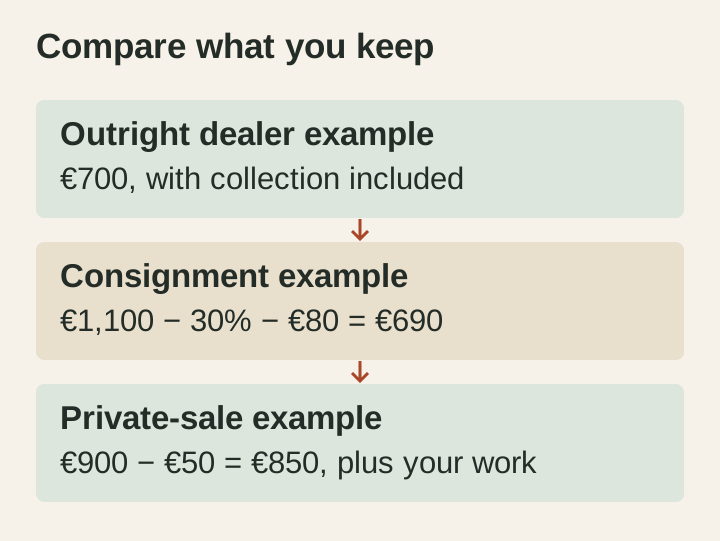
Suppose a dealer offers €700 for a small group, including collection. A hypothetical consignment proposal aims for a €1,100 sale with an assumed 30% commission and €80 transport: that would leave €690 if it sells at that price and there are no other costs. The higher headline has not produced a higher net amount.
A hypothetical private sale might achieve €900 with €50 of accepted costs, leaving €850, but you manage the photographs, messages, viewings and collection. These are invented examples to compare the method, not valuations or typical commission rates. Add your own time and the deadline as separate decision factors.
For auction, ask what a published result includes. Christie’s distinguishes buyer-side fees from the seller’s agreed commission. The amount a buyer pays, the hammer price and the consignor’s proceeds are three different figures.[1]
What happens if the furniture does not sell?
A reserve is an agreed minimum sale price, distinct from a public estimate. Christie’s explanation makes that distinction explicit. For your chosen auction or consignment service, ask who can change the price, whether fees remain payable if unsold and when the object must be collected.[2]
With consignment, agree the term and any markdown authority in writing. Ask who is responsible for damage while the object is held and what happens if you want it back. For an outright purchase, establish when payment becomes due and when ownership and collection responsibilities pass under the agreement.
Request comparable proposals
I am selling the attached numbered furniture inventory by [date]. Please identify the items you would buy or accept, the route proposed, expected or fixed amount, all commissions and charges, collection arrangements, payment timing and unsold terms. Please keep any clearance fee separate from the purchase value.
Choose the route that fits the household’s actual needs. Receiving a clear, fair amount on a reliable date can be the best result even when another route has a more optimistic headline.