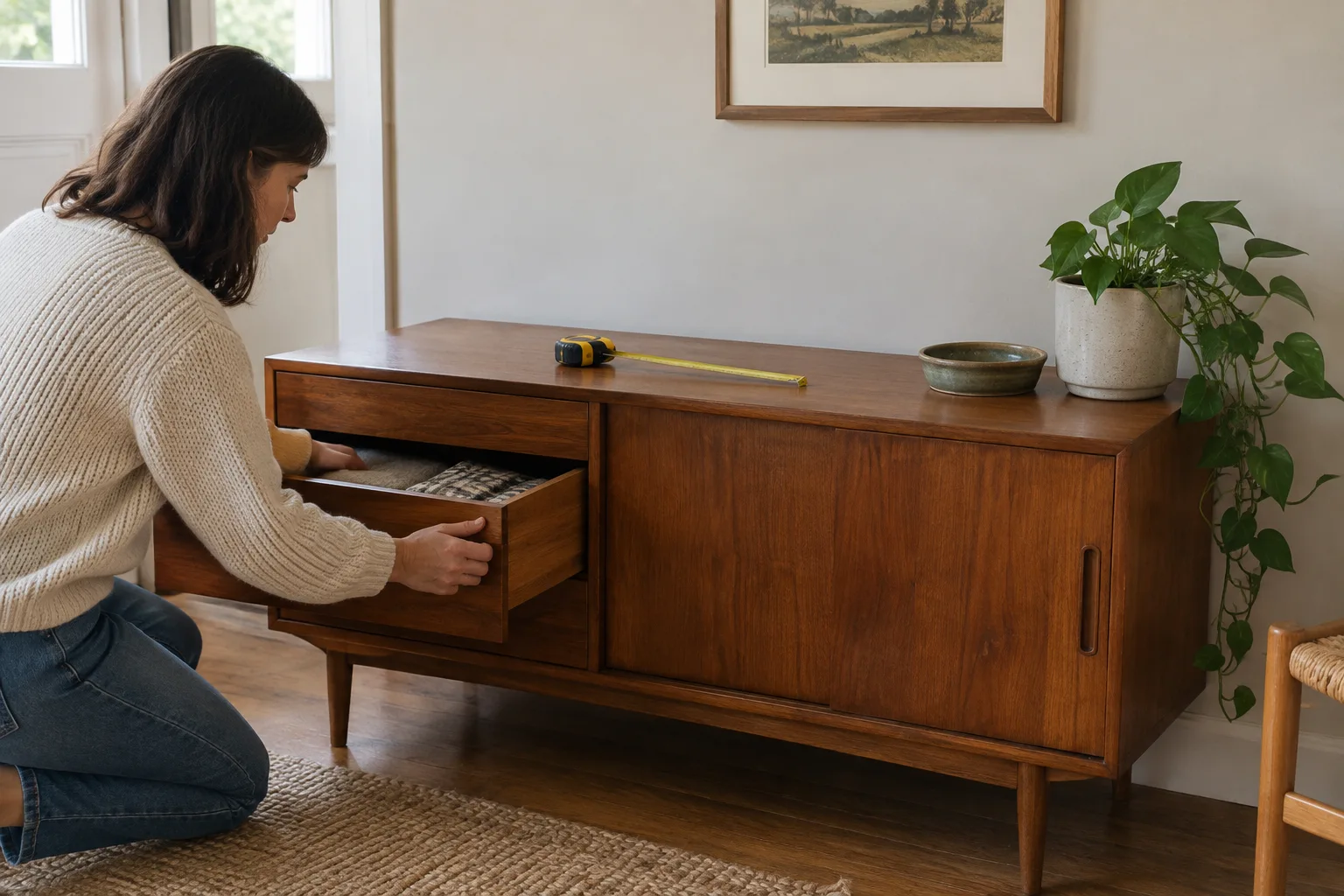
Five close comparisons beat fifty exciting ones
Match the object type, size, maker confidence, production version, condition and location. A restored signed designer cabinet is not a useful direct comparison for an anonymous cabinet of similar colour. Keep unattributed pieces in the comparison if your own attribution is unresolved.
Save the evidence with a date. For a sold record, establish whether a figure is actually shown and what it includes. A listing marked “sold” without a realised amount does not prove that its previous asking price was achieved. An auction estimate is a forecast, not a completed transaction.
If all you can find are current asking prices, say so in your working sheet. They show competition and seller expectations. They do not provide measured proof of the price a buyer will accept.
Make the amounts comparable
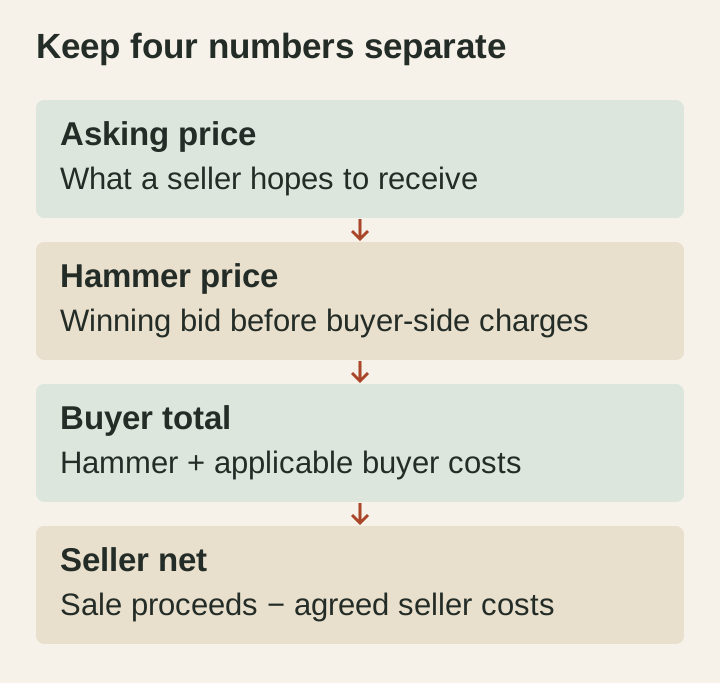
Christie’s explanation of auction fees distinguishes the buyer’s premium and seller’s agreed charges. Apply that distinction to any auction result you use: confirm whether the published amount is hammer-only or includes premium, and do not mistake either for seller proceeds.[1]
| Evidence | Displayed amount | How to use it |
|---|---|---|
| Comparable private sale with confirmed amount | €480 | Useful completed transaction if condition and locality match |
| Dealer asking price with restoration and delivery service | €850 | Current retail competition; not a private realised price |
| Auction hammer result | €420 | Add or remove only the fees needed for the comparison |
| Old listing marked sold, final amount hidden | €600 previous asking | Record as sold status, realised amount unknown |
Avoid a formula that deducts a universal percentage for private selling or every scratch. The gap depends on the object and service. Describe the differences, then choose a sensible range rather than manufacturing precision from unlike examples.
Price the work that remains
List what a buyer must do immediately: collect from a difficult floor, replace a missing shelf, arrange a structural assessment or commission upholstery. Get a real quote where a repair materially affects the decision. A repair estimate can explain a price difference, but it does not guarantee the market will reward you euro for euro for doing the work first.
Keep pleasing wear and unresolved failure separate. A surface you consider attractive patina may reduce some buyers’ interest; that is ordinary. A loose joint should be disclosed and priced as an unresolved condition, not hidden behind the same word.
Do not assign a designer premium until the attribution is supported. An honest description can attract the right buyer faster than a famous name that generates repeated challenges and wasted viewings.
Use an asking price you can explain
Suppose your hypothetical evidence supports a likely private transaction around €450–€500. You might list at €520 if you want some room to negotiate and can wait, or choose a clear €475 fixed price for a simpler sale. Those are scenario choices, not recommendations for an unexamined piece.
Write down your minimum net amount and any fees. If you need to keep €450 and a hypothetical platform charges 10% of the selling price with no other costs, a €500 sale leaves €450. Confirm the real fee basis and tax treatment before using that arithmetic. Collection or storage costs may change the result.
Pick a review date appropriate to your deadline. At that point, assess enquiry quality, viewing outcomes and comparable competition. Correct missing dimensions or poor photographs before deciding the price is the only problem. If the price changes, change it deliberately rather than repeatedly making tiny reductions without learning anything.
Give buyers fewer reasons to guess
Your pricing note
This price is based on [dated comparables and sale channel], with [condition, attribution and access differences]. The buyer receives [exact parts]. My expected net after [real fees/costs] is [amount], and I will review the listing on [date]. My minimum acceptable outcome is [amount or route].
Keep the private pricing note for yourself; give the buyer a clear listing with measurements, condition and collection terms. The best asking price is one supported by a saleable description and a realistic plan to complete the transaction.