Keep the lamp and shade identities separate
A pleated shade gives a simple base much of its presence. Its width, taper and collar decide how much of the stem remains visible and where the light sits. When the old shade is tired or missing, ordering something approximately white and conical can lose the proportions you liked.
Begin with photographs of the whole lamp and the shade from the side, above and below while the lamp is unplugged and cool. Record any label on the base and any separate information on the shade. A base model number does not establish that the shade now fitted is the original or correct one.
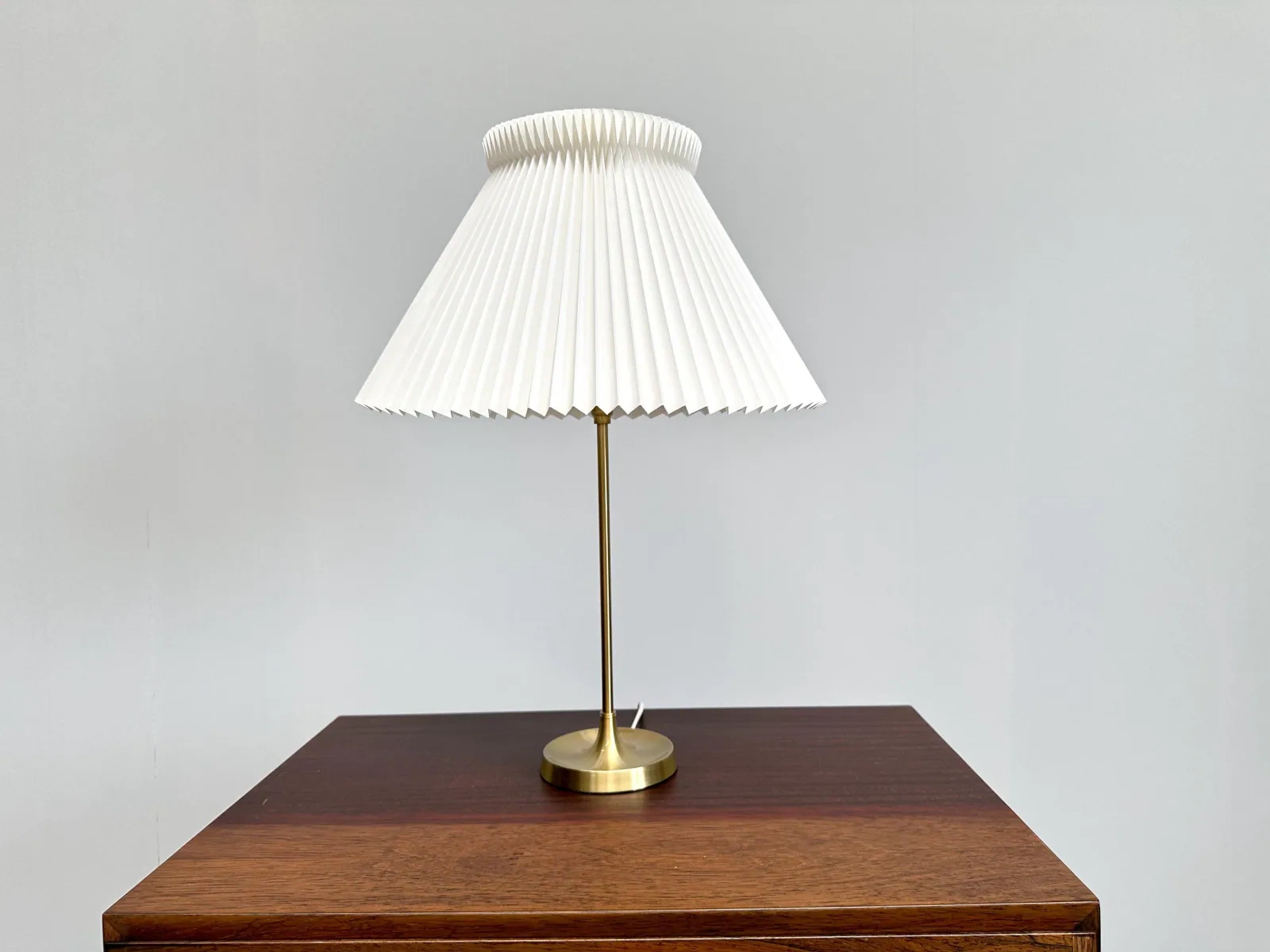
The seller photograph here shows a lamp described as Model 307. It gives a clear view of the pleated outline and collar, but it is not a measurement reference for your lamp. For the design’s history, use the linked Library entry; for the order, use your actual shade and the maker’s specification.
Read about the lamp’s design in Le Klint Model 307.
What 1-17 actually means
Le Klint’s shade guide says to measure the side from the underside of the collar; for a shade without a collar, measure the complete side. For Model 1, that side length forms the size part of the product designation. Record it separately from vertical height and diameter.[1]
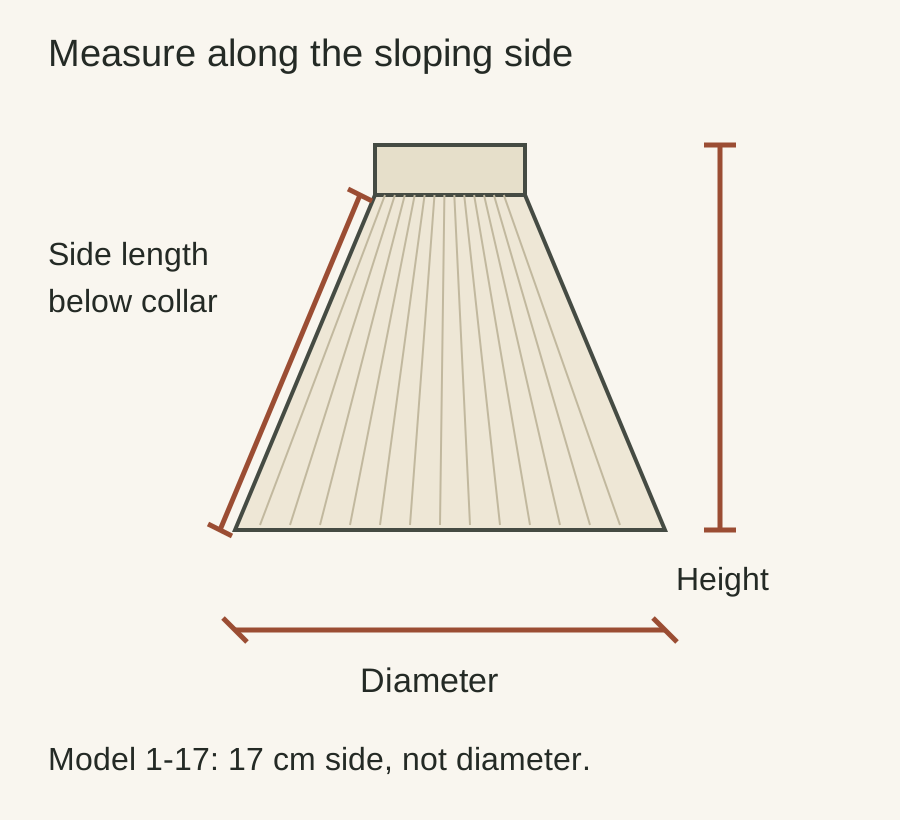
The current Model 1 product page lists 1-17 with a 17 cm side and 29 cm diameter, and 1-19 with a 19 cm side and 33 cm diameter. This is a worked comparison of two current sizes, checked on 10 September 2026. It is not a dating chart for old shades or a rule for every Le Klint model.[2]
Measure gently without stretching pleats to reach the expected number. If the old shade has distorted or the model is uncertain, send its dimensions and profile to the supplier. Forcing the measurements to agree can simply reproduce the wrong replacement.
Do not buy the shade and hope it attaches
Le Klint specifies a separate matching support for Model 1. Identify the support currently present, how it mounts to the lamp and which shade size it is intended to carry. Include a clear view of the collar and support in the enquiry.[2]
A familiar-looking shade perched on an improvised fitting is not a complete lamp. Ask the supplier to confirm the shade, support and any required mounting pieces as one order. A used shade sold without its support may still be worthwhile if the correct parts are known and available.
Try the proposed diameter and height as a paper outline beside the base, without attaching paper to a working lamp. Check the proportion from your normal seat and whether the arrangement clears a shelf or nearby wall. Confirm the final fit and light-source requirements from the actual product instructions.
Colour alone cannot choose the care method
Le Klint’s care guide distinguishes washable standard shades from paper shades, which must not be washed. That distinction matters before treatment, but it does not identify an unknown old shade from its colour. Establish the material and condition before applying today’s care instructions.[1]
Ask about splits at fold edges, crushed pleats, damage around the support and repairs. Keep mild ageing separate from a tear that affects attachment. If the old shade is important to retain, seek suitable specialist advice before trying to reshape, wash or glue it.
Choose the replacement material deliberately. Do you want its particular surface and light, or are you assuming every pale pleated shade is the same? Ask to see the available material samples or a complete example through the supplier.
A short brief can prevent the wrong delivery
Send this to the shade supplier
I need a replacement for the pictured lamp and shade. Here are the base identification, shade profile, collar and support, side length measured below the collar, vertical height and diameters. Please confirm the shade model, size, material, matching support and any mounting pieces, together with the applicable light-source instructions.
Keep the electrical condition of the old lamp as a separate job. A correctly fitting new shade does not establish that its wiring, holder or switch is ready for use. Have any unresolved electrical work assessed by a qualified person before bringing the lamp into service.
Once the model and fitting are settled, the choice becomes enjoyable again: the fold, size and light which made you want to keep the lamp in the first place.