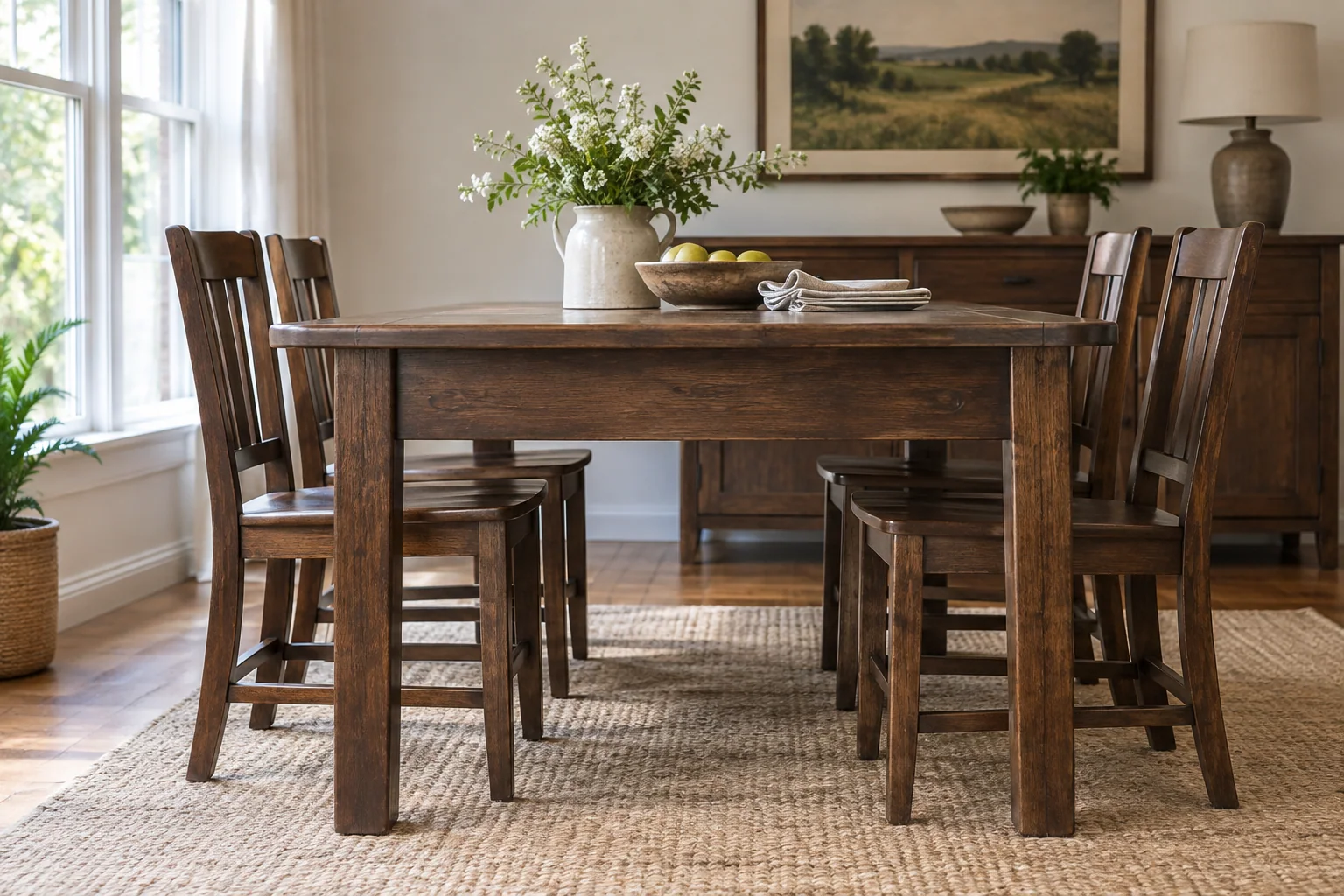
A normal-looking top can hide a low apron
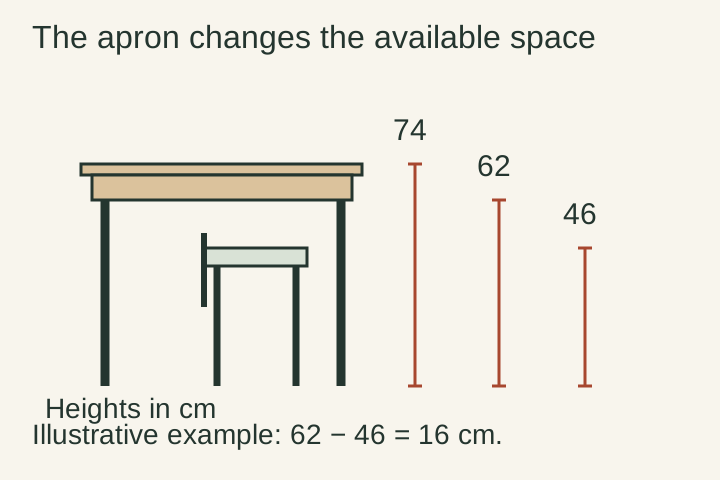
Measure from the floor to the top surface, then to the lowest obstruction where you sit. That may be the apron—the frame immediately below the top—or a drawer or support. Finally, measure the chair seat while occupied, including any cushion you intend to use.
Subtract occupied seat height from obstruction height to describe the vertical space available above the seat. This is a comparison measurement, not a universal comfort or safety threshold. Your thighs, posture and movement still need to fit in the actual arrangement.
| Measurement | Example |
|---|---|
| Floor to tabletop | 74 cm |
| Floor to underside of apron | 62 cm |
| Floor to occupied seat | 46 cm |
| Space above the seat to the apron | 62 − 46 = 16 cm |
| Tabletop above the seat | 74 − 46 = 28 cm |
Raising the table changes more than knee space
In that example, raising the complete table by 2 cm would increase the space to the apron from 16 to 18 cm. It would also increase the tabletop-to-seat difference from 28 to 30 cm. That arithmetic tells you what changes; it does not prove that either new relationship would be comfortable.
A lower chair increases room beneath the apron but also places you lower relative to the top. A thinner cushion can have a similar effect. Try these relationships with a sound alternative chair of known occupied height, rather than balancing the table on improvised blocks for a meal.
Check arm clearance separately. A chair may be comfortable when pulled back but unable to approach the table because its arms meet a drawer or apron. An armless chair can resolve that particular obstruction without any change to the table.
Is the table altered, incomplete or simply a poor match?
Have a furniture restorer examine shortened legs, unusual feet, empty fittings or evidence of removed components. These observations can lead to a question about the original height, but they do not prove that a particular castor or foot is missing. Seek documented or construction-based support before calling an addition a restoration.
If appropriate missing feet or castors can be established, ask about restoring that arrangement, including the condition of the attachment points. If not, an extension is a proposed alteration and should be described as one. Discuss its visibility, structural effect and whether it could later be removed without further loss.
The Canadian Conservation Institute emphasises identifying the object’s condition and avoiding unnecessary damage during care and handling. For a usable old table, that supports pausing before an irreversible change made to solve an unmeasured seating problem.[1]
Choose between a new pairing and a table alteration
Take the restorer the three heights, photographs of the whole table and underside, details of your chairs and the specific difficulty. Ask them to compare retaining the table, restoring supported missing components and a proposed alteration. Have stability, joint condition, appearance and future use included in the discussion.
Avoid treating removal of a deep apron as a simple clearance fix. It belongs to the table’s construction and may carry joints or other components. Likewise, random furniture risers or screw-on leg ends are not a universal solution for a dining table. Have any modification designed and assessed for the actual object.
A useful decision point
If the table works with another chair you enjoy, compare that complete pairing with the cost and consequences of altering the table. If the desired height requires a major change, another table may be the more satisfying purchase.
The right result is a table you can eat at comfortably every day. Start with measurements and a sitting trial, then decide whether the furniture needs changing or simply a better companion.