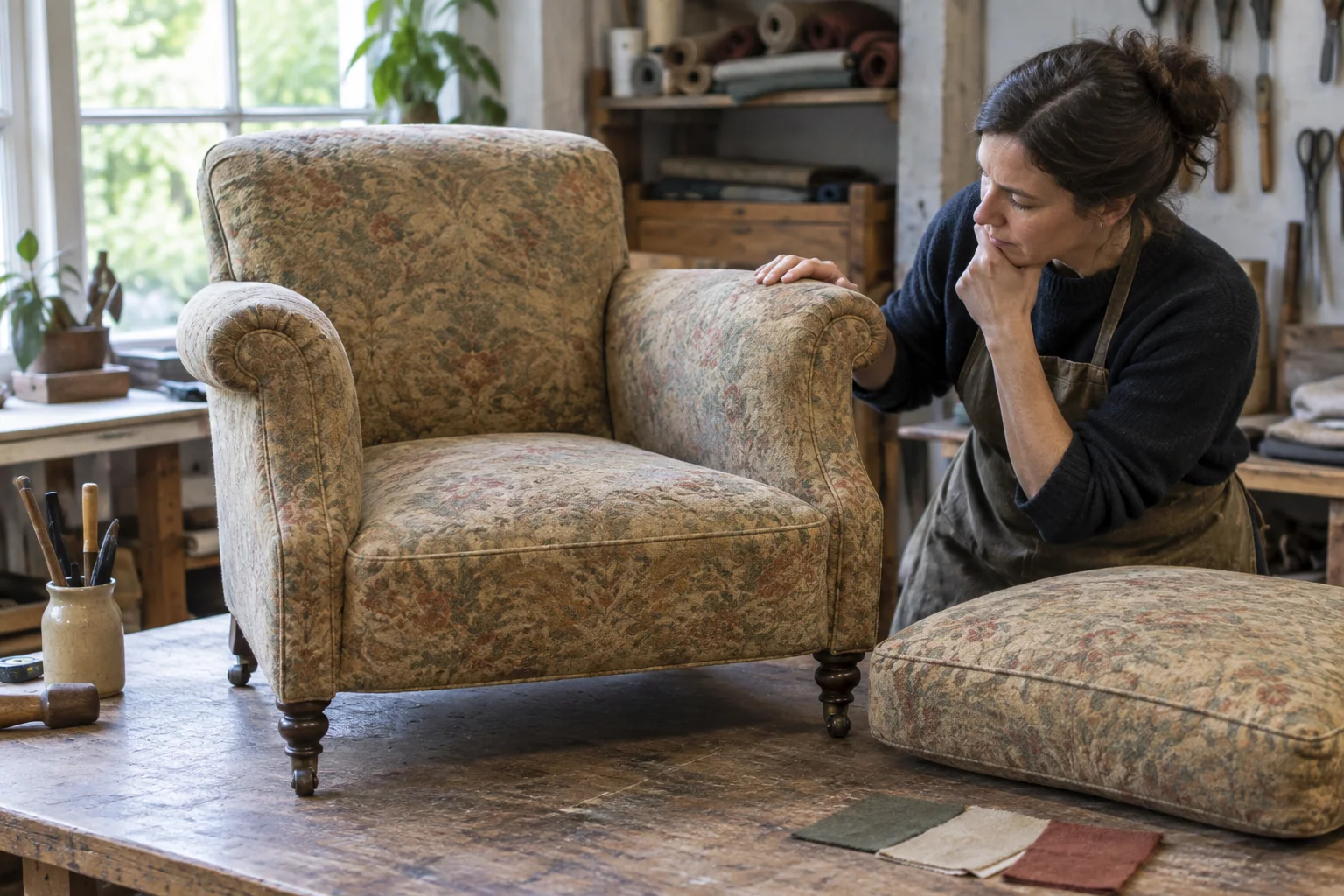
Keep the opening-up decision with the upholsterer
Begin with the chair’s history: previous reupholstery, storage, odours, staining and any known water or pest incident. Ask which layers have actually been inspected. A seller who has only lifted a loose cushion cannot give you the same information as the workshop that opened the fixed seat.
Do not pull out stuffing to identify it, shake an unknown filling into the room or attempt a home cleaning recipe. Leave the assembly intact until the person doing the work can assess it. “Looks clean” and “has always been in the family” do not answer a material or contamination question.
Photograph the whole chair and the existing seat shape before work starts. If the firm edge and upright position are qualities you like, record them. They can disappear in a rebuild even when the new fabric is beautifully fitted.
One documented repair keeps some layers and renews others
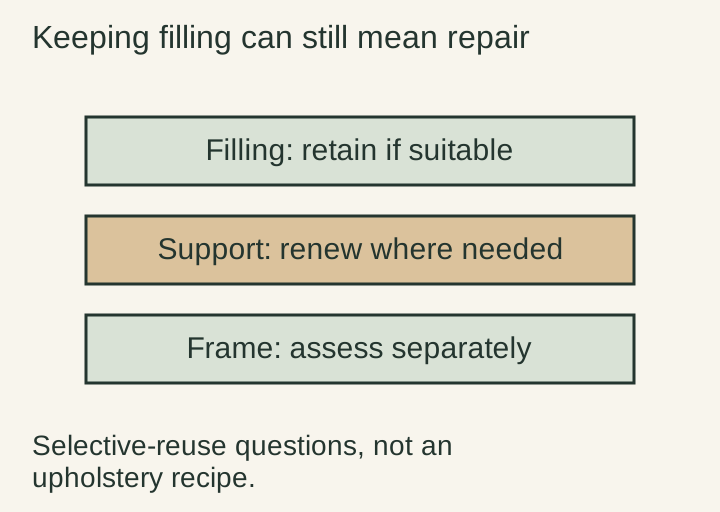
Bernacki & Associates illustrates a traditional upholstery build in which original springs and horsehair were reused while deteriorated webbing, burlap, muslin and cotton batting were replaced. That case demonstrates selective reuse. It does not establish that another chair’s springs or filling are fit to keep.[1]
Rowena Upholstery likewise describes traditional materials and the possibility of retaining some original material. The useful enquiry is which material can stay in this job, after inspection, and what must change around it. “Keep the horsehair” is not a complete work specification.[2]
For example, a chair can have useful filling but failed support below it. Reusing the filling does not make the support repair optional. Conversely, replacing every layer may be unnecessary if a careful assessment supports a more limited job. Ask the workshop to explain its choice in relation to the chair’s condition and your intended use.
Compare two scopes with the same promised result
| Part of the job | What the quote should explain |
|---|---|
| Frame and support | Condition found, repairs and materials proposed |
| Existing filling | What can stay, what must go and the reason |
| New covering and interlayers | Textile, necessary supporting materials and intended shape |
| Examination | Opening-up charge and how additional work is approved |
A reuse proposal and an all-new proposal are comparable only if both describe the finished chair. Ask about seat height, edge shape, firmness and how it will feel in ordinary use. A more padded seat is not automatically more comfortable if it changes your position against the back and arms.
Let the upholsterer explain any applicable requirements for the intended use or later supply. Reusing an old material is not a statement that a newly completed chair meets every current requirement. Keep the job record and material information with the furniture.
Agree that unexpected findings pause the work for a decision. This is especially useful when a low purchase price depends on being able to retain expensive existing work. An examination fee can be a sensible first commitment before a full rebuild is authorised.
Keep what has a useful job to do
Brief the upholsterer
I would like to preserve the chair’s existing shape where practical. Please assess the frame, support and filling separately, identify any material suitable for reuse, and explain the finished seating result and the alternatives. Please pause for approval if opening the seat changes the scope.
Choose selective reuse when the inspected materials and proposed work support it. Choose replacement when there is a concrete reason, not merely because old filling sounds unappealing. The aim is a chair with an understood construction and a seat you enjoy using.