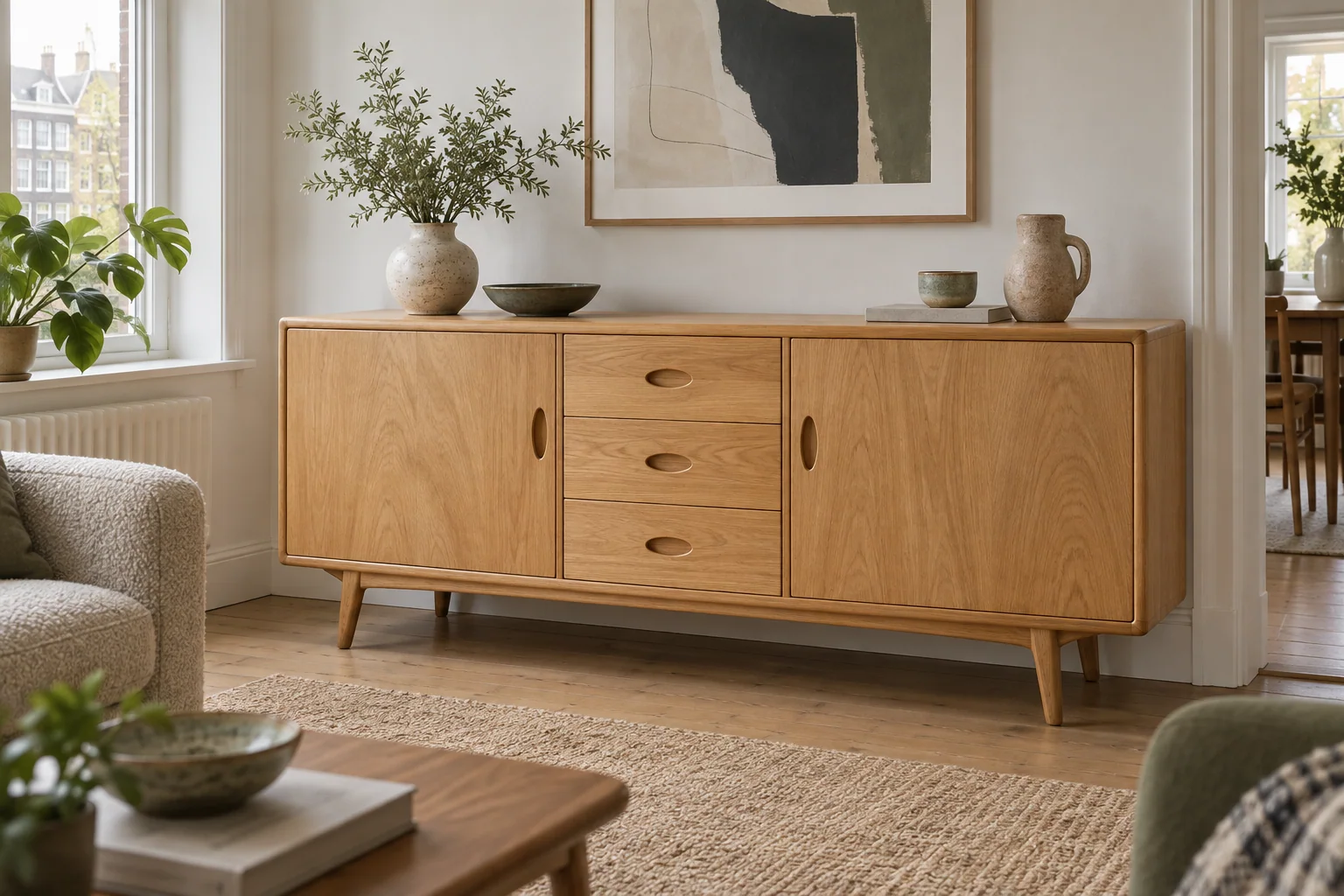
The difference is easier to see with objects on top
A seller-recorded 455 on Vinterior measures 156 cm wide, 44 cm deep and 69 cm high. Its description gives three drawers and cupboards with adjustable shelves. A Paul Beighton auction record identifies a 468 at 130 × 44 × 76 cm, with three cupboard doors above two drawers. These are measurements of those offered examples, not a complete factory specification.[1]
On those figures, the 455 occupies 26 cm more wall but sits 7 cm lower. Mark both outlines on the wall with removable paper rather than relying on the photograph’s proportions. Add the vase, lamp or artwork you want above it. A lower cabinet can leave a pleasing strip of wall in a small room, while the shorter 468 may release space beside a doorway.[2]
| Your priority | Start by considering |
|---|---|
| A long, low surface beneath artwork | 455, with the full width marked in the room. |
| A shorter stretch of usable wall | 468, including door and drawer opening space. |
| Frequently used small items | Compare the 455’s central drawers with the actual 468 interior. |
| Tall serving pieces | Measure cupboard openings, shelves and usable internal height on both. |
Ercol’s official catalogue archive is the place to investigate an uncertain model or period. Keep the catalogue date attached to any measurement you find there. A seller’s year estimate and a design’s introduction are different pieces of information.[3]
A beautiful front is not a storage plan
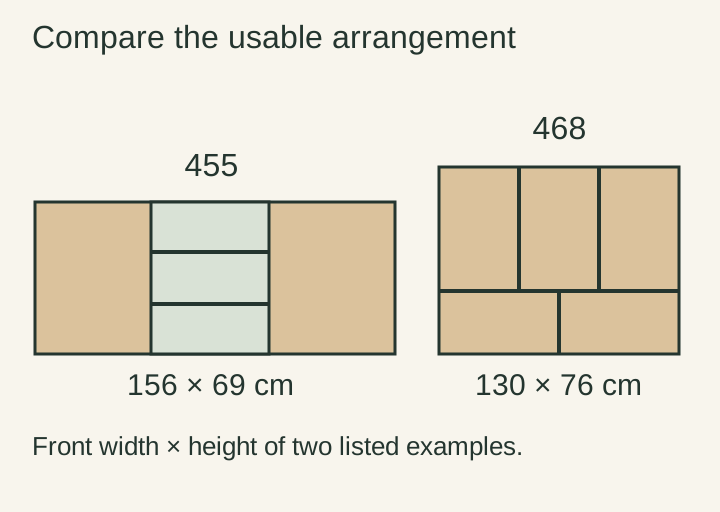
Measure your largest dinner plate, serving bowl and tall bottle with its stopper. Ask for clear internal dimensions and the opening through which each must pass. A shelf can be adjustable yet still have limited useful positions, especially if pegs or supports have been replaced.
For the 455, inspect the top central drawer and any removable cutlery tray separately. A surviving tray is useful when its divisions suit your utensils; it consumes depth when you want to store larger things. Ask to see the space beneath it, and confirm whether the tray and all intended shelf supports are included.
On the 468, photograph every cupboard open and both lower drawers. Do not assume the three doors create three equal compartments. Decide where the object you use every day will live, rather than giving the easiest compartment to things you take out once a year.
Start low when you inspect one
Have the empty sideboard demonstrated on a reasonably level surface. Note a door that drops as it opens, a drawer that scrapes in one place or a case that sits unevenly. Ask whether the problem follows the cabinet to another suitable position. That distinguishes a useful observation from a quick diagnosis based on a sloping shop floor.
Examine recessed handles at their edges and attachment points. A small old repair may be acceptable when it is stable and disclosed; an opening split where you pull every day deserves an assessment. Photographs of the backs and undersides of drawers can reveal work hidden behind a tidy front.
Ask about the castors and the wood around their fixings, including missing or mismatched replacements. Their presence does not make a loaded sideboard easy or safe to push across every floor. Agree how it will be moved, emptied and supported rather than using its wheels as a delivery plan.
Pay for the cabinet you will actually use
Compare the price delivered with all drawers, shelves, trays and supports ready for their intended jobs. If one example needs a replacement handle or castor, get that specific work priced. “Just needs a tidy” is not enough detail when the part is shaped to the cabinet.
A useful seller request
Could you show every compartment open, measure the clear shelf spaces, photograph the underside and castors, and confirm which trays and supports are included? Please note any door, drawer or handle repairs.
A few surface marks can be easy to live with. Discovering that your everyday plates cannot pass the cupboard opening is harder to forgive. Let the interior make the final choice between two very appealing silhouettes.