Start with daylight and the fabric label
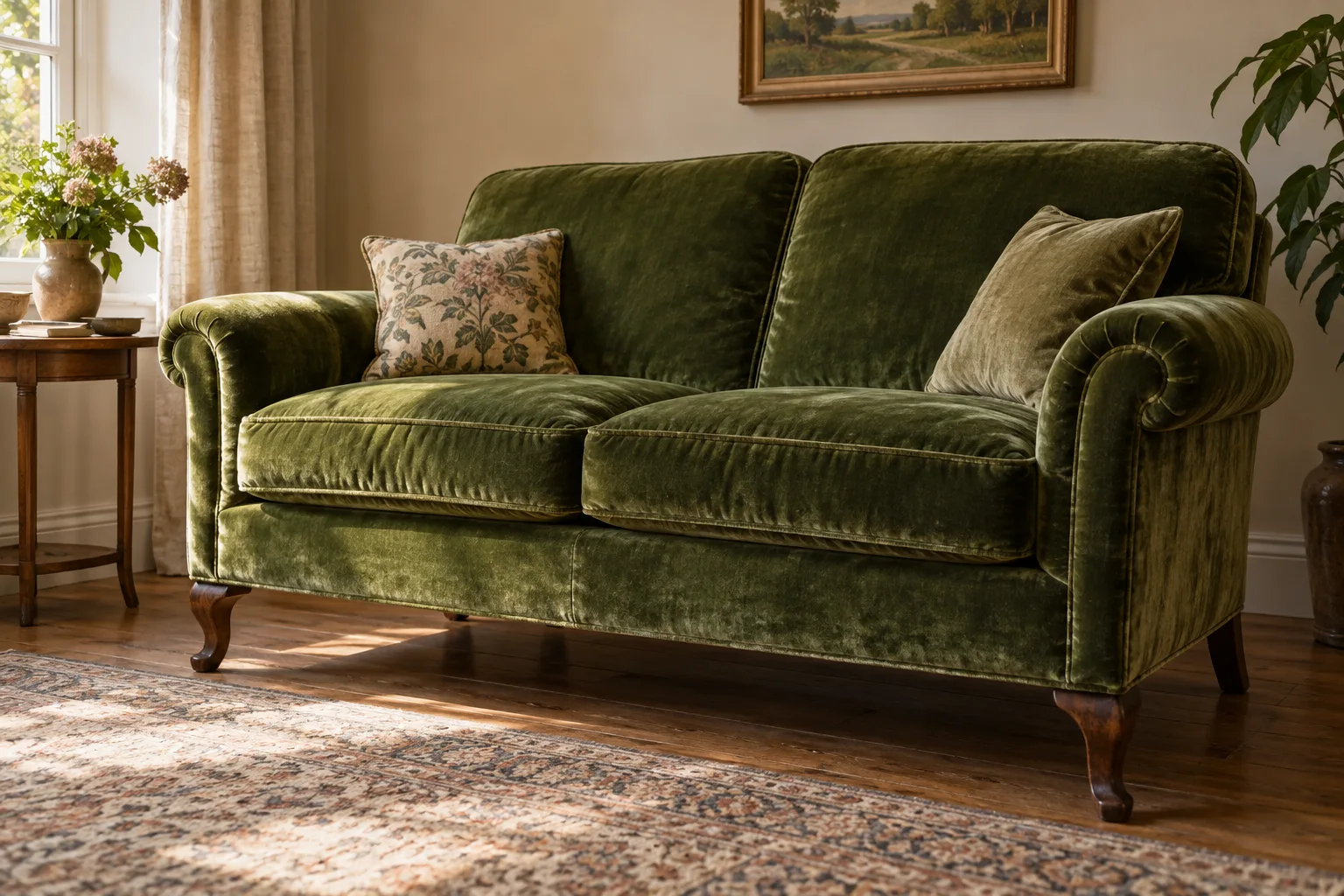
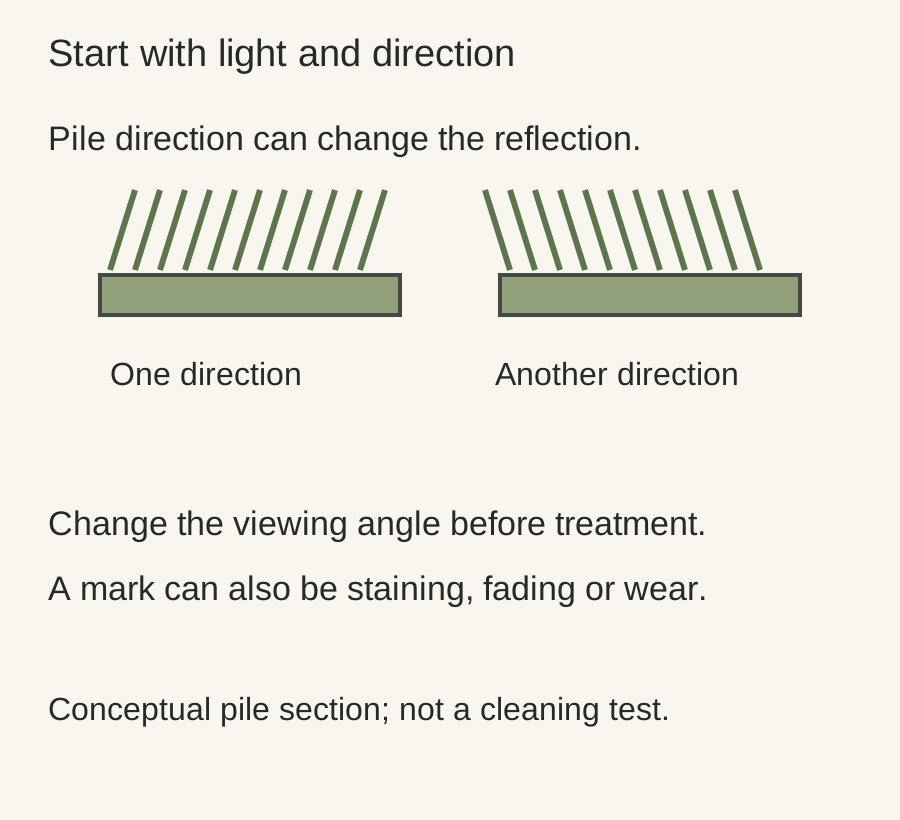
A green sofa can look almost black from one side and silver-green from the other. Start by describing that changing surface before deciding that it needs cleaning. You can make a useful first pass without touching the pile.
Follow three steps: photograph the whole piece and the patch from two directions in ordinary daylight; note whether the patch changes with the angle or remains a distinct ring; then look for a label, fabric invoice or re-covering record. Keep pressure, missing fibres and staining as separate possibilities. The observation helps a cleaner assess the job; it does not diagnose it.
Kvadrat’s maintenance guide explains that pressure marks can be a normal characteristic of velour, and that cotton velours need particular care compared with wool or mohair versions. That is a reason to identify the textile, not to assume every pale area can be brushed away.[1]
Find the fabric behind the description
Ask for surviving upholstery labels, an old fabric invoice or a record of re-covering. Record any known fibre blend, backing and previous treatment. If the original cloth remains, keep its history separate from replacement seat panels or later covers.
For a concrete example, Sahco’s current fabric named Velvet has a viscose pile and its product care panel says not to wash, with a mild professional dry-cleaning process specified. That instruction belongs to that product. A similar-looking old sofa cannot borrow it merely because the colour or sheen matches.[2]
A cushion zip may have been provided for manufacture or access to the interior. It does not establish that the cover was designed for household washing. Shrinking one cover can leave you with a clean piece of cloth that no longer fits its cushion.
Routine dust removal is a separate job
If the fabric is identified and stable, use its own routine-care instructions. For Kvadrat velour, the maintenance guide describes a suitable upholstery attachment and vacuuming in the nap direction. That is a dust-removal step, not a treatment for a ring or a worn patch; a powered carpet brush is a different tool.[1]
If the textile or its condition remains uncertain, your next step is the photo-and-label enquiry, not a trial with water or steam. Send the observations from the first pass and ask what must be identified before cleaning. A seller’s promise that a mark will come out is not that assessment.
If the fabric splits, sheds fragments, has detached trim or appears structurally weak, stop ordinary cleaning and ask a textile conservator. CCI’s textile guidance treats weak or fragmenting material differently from robust cloth; a domestic cleaning service may not be the right route for fragile historic upholstery.[3]
Before arranging professional cleaning, list the areas you want addressed and photograph their present appearance. Keep odour, a surface stain and flattened pile as separate requests. One may improve while another remains.
Refreshing pile is not deep steam cleaning
You may encounter apparently contradictory advice about steam. Kvadrat’s guide discusses steaming as one way of restoring pile on its suitable velours, yet advises against a steam cleaner for deep cleaning. Those passages address different operations. They are not a universal instruction to steam an unidentified vintage sofa.[1]
For your piece, ask the specialist which textile they believe is present, which process they propose and how they will assess colour change, shrinkage, backing and the effect on material beneath. Agree a discreet test and inspection after drying before extending treatment.
Describe the result you need
I want to keep this upholstery if practical. Here are the whole sofa, the affected areas in two lighting directions, labels and known cleaning history. Can you distinguish pile marking, wear and staining, explain the proposed treatment and its limits, and assess a small area before committing to the whole piece?
Choose between keeping, cleaning and re-covering
If the colour changes with the pile and the cloth remains usable, you may prefer to keep its lively surface. A permanent area of missing pile is a repair or re-covering question, not simply more cleaning. A stain which cannot be removed without an unacceptable change may also be something to live with.
When buying, do not pay as though an unresolved mark has already disappeared. Price the piece in its observed state, then add the assessment or work you genuinely intend. Old velvet can be beautiful without looking freshly upholstered; the aim is a chair or sofa you can enjoy using.
For the cover, padding and support beneath it, read the complete upholstery assessment.