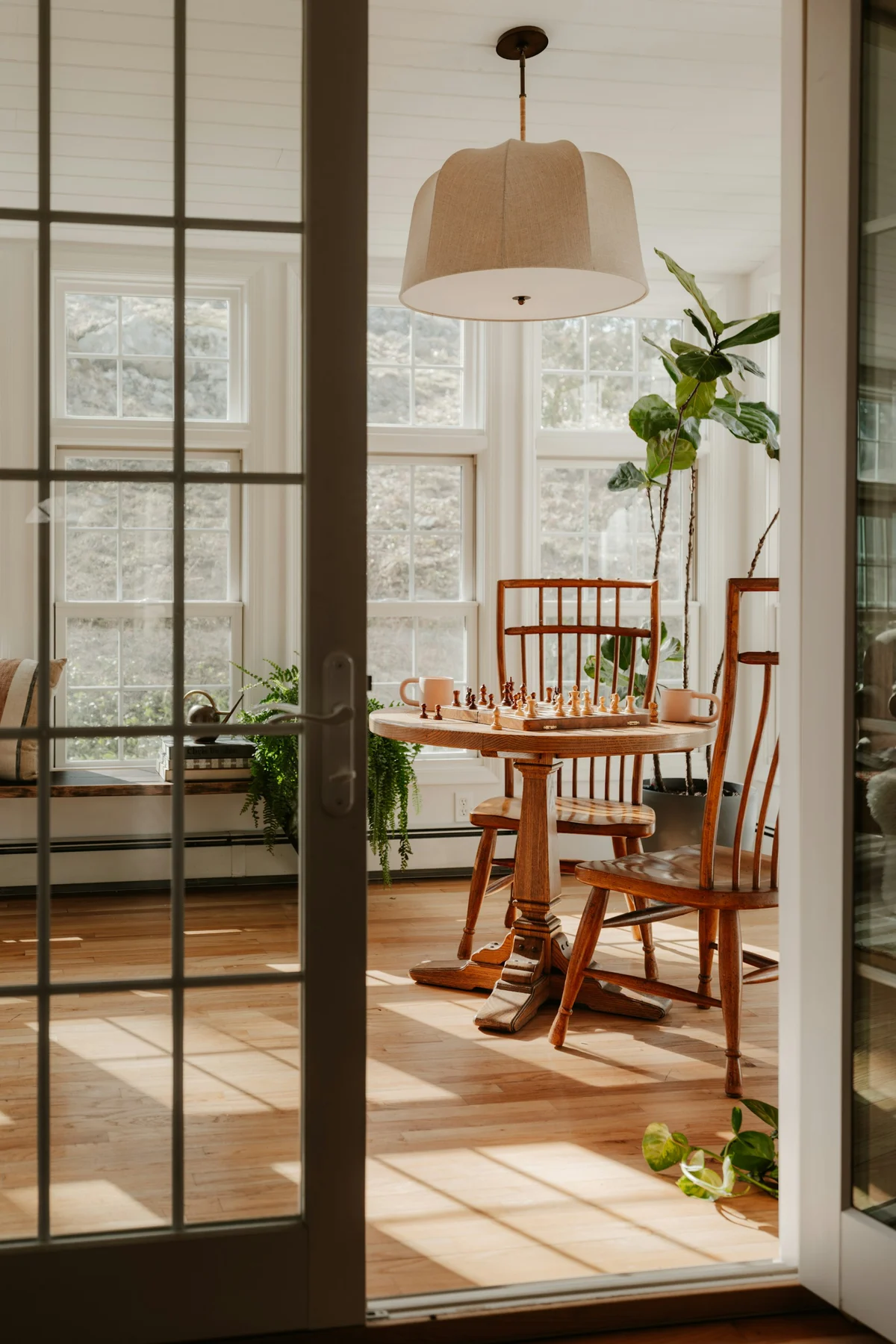
Visit your own room at the inconvenient times
Look at the room early in the morning, in the afternoon and after the heating has been off. Record where sunlight falls, whether glazing or adjacent surfaces become wet, and where the room feels markedly warmer or colder. If you have only lived there in summer, keep the winter question open.
A simple record of temperature and relative humidity can help you understand patterns, especially near a proposed cabinet or chair. Use it to compare positions and times, not as a guarantee that one reading makes the room suitable. If the room has persistent damp or a building problem, address that before selecting vulnerable furniture.
Decide whether the room functions as a heated living space, an occasional sitting room or a space you largely close for winter. That distinction is more useful than a listing’s “conservatory style” label.
The bright seat may be the hardest position
The Canadian Conservation Institute explains that light can alter wooden surfaces and finishes, and advises keeping furniture out of direct sunlight and away from heat sources. For a glazed room, apply that guidance to the actual path of the sun and the heater positions.[1]
Look for a table with one side in shade and the other in strong sun, or a chair whose back catches the afternoon light every day. Shading and a different position can be more useful than hoping a particular wood colour will hide a change.
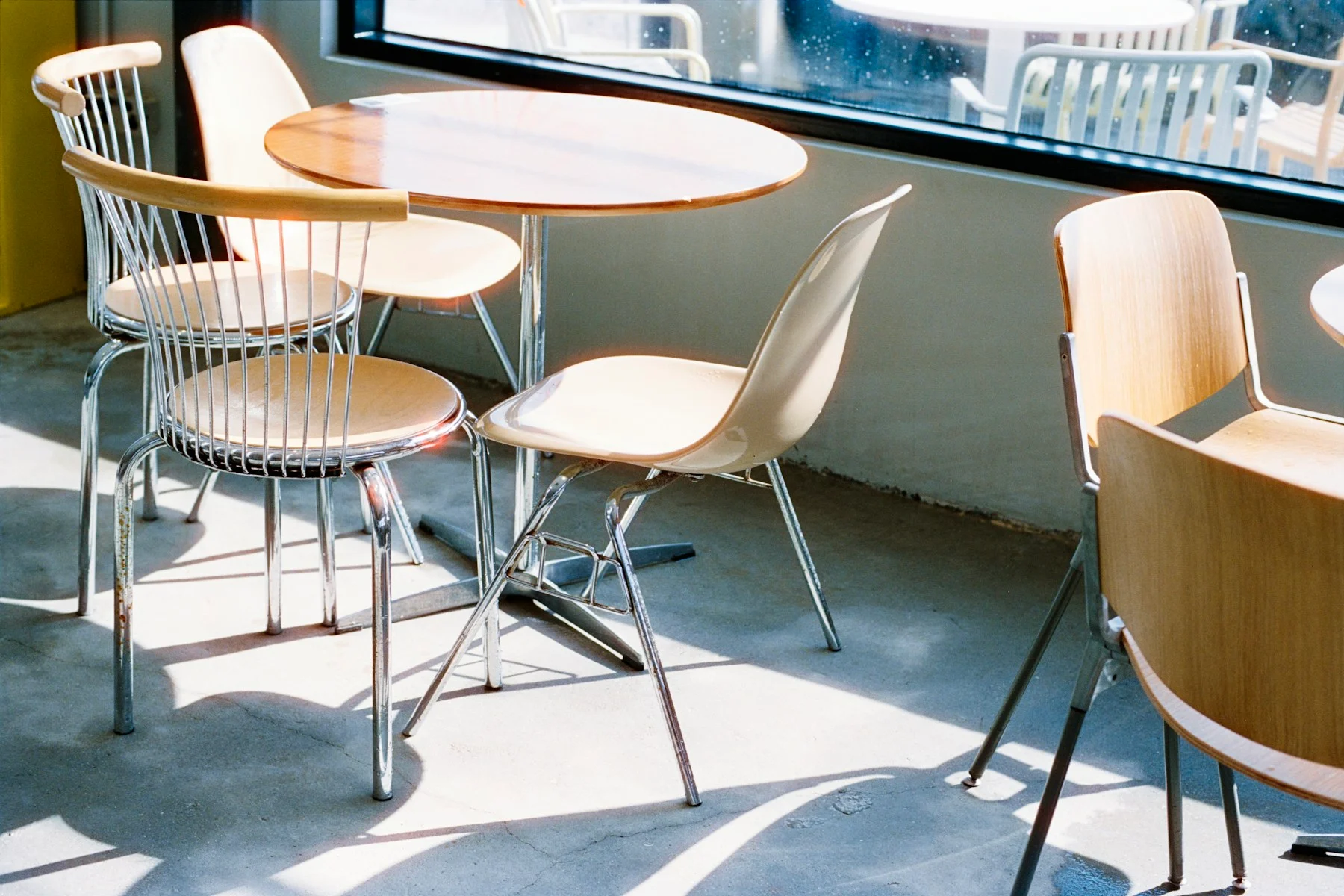
A window-side photograph can show where light lands at that moment. It cannot show the accumulated exposure, the temperature of the surface or the room in January. Ask the seller about uneven fading on a used set and make a separate plan for its new position.
Choose the object, not the conservatory stereotype
- Wood or veneered surfaces. Existing finish, old lifting or splits, and a position away from direct sun, heat and damp contact.
- Upholstery and loose cushions. Condition, stated care instructions and a realistic place to keep cushions when needed.
- Cane, wicker or rattan. Actual material and construction, sound strands/joints and the intended indoor or outdoor use.
- Metal frames and fittings. Condition around joints and feet, corrosion and any finish damage requiring assessment.
Rattan-like appearance does not establish weather resistance. Some pieces are woven from plant material and others from synthetic strands; both still need an identified construction and suitable use. If your room opens directly to weather or the furniture will move outdoors, consult the outdoor-furniture Guide for that separate exposure.
A sound used piece with an ordinary, serviceable finish may suit the room well. If preserving a fragile, important old surface is central to the purchase, discuss the intended environment with a conservator before accepting the listing.
Place furniture around the room’s conditions
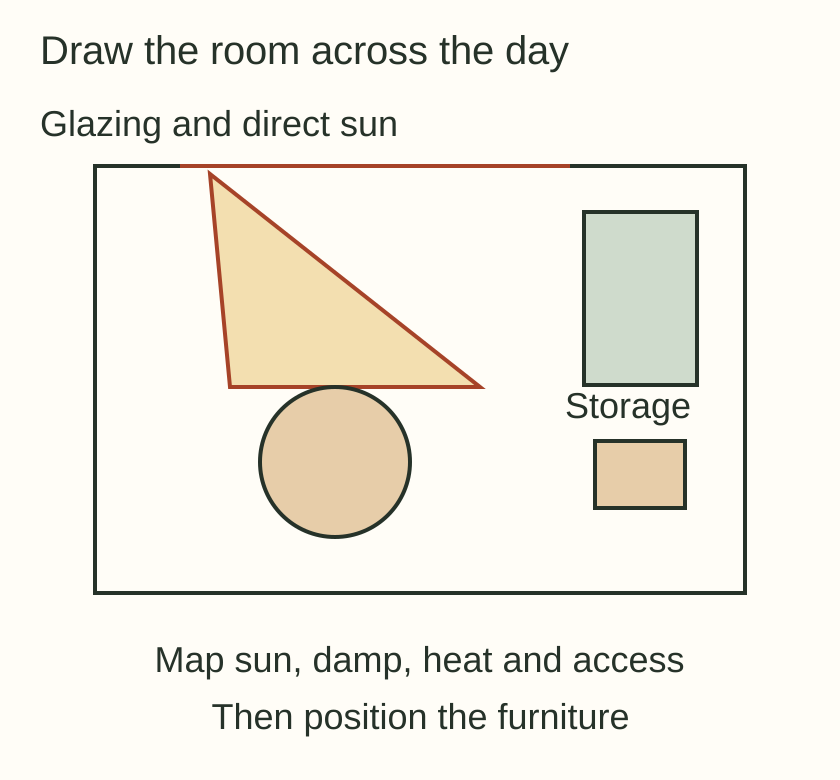
Mark the areas that receive direct sun, the cold or occasionally wet surfaces, heaters and the walking route to opening windows. Start with positions that keep furniture clear of those conflicts. Then add the table, chairs and the space to pull a seat out.
Imagine a compact room where the attractive corner sits directly beside cold glazing and a heater. Moving a cabinet to the interior wall may be a better solution than buying an old cabinet and immediately adding coatings to it. The right gap depends on the room, appliance instructions and piece; do not substitute one universal distance.
Account for plants too. Watering, splashes and damp pot bases need their own arrangement away from old furniture surfaces. Keep enough access to notice a leak rather than concealing it behind a chair.
Ask how it spent its last winters
When viewing a used conservatory set, ask whether it stayed in the room year-round, whether the space was heated, and whether cushions were stored elsewhere. Those are seller reports to compare with the condition you can inspect.
Look at concealed lower areas, cushion undersides, joints and the sides nearest the old windows. Compare uneven colour, loose veneer, split joints, musty smells or corrosion with the piece’s history. None should be waved away simply because the furniture came from a sunny room.
Decide which changes you are comfortable keeping and which require a quote. Reupholstery, strand repair and finish treatment can change the value of a supposedly inexpensive set. Do not plan a generic oil, varnish or waterproofing treatment without identifying the material and existing finish.
Include the new environment in your request
Message to the seller
This would go in a [heated / seasonally used] glazed room. How was the furniture used and stored through winter, and are any finishes or cushions replacements? Could you show undersides, lower joints and any fading, lifting, damp marks or corrosion, and provide the material and care information you have?
Choose the combination of furniture and position that you can look after comfortably. If the room’s conditions remain unresolved, start with fewer suitable pieces and learn how the space behaves before filling it with surfaces you want to preserve.