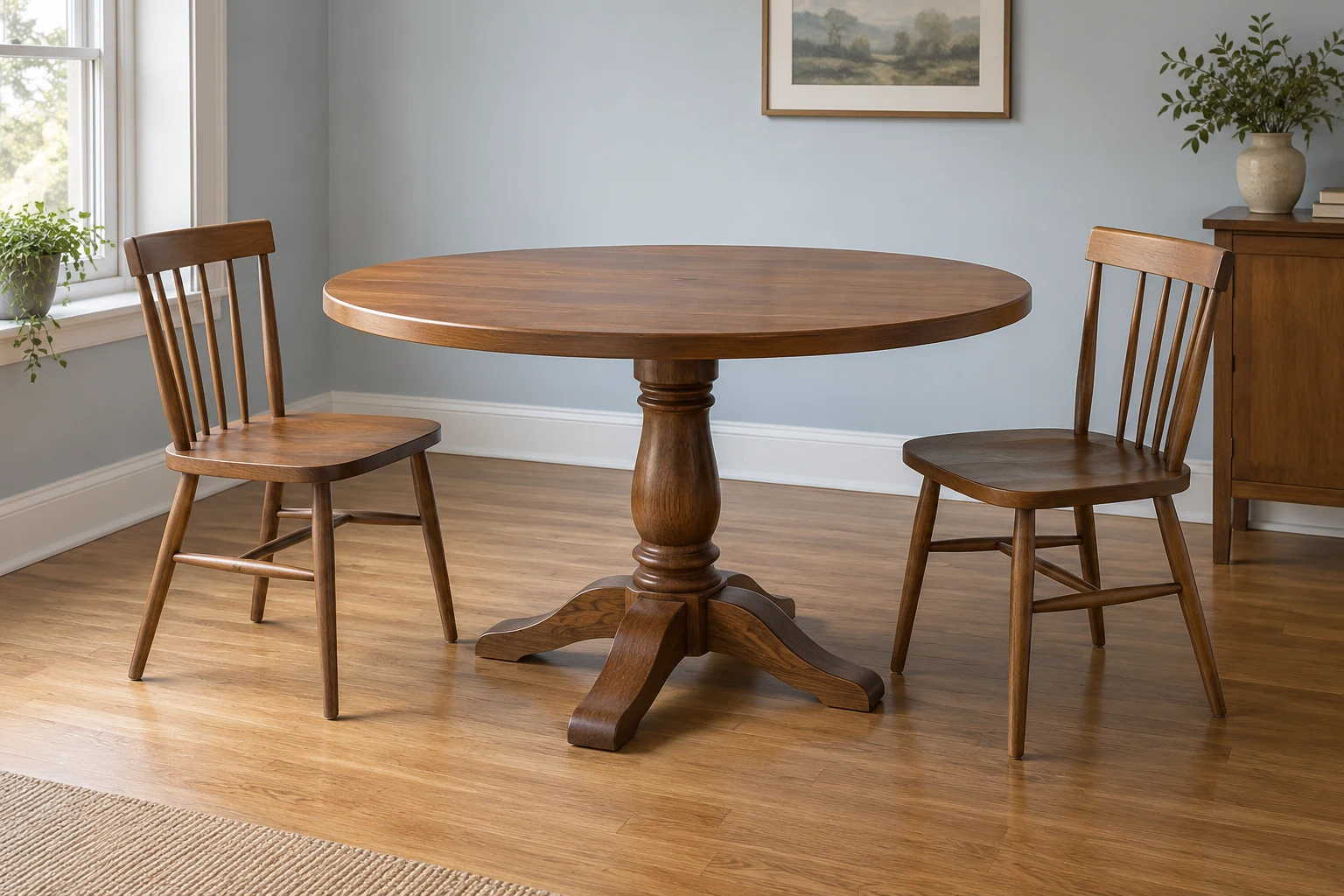
Draw the part the listing leaves out
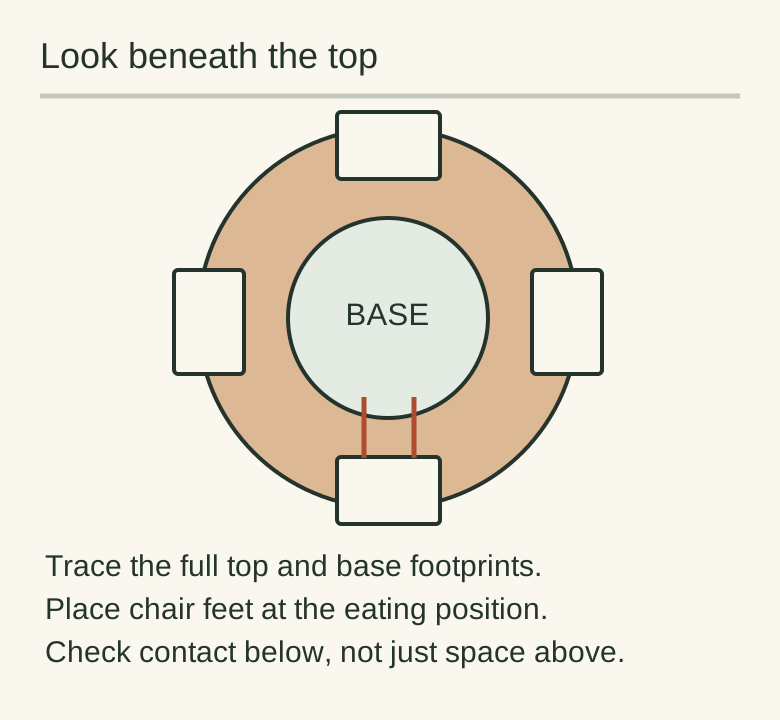
Trace the tabletop on a simple plan, then add the full base footprint underneath. A circular plinth, splayed feet and a twin-pedestal arrangement occupy different space. Record the widest base projection and any raised rim where a chair foot might land.
Position the chairs at a realistic eating distance. A base that looks unobtrusive from above can stop a chair moving close enough or make somebody straddle a projecting foot. Try the end positions as well as the sides of an oval table.
Do not infer height from the silhouette
Knoll publishes different sizes and versions within the Saarinen pedestal-table collection, including a lounge-height version. A familiar outline therefore does not establish dining height. Compare the documented variant and the measurements of the exact piece being offered.[1]
Ask for floor-to-top height and floor-to-lowest obstruction where your knees will go. Include any fixing plate beneath the top. If your chair has arms, compare their highest point with the obstruction, leaving room for ordinary movement rather than arranging an almost-touching showroom fit.
Inspect the connection that carries the top
Ask for photographs of the underside and where the column meets the top and foot. Record missing fixings, cracks, loose collars, bent parts and previous modifications. A heavy top is not evidence that the assembly is stable, and a replacement top may change the original relationship between parts.
Do not test a suspect table by leaning on the rim. Have the seller demonstrate only ordinary empty-table handling, and stop if the connection moves. If the top or base is heavy, arrange suitable handling rather than tipping it casually for a photograph.
Four questions beneath the top
- Does the assembly match its documented design?Ask about replacement tops, bases and fastening parts.
- Is anything moving that should be fixed?Locate the movement rather than asking for more force.
- What is the floor contact?Check the complete foot or plinth and any protective fittings.
- How will it travel?Establish whether separation is intended and who is qualified to do it.
Count seats by trial, not circumference alone
A round top may allow flexible positions, but diners still need room for their shoulders, place settings and legs. Mark your chairs and try the normal arrangement with the people who will use it. A larger diameter also changes how far the centre of the table is to reach.
For a worked comparison, sketch two tables with the same top diameter but different bases: a compact central foot and a wide four-pronged base. They offer the same nominal top area. The second may require chairs to sit between the prongs, reducing the freedom that attracted you to a pedestal in the first place.
If the table extends, repeat the check in the larger state. Do not borrow a seating promise from a fixed table or another version of the design. The useful result is a seat plan for this table in your room.
Request the missing underside evidence
Ask the seller
Please provide the tabletop dimensions, overall height, lowest underside clearance and full base footprint. I also need views of the top-to-column and column-to-foot connections, details of any replacements, and the intended dismantling method for transport.
Choose the table once fit and assembly make sense together. If the base prevents comfortable seating or its connection needs work, a more generous-looking top does not compensate for that problem.