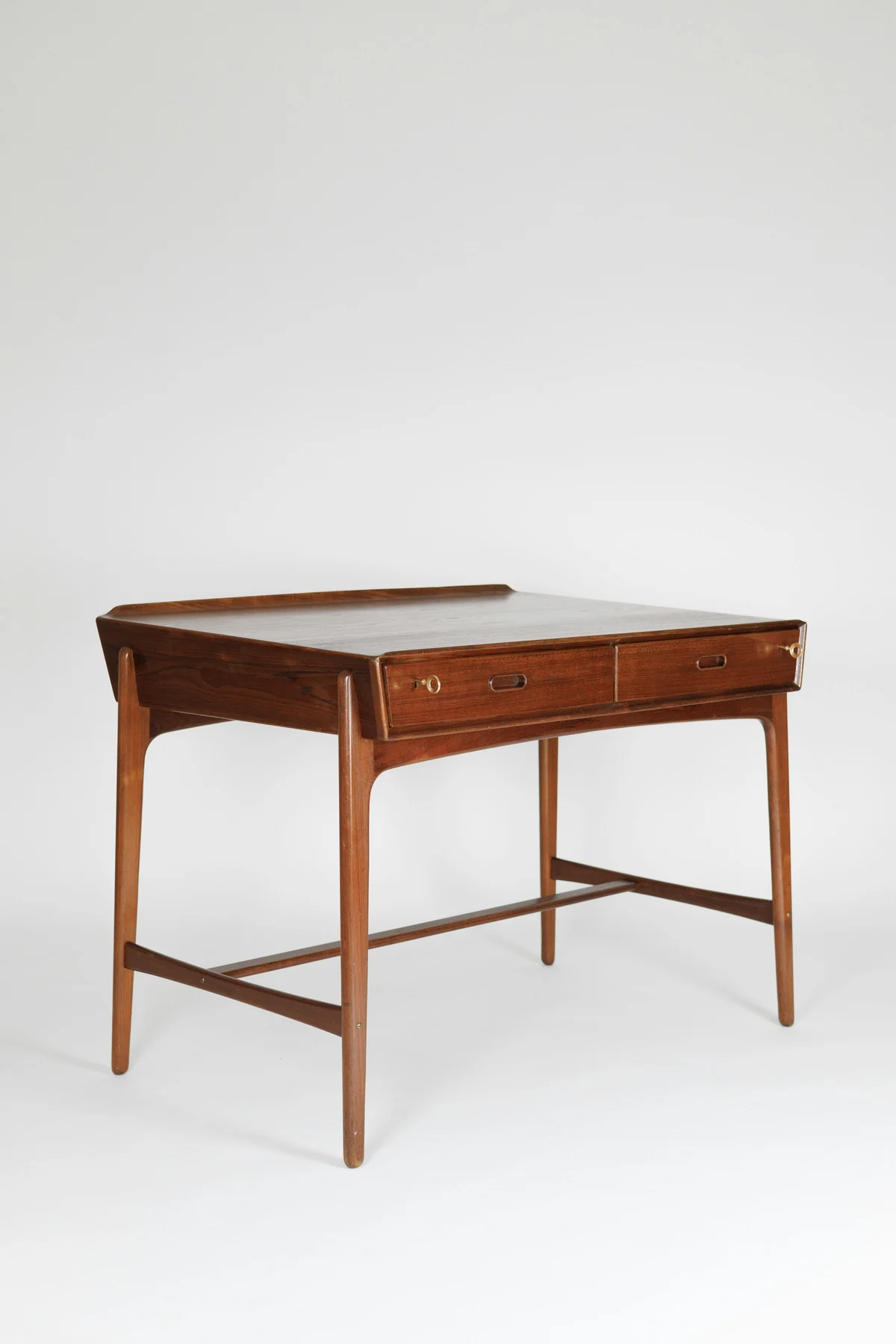
Measure the hallway at its narrowest point
Include skirting, door frames, radiator valves and anything mounted on the opposite wall. Then measure the candidate console at its maximum depth, including the rear projection, handles, bowed front and feet. The useful passage is the space left between those real obstacles.
An illustrative 120 cm hall minus a 35 cm furniture projection leaves 85 cm before allowing for anything on the opposite side. That arithmetic is a screening example, not a recommended or compliant passage width. Try the route with the people, bags and mobility equipment that use it, and check any applicable access or escape requirements.
Open the door before placing the lamp
Draw the front door and nearby room doors through their full swings. Include handles, an open console drawer and the person standing in front of it. A piece can fit when everything is shut and still prevent somebody entering with shopping.
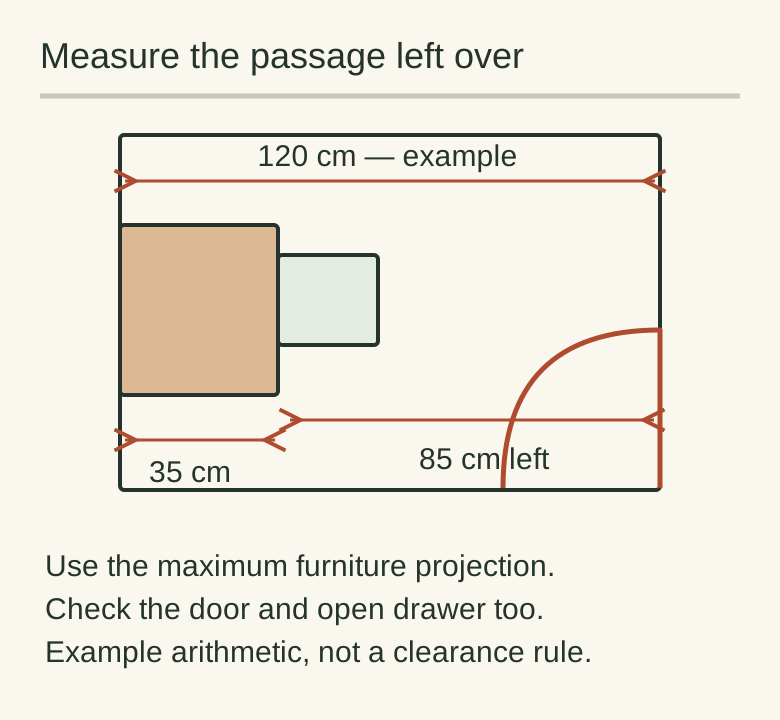
Use a paper footprint or a floor-safe marking method to rehearse the arrangement. Walk past with a coat and bag. If you must turn sideways every time, choose a shallower object or another location rather than relying on the furniture’s visual lightness.
Check how the console is meant to stand
Ercol’s current Windsor console, model 3865, is specified at 79 × 41 × 72 cm and the maker says it should be fixed to the wall for added stability. This is an exact product example: even a relatively small hall table can have an installation requirement.[1]
For a vintage piece, ask whether it is intended to stand independently or attach to a wall. Inspect the back, feet and existing brackets. A narrow base, an attached mirror or an opening drawer may change the installation question. Have suitable fixings and the wall assessed for the actual assembly.
Do not use a mirror leaning on the top as a substitute for secure support. If a mirror is included, record its fittings and weight where known and arrange its installation separately or as the documented combined design requires.
Give the small surface a simple job
Choose what genuinely needs to land here: keys, post and perhaps a lamp. Measure a tray and lamp base together, including the shade’s projection. A decorative top that leaves objects perched at the edge is less useful than a slightly plainer surface that contains them.
Check the console in use
- TopUsable area after a mirror base, gallery or lamp is included.
- DrawerClear opening, internal dimensions and room to stand in front.
- CableA route that avoids doors, drawers and the walking passage.
- FeetSound contact and protection suited to the floor.
Look at the surface from the doorway in everyday light. A worn patch can be part of the object’s appeal, but establish care before placing wet umbrellas, plant pots or hot items on it. Keep daily clutter within the useful surface instead of expanding it into the passage.
Send dimensions that explain the constraint
Ask the seller
The console would sit in a hall measuring [clear width] at its narrowest point. Please provide its maximum depth including feet and handles, open-drawer projection, back photographs and any intended wall fixings. Is a mirror or upper section included, and how is it secured?
Choose the piece only after the doors, daily route and installation work together. A hallway console succeeds when it offers a useful place to put things while the hallway continues to be easy to pass through.