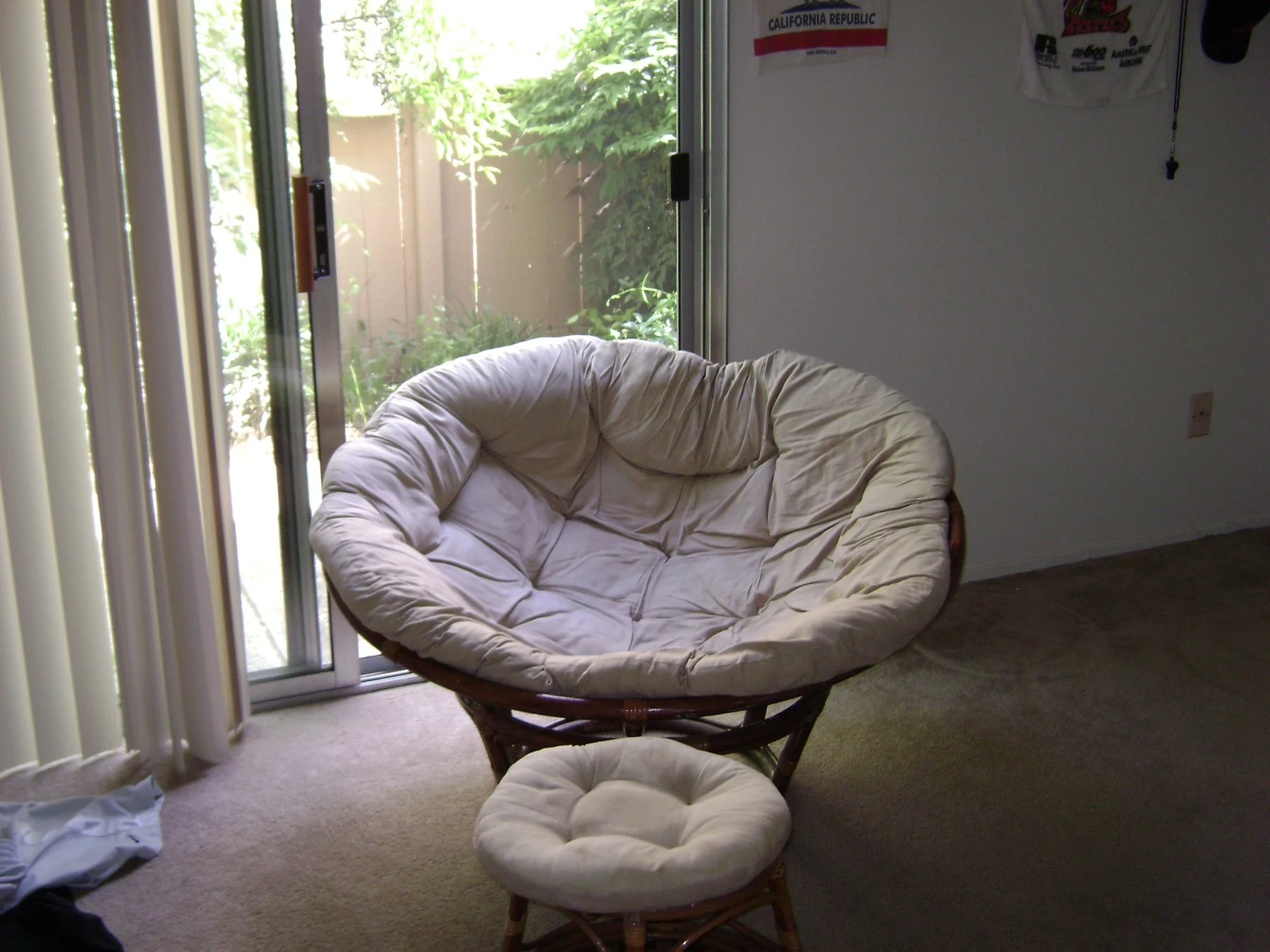
Start with the position you enjoy
Sit in the chair you already own, in the position you use for reading or relaxing. Note where your feet naturally want to rest. Compare with a stable footrest you find comfortable, rather than balancing books or boxes beneath your legs. If you need a footrest for a medical or mobility reason, use the advice appropriate to that need.
Record the occupied seat height, the angle of your thighs and the distance to the support. A deep soft sofa may settle far below its catalogue seat height, while a taut upholstered chair changes much less. The same ottoman can feel very different beside them.
Measure the support surface, not the tallest detail
Herman Miller publishes separate dimensions for its Eames Lounge Chair and Ottoman and distinguishes chair size options. Even a designed pair is documented as two objects. For a vintage purchase, compare the exact parts and their condition rather than assuming any similarly shaped ottoman will reproduce that relationship.[1]
A domed cushion, raised piping and a hard frame edge can make the highest point a poor description of the support your legs receive. Ask for front and side views, top dimensions and the height at the usable central area. If possible, try the actual piece with your chair.
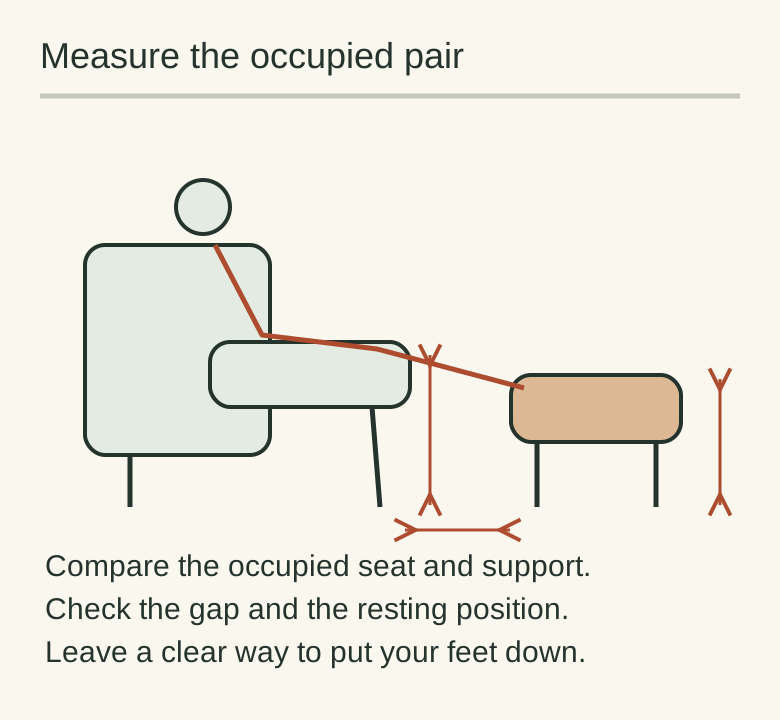
Check comfort without inventing a perfect number
Try the intended position for long enough to notice whether you keep shifting. Are the legs supported where you want them, or do your heels land on a hard edge? Does the footstool have to sit so far away that you slide forwards in the chair? Can you put your feet down and stand up normally?
For example, a tall firm ottoman may look proportional beside a sofa when both are empty. Once the seat cushion compresses, the support can feel unexpectedly high. A side photograph taken during an ordinary seated trial explains that difference better than two catalogue measurements.
Record the relationship
- Chair occupiedSeat position and height with its usual cushions.
- Footstool in useUsable width, support surface and firmness.
- Getting upA clear place to put both feet and a route out of the seat.
- Other usesConfirm separately if the piece is also intended as seating or a table.
Look under the upholstery
Ask for the accessible underside and close views of the feet. Note loose joints, damaged webbing, sagging padding and replacement castors. A low ottoman is still a structure with a load path. Do not assume it is suitable for standing or extra guest seating unless that use is established.
If reupholstery is planned, discuss the finished height and firmness before choosing fabric. Changing the cushion can alter the relationship you have just measured. Keep the intended chair and sitter in the upholsterer’s brief.
A tray can make an ottoman useful for occasional objects, but check its stability on the actual cushion. Drinks beside a flexible upholstered surface require a different arrangement from a firm side table.
Keep a route around the pair
Ask the seller
Please send the footstool’s top dimensions, usable support height, side profile and underside. Is the filling or frame repaired, and is the piece documented for foot support, seating or another use? I am comparing it with a chair whose occupied seat height is [measurement].
Mark both footprints in the room before buying. A comfortable chair-and-footstool pair can occupy much more depth than the chair alone. If the only way past it is to step over somebody’s legs, revise the arrangement before adding the second piece.