A construction family with many personalities
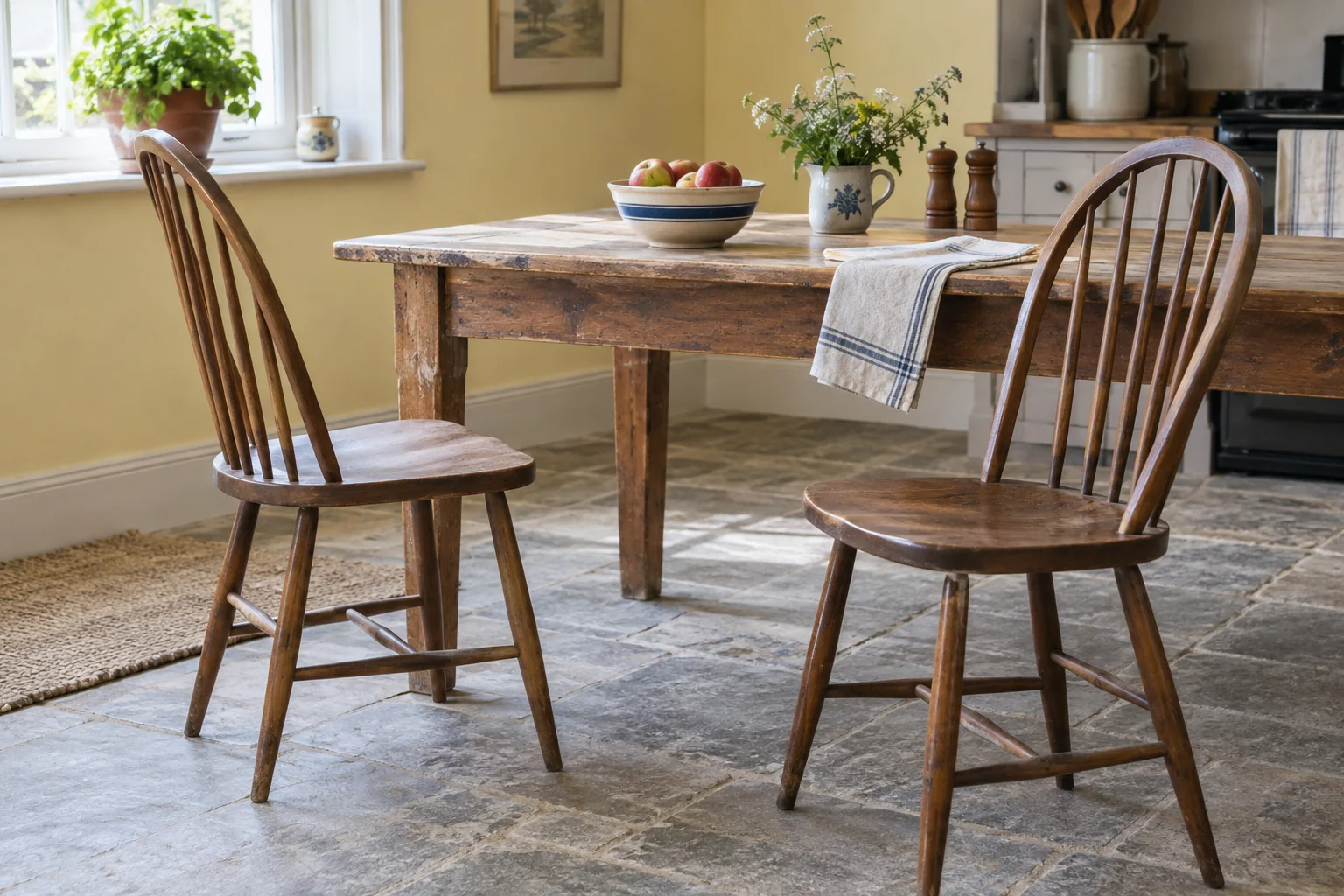
Windsor chairs join the back and legs into a substantial wooden seat. Within that broad idea are low backs, comb backs, bows, arms and many regional variations. Museum Wales records a late eighteenth-century comb-back example in oak and ash; Colonial Williamsburg documents a Windsor with several different woods in its construction. One species throughout is not a universal test of a correct Windsor.[1]
That variety is part of the appeal. A plain kitchen set can feel relaxed alongside a more elaborate chair at the head of a table. The word Windsor itself does not establish a maker or date, however. A later chair can repeat an older form very closely. Buy the seating arrangement first and pay a historical premium only for evidence that supports it.[2]
Let the wooden seat tell you whether it fits
A photograph from above reveals the outline of the seat, but only sitting tells you how its hollow and front edge work for you. If the frame is sound, try the chair at a table of the intended height. Notice whether your thighs are supported, your feet settle comfortably and the front edge presses behind your knees.
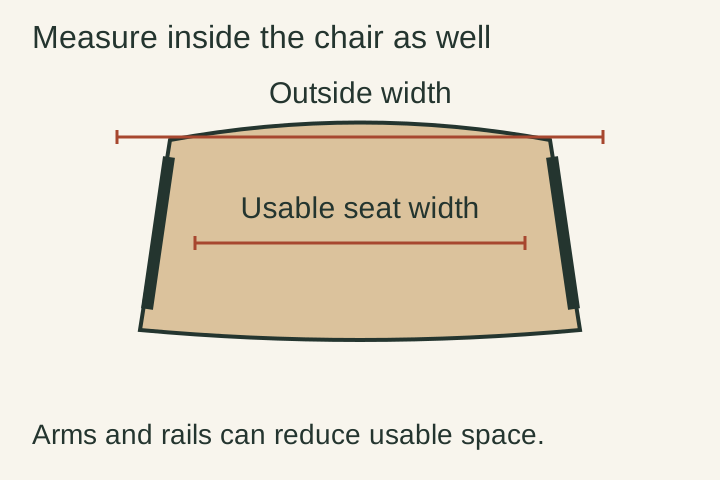
With an armchair, measure the usable space between the arms where your hips and forearms actually sit. Then measure arm height against the underside of the table, including its apron. Overall chair width will not answer either question. A cushion may soften a hard seat, but it also raises you towards the apron and changes the back’s contact point.
| Measurement | Use it for |
|---|---|
| Usable seat width and depth | Whether your body fits inside the shaped seat and any arms. |
| Occupied sitting height | Your relation to the tabletop and room for your thighs. |
| Arm height and widest span | Whether the chair can approach and tuck beneath the actual table. |
Follow every part into the seat
Examine the top, edges and underside without turning a heavy or fragile chair over unsupported. Note cracks that cross a leg or back-stick attachment, looseness where parts enter the seat and old blocks or metalwork added beneath it. A dark line can be a grain feature, an old repair or an open split; a second view and the seller’s account are better than a confident guess from one image.
Watch the chair on a level floor. A leg that rocks because of an uneven floor is different from a joint moving within the seat. Do not twist the back or lean hard on the arms to demonstrate strength. If movement is already visible, ask for an assessment before using it.
Previous repairs are not disqualifying. What matters is what failed, how it was repaired and whether the surrounding wood can continue to do its job. A tidy-looking added screw is not by itself a repair report.
Make an intentional mixed set
Consider a hypothetical six-chair purchase: four chairs have a similar seat height and two have lower, deeper seats. They may look charming together, yet put two guests below the others at dinner. Measure and try those two before assuming a cushion will solve it. Conversely, differences in back height may be visually noticeable without changing the seated experience.
Line the chairs up, number them and compare seat profiles, stretchers, leg spacing, arm heights and previous work. Ask whether the seller is describing a factory set, a historically associated group or a recent decorative assembly. Each can be a sensible purchase, at an appropriate price and with an accurate description.
Keep the history and the dinner test together
Message to adapt
Please send a numbered view of every chair, seat and underside, with seat height, usable width and any arm height. Which chairs have repairs or loose parts, and what supports the date or set description? I would like to try the two most different chairs at a dining table before buying the group.
Choose the set whose differences you will enjoy every day. A back silhouette brings character to the room; a well-fitting seat is what keeps people at the table after the plates are cleared.