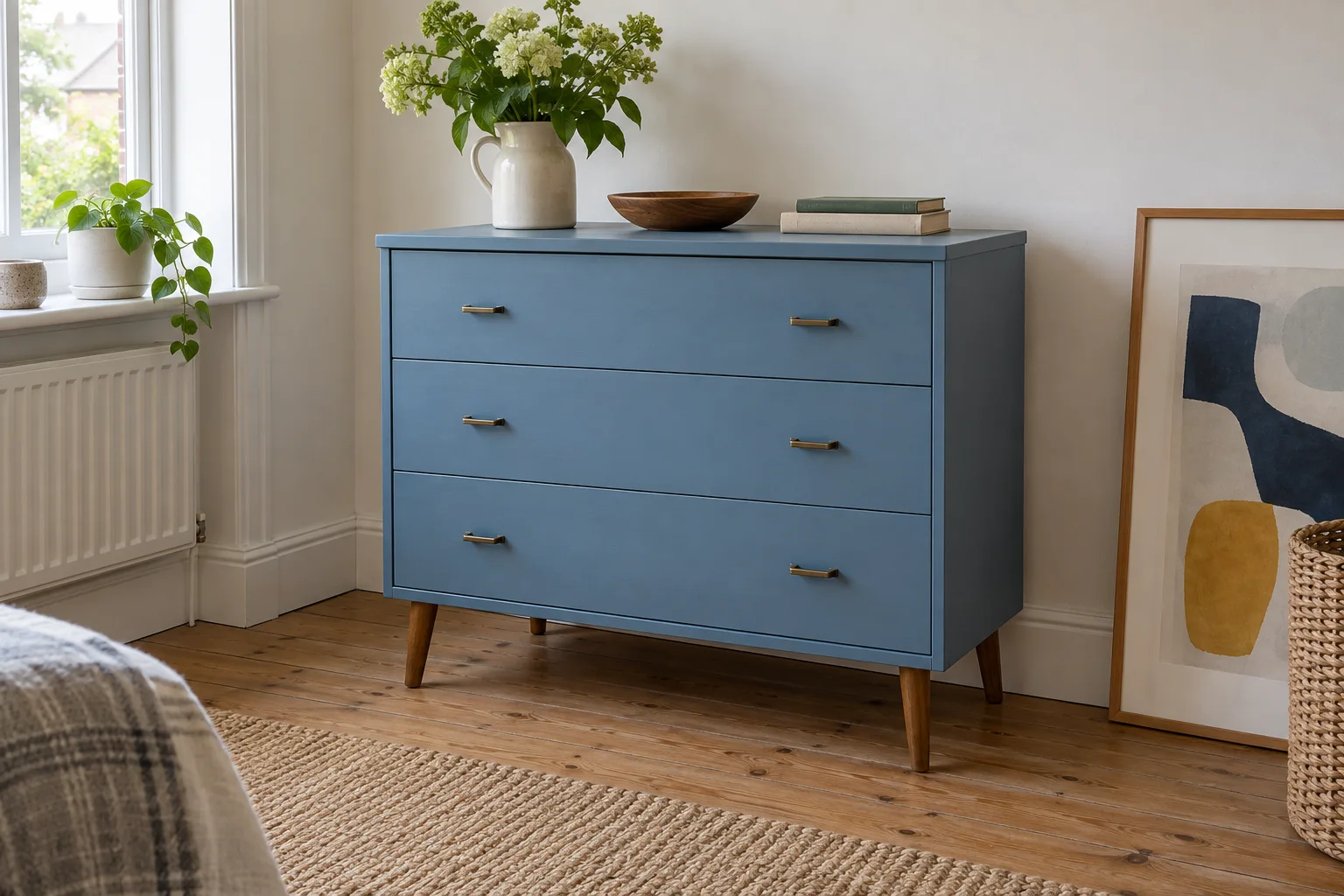
The photograph in your head is the risky part
A painted chest in an advert can quickly become a beautifully pale wooden chest in your imagination. That transformation is an assumption. The original cabinet might combine veneered faces, solid edges and a plainer substrate. Someone may also have filled damage before painting it.
Write down what attracts you without mentioning the future finish: useful drawer sizes, a graceful outline, a manageable footprint or handles you love. If none of those survives without a flawless stripped appearance, look for an already exposed example instead.
Paint is not always an unwanted later layer. Some furniture was designed around a painted finish, and an old decorative surface can be part of the object’s interest. CCI’s care guidance treats finishes and past treatments as consequential features, rather than a disposable layer over the “real” furniture.[1]
Look for evidence without making a test patch
Ask for photographs of existing wear, the underside of the top, drawer edges and the back. Look for visible veneer boundaries, filled patches, replacement boards and differences between trim and broad panels. Do not scrape the seller’s furniture or ask them to make a new chip to satisfy your curiosity.
An unpainted drawer interior may use a different timber from the front. A wood-grain pattern at one chipped corner does not prove a solid top. When the finish is the deciding factor, ask a restorer what a controlled assessment could establish and what would remain unknown after it.
Thin profiles, curved mouldings and carved details also change the work. They provide more edges and recesses where old coatings can remain. Your finish brief should allow the restorer to preserve a sound detail rather than remove material simply to chase a uniform colour.
A successful restoration can still show old paint
A 2019 workshop account from Sacred Roots Ohio describes a nine-drawer Kent Coffey Penthouse dresser that had been painted white, stripped and refinished. Its next restoration included missing veneer and drawer-slide work. The owner and restorer agreed that some deep damage and white paint in the grain would remain.[2]
That is a useful outcome to picture before buying: an attractive, usable older chest with an acknowledged history, rather than a flawless reset. The account is one restorer’s documented job, not a price estimate or a treatment recipe for your candidate.
There is another worthwhile outcome: keeping a finish. MPF Conservation documents an American cherry chest whose work included joinery and drawer repairs while its original varnish was retained and treated. It is not a painted-chest comparison, but it demonstrates that solving function and preserving a surface can belong in the same project.[3]
Agree the result before choosing the method
| Desired result | What must be acceptable |
|---|---|
| An exposed timber surface | Some colour variation, visible infills or retained traces may remain. |
| A sound painted piece | The existing paint needs assessment; repainting does not remedy failed material below. |
| Preserve the established finish | Cleaning and local repair may leave substantial age and wear visible. |
Request a scope which separates coating assessment, structural work, veneer or trim repairs and the final finish. Ask for a stop-and-contact point if removal reveals missing veneer or a major earlier repair. A capped assessment is easier to agree than an open-ended instruction to “make it beautiful”.
HSE identifies dry sanding and heat-based removal of old paint among lead-exposure risks. Unknown coatings need an appropriate assessment and controlled work plan; do not make dust or use heat to investigate them at home. The separate lead Guide covers the buying questions.[4]
Buy the object and an achievable finish
Compare the purchase, transport and assessed work with a suitable piece already in the condition you want. Add the inconvenience of storing an unfinished cabinet and arranging workshop visits. A project can still be worth it because you love this particular piece, but that is different from assuming a cheap flip.
Brief for a restorer
I like this cabinet’s shape and want [the intended result]. Here are whole views and existing exposed areas. Please assess the likely construction, coating issues, repairs and limits of colour matching. What would you inspect before committing to the job, what outcome is realistic, and at what discovery should work pause for a new decision?
If you would be disappointed by every result except perfect bare wood, let another buyer take this project. If the cabinet is useful and you can enjoy a realistic finish, its layers need not be a reason to leave it behind.