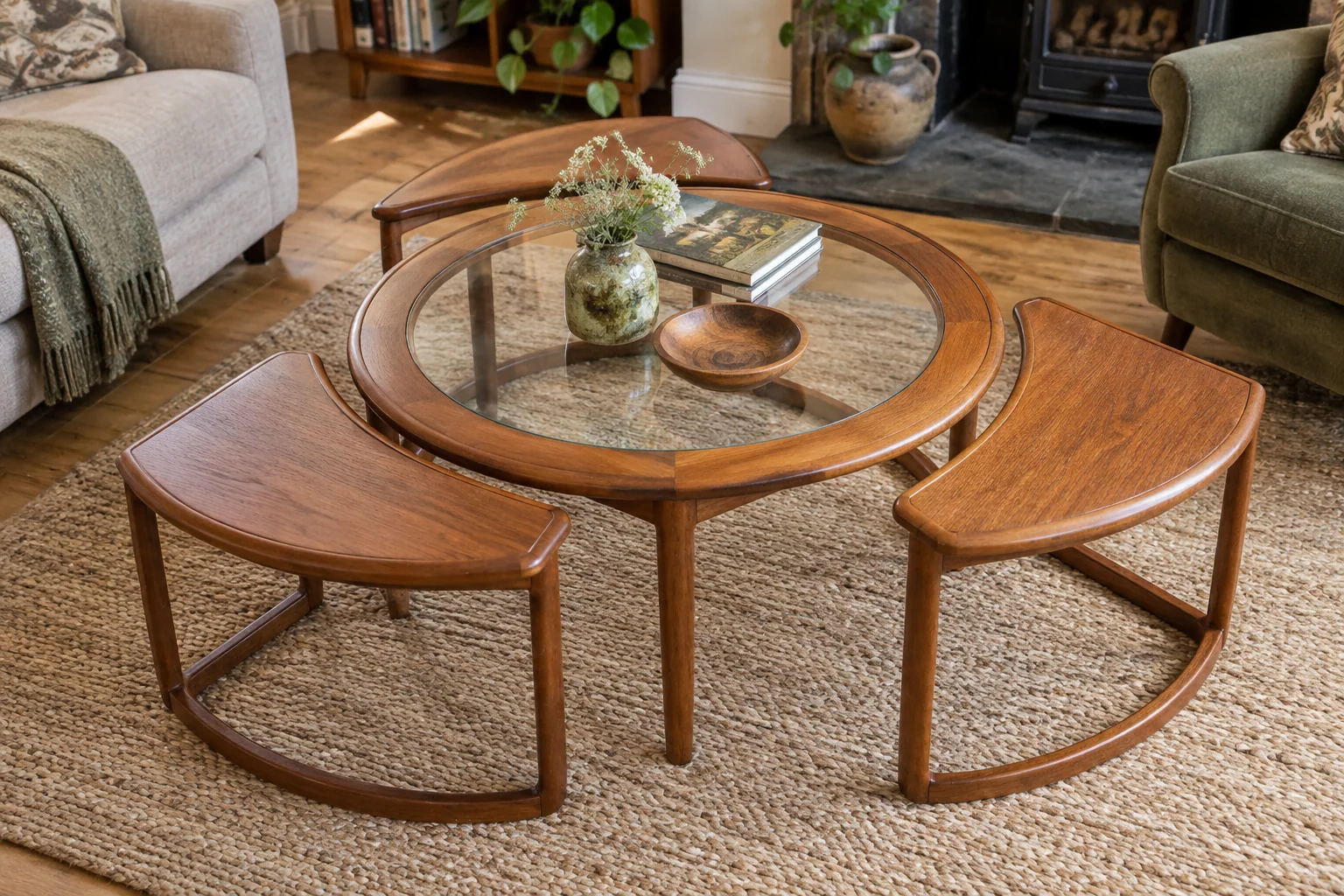
Read the set description and dimensions together
One 1stDibs seller record describes a Nathan-attributed teak-and-glass set of four under the name “Trinity”. It gives the large table as 32.5 inches in diameter and 20.5 inches high, and the smaller tables as 24.5 inches wide, 13 inches deep and 17.75 inches high. Those are the seller’s measurements for that group, not a factory-wide specification.[1]
Notice that the page’s main dimensions panel uses the smaller table’s measurements. Reading only that panel would give you the wrong footprint for the whole nest. Ask the seller to label a separate measurement record for the large table and every small one.
The market name helps locate comparisons, but do not let it replace production evidence. Ask about labels, documents and replaced parts if the price depends on a particular period or originality. Matching colour is a weaker fact than matching construction and a properly fitting assembly.
Inspect the tables that usually hide underneath
Have the owner pull out the smaller tables by the intended route and show them together from above and below. Look at legs, stretchers, joints and the curved edges that nest under the larger frame. Ask whether any table rocks on a suitable level surface or rubs against another while being stored.
A later repair or a small difference in finish can be acceptable. A wrong height or altered member that prevents nesting is a functional problem. If one table has been sourced separately, ask the seller to say so and demonstrate its fit rather than treating the group photograph as proof of an original set.
Decide whether all three small surfaces would get used. An incomplete group may still suit your room at the right price, but describe and value it as the pieces supplied. A listing for an individual replacement does not guarantee the same dimensions or fittings.
The wooden rim does not specify the glass
Ask for the glass edge, its resting or retaining arrangement and any packing or supports between it and the wood. Record chips, cracks and replacement history. Avoid touching a suspect edge or taking a heavy top out merely for a better photograph.
A glass specialist should establish the replacement from the actual frame and intended use. Give them the support profile and ask about material, thickness, shape, edge finish and installation. Do not order solely from the table’s maximum outside diameter or copy a measurement from another set.
If the glass is missing, compare the delivered price plus the confirmed replacement with a complete nest. The open frame can look almost finished, but an unpriced top is still an unfinished purchase.
Plan the evening when every table comes out
Place paper outlines for the large table and the smaller ones beside the seats they will serve. Keep the route past the main table clear while the smaller tables are in use. A tightly packed nest is only the stored state; the useful room arrangement is the one with people and cups around it.
Ask the seller
Could you show all four tables separated, their undersides and the glass support, then demonstrate the small tables returning to the nest? Please give dimensions for each size and describe missing, repaired or separately sourced parts.
Choose a sound, complete group if easy daily use is the aim. Choose a smaller incomplete group only because those actual pieces work for you, with the missing parts already reflected in the decision.