Recognise the arrangement before comparing spare parts
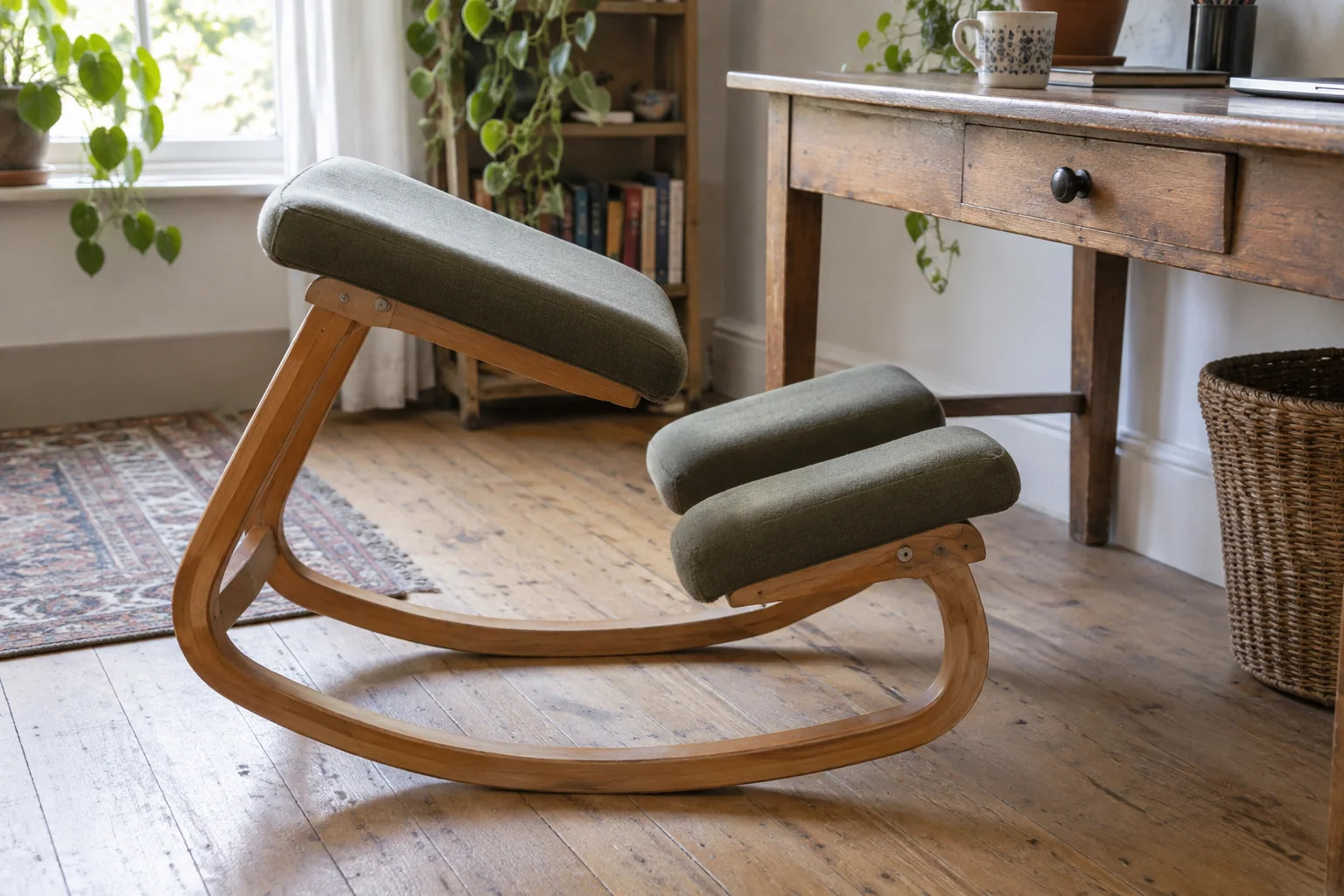
Varier identifies Variable as Peter Opsvik’s 1979 design. Its present specification describes a tilted seat, two lower pads and curved runners. The plywood construction is layered and moulded, with a decorative outer veneer. An older Stokke-marked example should be researched through its own labels, documents and complete form.[1]
Ask for an underside view, the complete frame and any model information. Do not use the word “balans” as a replacement-parts specification: a different chair in the broader family may have a back, another base or different fittings. Send the actual evidence to a supplier before asking what fits.
A design date establishes when the design originated, not when a particular chair was produced. Keep an older purchase record or maker mark with the object even if the pads have since been renewed.
Look below the most obvious worn fabric
Check the exposed edges of the laminated runners for splits or lifting layers, especially near connections. Ask about movement, repaired joints and altered fixings. Photograph the floor-contact surfaces too. An unevenly worn or changed underside can affect how the chair behaves on your floor.
Compare both lower pads and the main seat. Flat filling, a loose pad and a damaged mounting need different work. Ask the seller which parts have been replaced and whether the new padding changed their thickness or angle.
Get a quote for the relevant components, not “reupholstery” without a parts list. A new textile does not address a loose frame. Stop the trial if the chair moves in an unexpected way or a joint is questionable; the intended rocking motion is not a reason to excuse everything that moves.
Try reaching the keyboard before believing the chair label
The current maker guidance suggests tabletops roughly 71–76 cm high, while explicitly recognising differences between people. Use that as current product guidance, not confirmation that an old chair, replacement pads and your body will work with any desk in that range.[1]
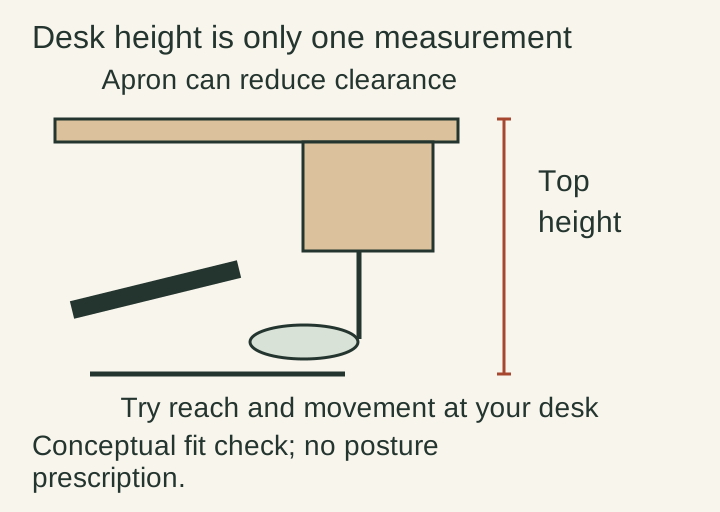
Measure the desk’s top and underside, including a drawer or apron. During a comfortable trial, check your reach to the keyboard or writing area, where your forearms rest and whether the chair can move without striking the desk. A 74 cm top above a deep drawer is a different arrangement from a clear slab at the same height.
Practise getting on and off as well as sitting. Keep another comfortable seat available while deciding whether you like this arrangement. If a position causes pain, stop; a vintage chair purchase is not a treatment plan. Seek individual professional advice if a health condition drives the choice.
A small chair can still need a specific repair
Ask the seller
Could you confirm the model and show the runners, all connections and the underside of each pad? Please describe replaced pads or fixings and any movement beyond the intended rocking. I would like to try it at a desk with a ___ cm top and ___ cm clear underside.
Compare the sound chair plus any confirmed pad work with a complete example you can try. Choose it when the ordinary sitting and getting-up routine works for you, rather than because “ergonomic” appears in the listing title.