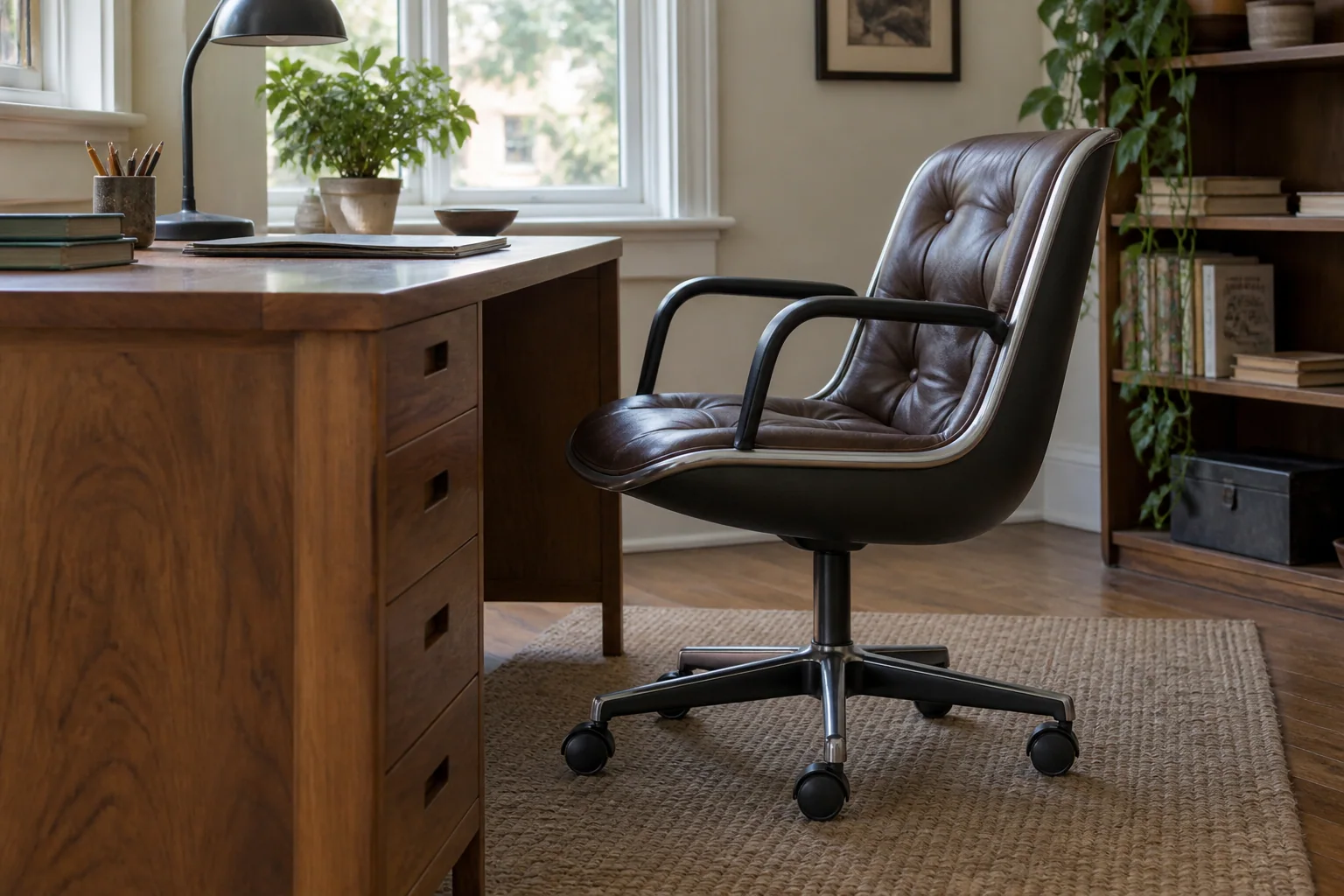
Describe what happens before naming the broken part
There is a useful difference between a seat that slowly sinks while occupied, one that will not rise using its intended control, and a chair that stays at one height because its adjustment is unfamiliar. Record the symptom and any known history. Do not dismantle anything to make the story sound more certain.
Knoll’s current cutsheet lists pneumatic adjustment, swivel and tilt, with both four-star glide and five-star castor configurations. An older KnollStudio reference also distinguishes column covers for pneumatic and mechanical height models. These documents show why a current parts assumption cannot be applied to every used Pollock.[1]
Ask for a whole-chair photograph, identification labels in context, and clear underside and control views taken without risky handling. Send those to Knoll, an authorised dealer or a repairer familiar with the model. A count of the base spokes can help describe the chair, but does not establish the adjustment mechanism or its production date.[2]
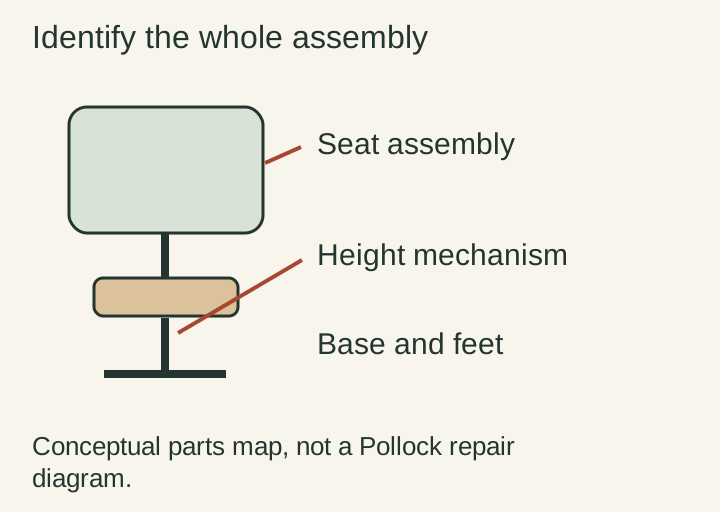
Get the repair scope in writing
Ask whether the proposal replaces a cylinder, a larger control assembly or other components as well. The answer may change the working height, the available adjustment or the amount of original hardware retained. Have the supplier name the part and confirm its compatibility with this chair, including any known modifications.
| Ask | Why it matters |
|---|---|
| What fault have you identified? | A symptom is not a parts diagnosis. |
| Which exact assembly will be supplied? | A cylinder-only price and a complete control assembly are different jobs. |
| What height and functions will remain? | Successful fitting must leave the chair useful at your desk. |
| Who installs and checks the result? | A loose part in the post is not a finished repair. |
Keep any discarded original parts only if the repairer can return them safely. Do not open, puncture, heat or improvise modifications to a pressurised cylinder. This is a professional parts-and-installation decision, not an opportunity to test a generic online removal trick.
Will it be comfortable after the repair?
Measure a chair you already work comfortably in: occupied seat height, room for your thighs beneath the desk and where your forearms sit while typing. Then ask the repairer for the expected range of the Pollock after the specified work. Overall chair height does not answer those questions.
If a sound example is available to try, spend more than a quick moment in it. Check whether the arms meet the desk before your body reaches a comfortable working position. Notice the usable seat depth and where the back supports you. Do not assume that adding a taller lift will safely cure every fit problem.
Treat a loose base, damaged shell or movement where the seat meets its support as separate concerns before a sitting trial. A neatly buttoned cushion can distract from the parts that carry it. Ask for an assessment of those issues rather than folding them into the word “lift”.
Compare finished outcomes, not two asking prices
Make three columns: the faulty chair as offered; that chair after the confirmed work and transport; a sound example you would use as it stands. Upholstery condition belongs in the comparison too. A lift repair does not solve worn filling, damaged arms or wheels unsuitable for your floor.
For a set, identify each mechanism. Matching leather and a shared seller do not prove identical production or repairs. A quote for one chair should not silently become the budget for four.
Before committing
Please identify the height and tilt mechanism from these photographs, confirm a compatible repair and its finished seat-height range, and quote the installed result. I also need to know whether the base, shell or upholstery requires separate work.
Buy the project when the repair is understood and the resulting chair is one you want to sit in. If the central answer is still “a universal cylinder should fit”, leave room in the decision for it not being the easy bargain advertised.