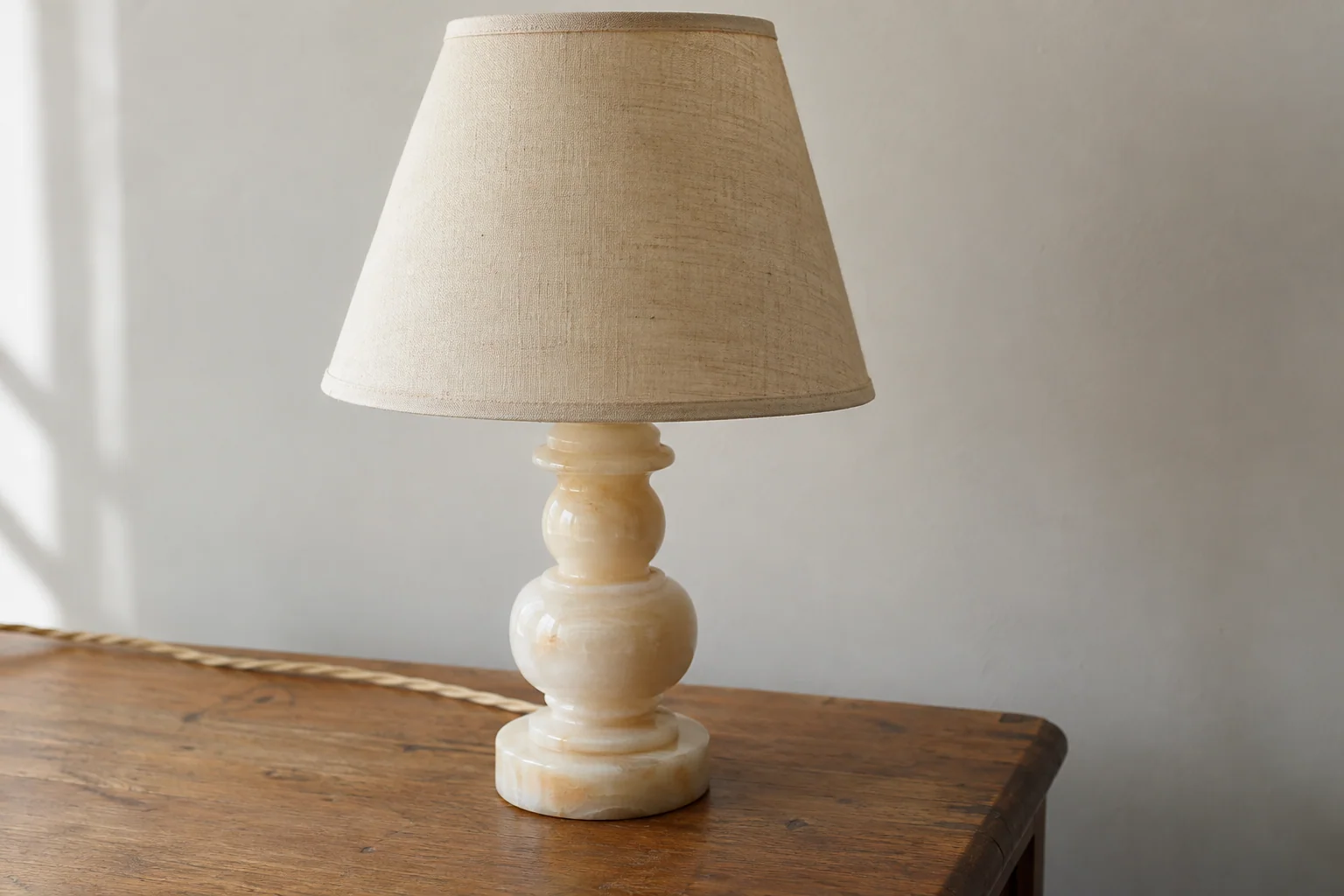
A white surface does not identify the material
The National Park Service’s guidance on gypsum alabaster describes a soft, water-sensitive material that can be confused with marble. It also discusses staining and the effects of past surface treatments. Use that guidance to avoid assumptions, not to identify a lamp from translucency or colour alone.[1]
Ask the seller what supports the material description and whether the base has been cleaned, waxed, oiled or repaired. Request diffuse-light views of the whole base and closer views of discoloured areas. Do not scratch it, apply acid or wet a patch to find out what it is.
Decide whether the existing colour is part of the appeal. If the purchase depends on turning the lamp a uniform bright white, obtain a conservator’s assessment before paying. A successful treatment may stabilise a surface without removing every mark.
A loose base is not necessarily one loose screw
The NPS illustrates a lamp base assembled from five turned stone sections on a threaded rod and warns that overtightening can chip their edges. That example explains why a visible seam or movement needs investigation rather than extra force.[1]
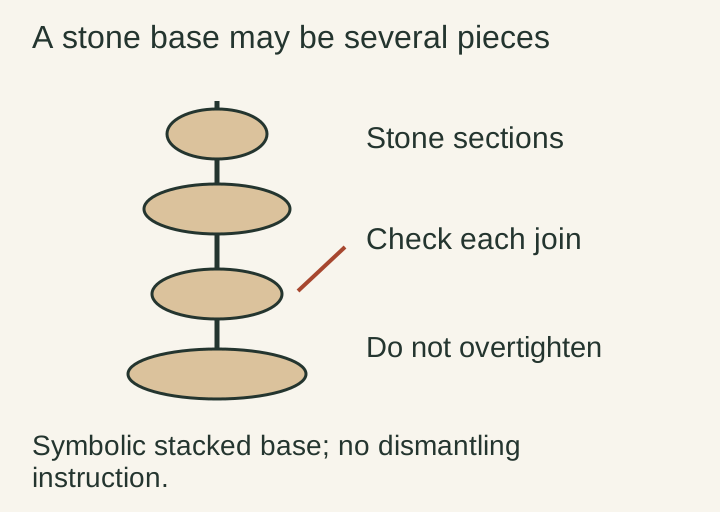
Ask for the junctions between sections, the bottom edge, the neck and the area beneath the fitting. Record chips, gaps, adhesive traces and repairs. Have the seller describe movement during normal handling; do not twist the sections as a test.
If the assembly is uncertain, the stone specialist and electrician should agree how it can be handled and opened. Rewiring may involve the same central route or fittings that hold the base together. A quote should say who is responsible for fragile parts and what happens if dismantling reveals damage.
The stone base is only part of the lamp
Check whether the shade, fittings and any decorative upper part are included. Ask for a complete height and a base-only height, each with its measuring points identified. For a pair, photograph both lamps together: similar bases may have different fittings, repairs or shade heights.
Electrical Safety First’s lamp guidance stresses correct bulbs and sound cables and fittings. An uncertain older lamp needs a qualified electrical assessment before use. A seller’s photograph with the bulb lit does not replace the record of what was examined or renewed.[2]
Choose the shade after the fitting and intended use are understood. Check the lamp from the seat beside it as well as from across the room. A large shade can give a small base an awkward reach and should not be used as a carrying handle.
Keep the purchase and the treatment separate
Support the base properly when moving it and agree transport for the actual assembled object. Keep a fragile or flaking surface undisturbed until assessed. The NPS recommends specialist involvement beyond limited dry dust removal on suitable stable surfaces; it does not provide a universal washing routine for old lamps.[1]
Ask the seller
Could you show every stone junction, the neck and lower edge, and describe any movement, chips, repairs or past cleaning? What supports the alabaster description, which shade and fittings are included, and what electrical work is documented?
Buy a sound lamp with an appearance you enjoy. Treat uncertain stone repair, hoped-for stain removal and electrical service as separate commitments before calling an inexpensive base a bargain.