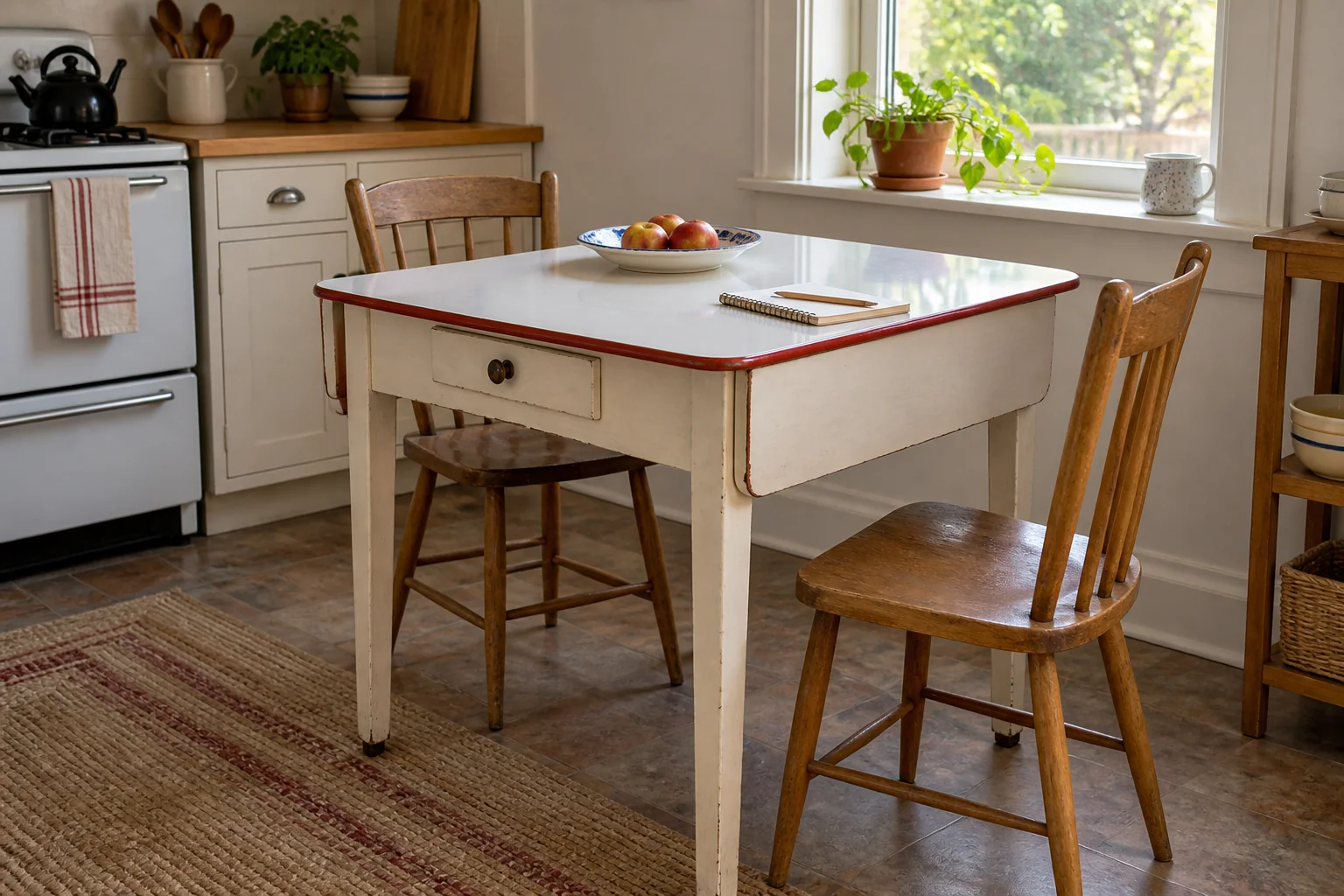
Enamel is a material description
The Metropolitan Museum’s technical account describes enamel as glass fused onto a metal substrate. That explains why an enamelled surface should not be approached like a wooden top that can simply be sanded and oiled. A seller’s word enamel is a starting point: look at existing edges and the underside without scratching a fresh test patch.[1]
Ask whether the surface has been repainted, filled or locally touched up. A colour-matched repair may be perfectly visible once you know where to look. Its appearance does not establish that the material is suitable for heat, abrasion or direct food preparation.
Separate the top from the wooden base in the description. A good enamel surface can sit on a loose frame, while a sturdy base can carry a damaged top. Neither part cancels the condition of the other.
Put the damage on a map
Request an overall top view followed by close photographs of each damaged area. Note whether the mark is on the working face, the rolled rim, a hidden underside or an extension that is usually tucked away. Include a side view so a sharp raised edge is not flattened by the photograph.
| Observation | Next decision |
|---|---|
| Stable old edge mark | Decide whether the appearance suits the intended use. |
| Sharp break where hands pass | Obtain a repair assessment before everyday use. |
| Loose coating or corrosion | Establish the cause and treatment scope. |
| Filled or repainted patch | Identify the repair material and use limitations. |
The table is a decision aid, not a diagnosis from a photograph. If you cannot establish what a damaged or repaired surface contains, use a separate suitable board or serving tray for the intended food task and seek advice before treating the old top as a preparation surface. A shiny finish is not a food-use certificate.
The bargain may live in the extensions
One Chicago owner’s listing records a top 25 × 40 inches closed and 45 × 40 inches open, with pull-out leaves and disclosed chips. Those figures describe one table, not a standard size: about 63.5 × 101.6 cm becomes 114.3 × 101.6 cm. That is a substantial change in a small kitchen.[2]
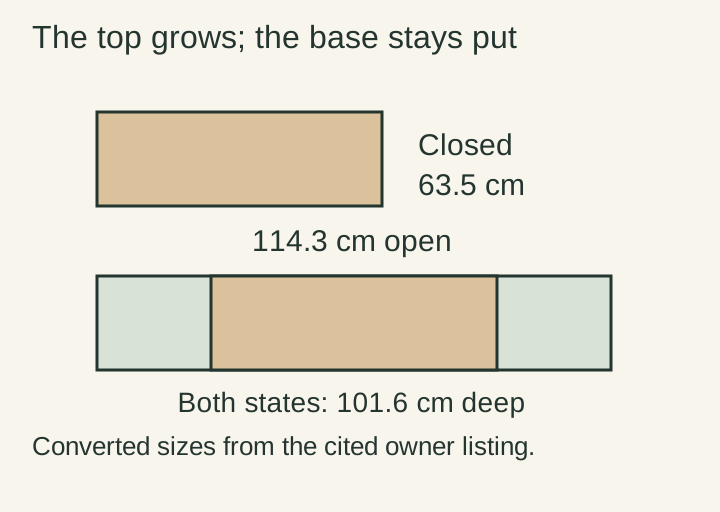
Ask the seller to demonstrate each leaf and its support, then show the table from below. Does a leaf sit level when correctly engaged? Is it supported along the intended runners? Keep fingers clear of moving parts and stop if an extension jams rather than forcing it into the photograph.
Try your chair at the ends and along the sides in both arrangements. A drawer or deep apron may limit knee room. The tabletop can expand while the base stays in the same place, changing where a person can sit comfortably.
Choose the use you want to keep
Mark the open footprint in the kitchen and include the route to the cooker, fridge and cupboards. If the table has castors, assess their condition and how the table will stand securely on your floor. Wheels are not a reason to push an uncertain loaded frame around.
Ask for one complete demonstration
Please show the whole top and its damaged areas, both leaves fully engaged, the underside supports and the clear knee height. Has the enamel been filled or repainted, and are the castors and frame sound?
A few visible years can be part of the appeal. The useful distinction is between a table you can enjoy at breakfast and one whose surface or mechanism still needs a job you have not priced.