The tallest point is not where you put your keys
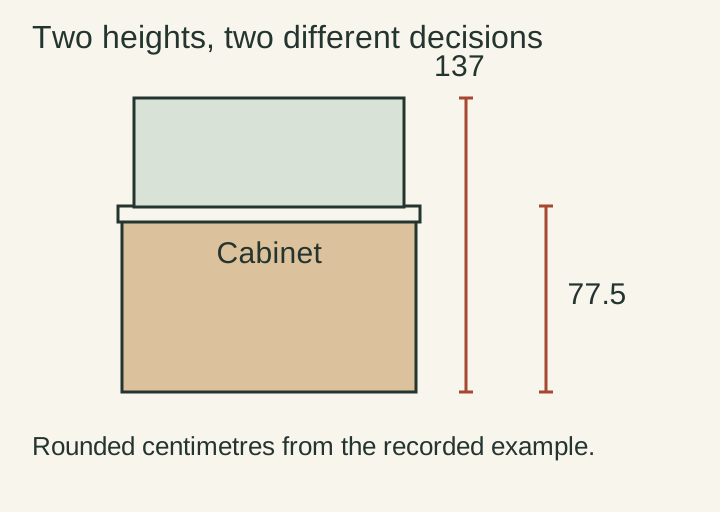
Harp Gallery records an English washstand, dated by the seller to around 1900, at 36 inches wide, 18 inches deep and 54 inches high overall. Its marble surface sits at 30½ inches. Rounded to centimetres, that is a 91 cm-wide, 46 cm-deep cabinet with a 137 cm overall height and a 77.5 cm working surface.[1]
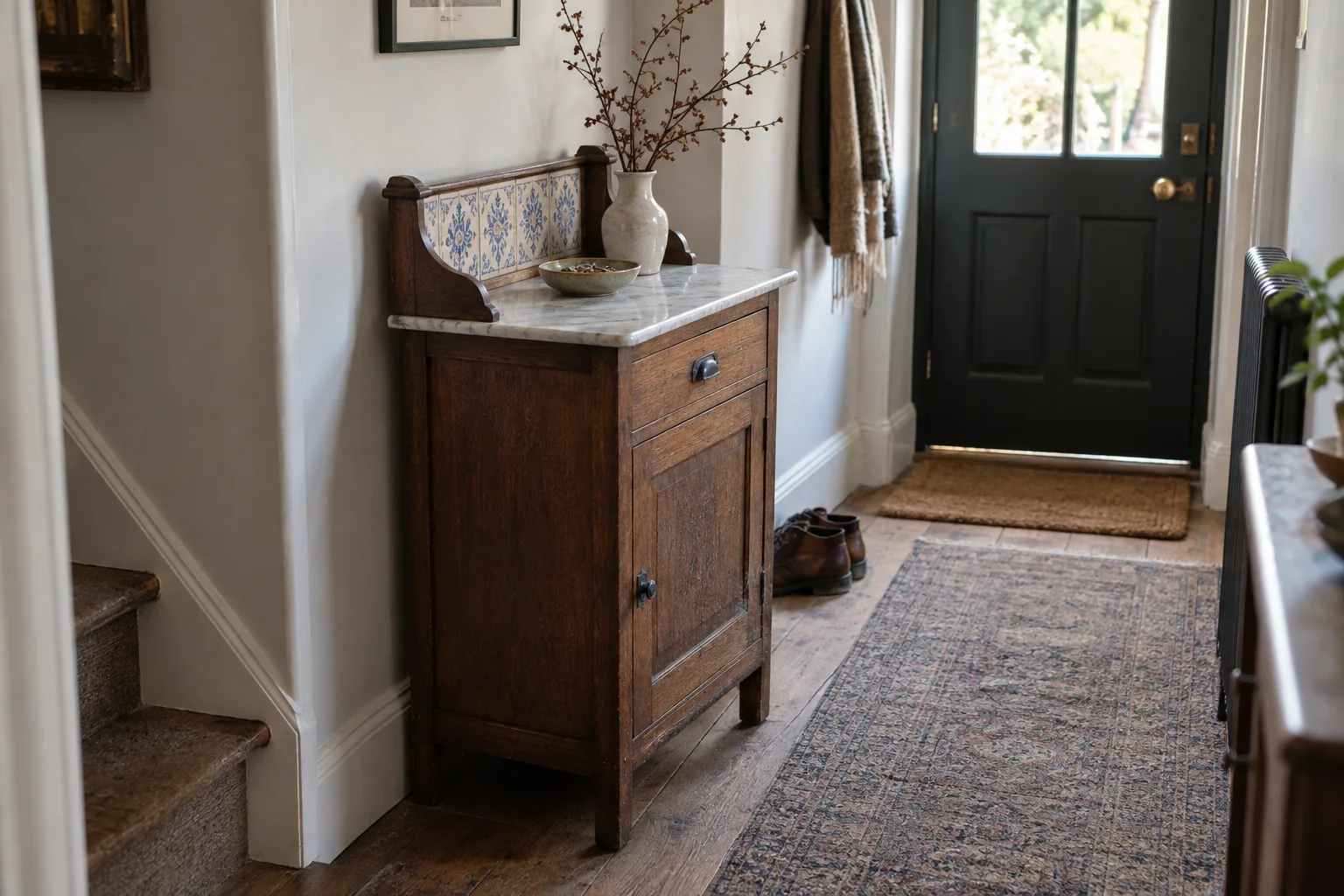
That difference changes the furniture’s use. The marble may sit lower than you expect from the tall silhouette, while the tiled back occupies the wall above it. Mark both heights before deciding whether it belongs beneath a picture, beside a switch or in front of an existing socket.
| Measurement | Check at home |
|---|---|
| Working surface height | Comfortable reach for everyday objects. |
| Overall height and back projection | Artwork, switches, sockets and the wall behind. |
| Depth including projections | The remaining hallway passage. |
| Doors, drawers and interior | Opening space and the objects you intend to store. |
Use your actual bag, keys tray or folded linen as the starting point. A narrow washstand can provide useful storage without becoming a catch-all that blocks the passage beside the front door.
Separate the marble’s condition from the cabinet’s
Request a view of the whole stone surface in even light and detailed photographs of chips, cracks, repairs and its edges. Ask how it is attached or supported and whether the seller knows of previous lifting or replacement. A neat polish cannot answer those construction questions.
Inspect the wooden frame supporting the stone, the back assembly, drawer movement and doors. Look for evidence of looseness, distortion or past damp exposure. A heavy surface can conceal the top of a cabinet in listing photographs; ask to see accessible support details without asking the seller to dismantle it unsafely.
The Harp Gallery example has a renewed finish and marble described as polished and sealed. That is the condition of one restored offering, not evidence that another washstand is sealed or that sealing makes stone impervious to marks.[1]
A dry cabinet is the straightforward conversion
For keys, a lamp or linen, the main questions are useful dimensions, condition and a sensible arrangement. Use suitable protection beneath objects that could scratch or leave moisture, and follow care advice for the identified stone and finish. Wipe spills promptly with a method appropriate to those surfaces.
Do not infer suitability for food preparation, wet appliances or a basin from the marble alone. Plumbing cut-outs, water exposure, altered supports and a changed working height require their own assessment. If your real intention is a sink unit, obtain that project’s design and cost before buying the cabinet.
Keep the tiled back if it works in the room. Removing it to force a different appearance may leave fixings, a changed structure or an awkward edge. Ask how the piece is assembled before treating the back as a removable accessory.
Agree what travels together
Have a competent mover inspect or review the construction and plan the lift. Do not assume the stone is loose, and do not lift the cabinet by the marble edge or decorative back. The Canadian Conservation Institute advises planning furniture moves around construction, condition and secure support.[2]
The recorded washstand includes removable porcelain wheels. If an offered example has castors, ask whether they are sound and whether their removal is appropriate; it may change the working height. Old wheels are not a reason to roll a heavy, fragile assembly across thresholds.
Before arranging collection
Please confirm the marble height, overall height, depth and internal storage, disclose stone and frame repairs, and explain which parts are removable. Can the mover review how the stone and tiled back are secured?
A washstand earns its place when the old arrangement serves a simple present-day need. Good proportions and useful storage can be enough, without turning every purchase into a renovation project.