
A height and shade diameter do not tell you the reach
One older Kaiser-Idell scissor lamp offered through 1stDibs is recorded with a 35.56 cm height and 21.59 cm diameter. The listing does not supply the useful folded-to-extended reach. It also describes original wiring. Those omissions and claims are reasons to ask for more information, not specifications to fill from a similar lamp.[1]
For comparison, a Fritz Hansen product fact sheet for the current Kaiser idell 6718-W shows a 47–89 cm span. That is a reference for that current product. It does not establish the travel, dimensions or electrical condition of an older Kaiser lamp or another scissor design.[2]
Ask the seller to identify what each measurement runs between: wall face, pivot, shade edge or light-source position. Two measurements both called extension can describe different things. A side photograph with a tape and clearly identified endpoints is more useful than a bare number.
Map the positions your room actually needs
Draw the wall, table or chair from above. Mark the proposed mounting point and the place where you want light, then add the shade’s space in both folded and working arrangements. Include shelves, curtains, a screen, the route past the furniture and a person getting up.
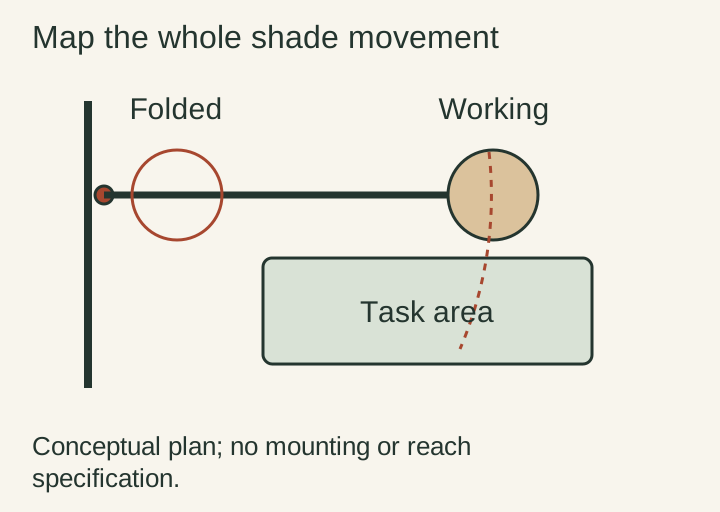
| Position | What must remain clear |
|---|---|
| Folded | The shade, cable and arm beside the wall. |
| Moving | The space swept by the shade and joints. |
| Working | The task area, head space and intended cable route. |
If the lamp pivots sideways, ask for its intended movement range as well as the scissor extension. Do not assume unlimited swivel. A lamp that reaches the centre of a desk in one photograph may need a different wall position to illuminate your normal writing area.
Use a paper plan or a lightweight mock-up for placement, not the unmounted vintage lamp. Keep hands away from scissor joints when the seller demonstrates normal movement, and do not force a stiff mechanism to discover its limit.
The wall is part of the purchase
Give a competent installer the exact lamp, its mounting plate or bracket, condition information and intended positions. They need to assess the wall construction, suitable fixing and the loads created by the arm in use. A heavy-looking screw or an old hole pattern is not a mounting specification.
Plan the cable through the whole movement so it cannot be pinched, pulled taut or brought into an unsuitable position near the shade. Have electrical condition and any necessary work assessed before energising an old lamp, particularly where original wiring is claimed.
Ask which components are missing or replaced and whether a suitable bracket, shade attachment or switch can be supplied. Have the installer or lighting specialist confirm compatibility. Include their work in the purchase comparison before buying a lamp that arrives as disconnected parts.
Try the intended adjustment without making it a repair test
Once the lamp is sound and properly installed, check the useful task light in your normal sitting position. Adjustment should bring light to the work without putting the shade where you knock it while standing. Have the professional confirm suitable light-source and operating requirements for the actual fixture.
Before purchase, ask whether pivots hold their intended positions and disclose excessive looseness, stiff movement, corrosion or previous repairs. A mechanism that needs workshop attention can still be worth buying, but price that work explicitly rather than assuming adjustment means tightening whatever screw you can see.
Send a plan with the enquiry
Please measure folded and working reach with endpoints identified, show the mounting assembly and cable through normal movement, and disclose joint and electrical repairs. Here is my wall, furniture and intended task position.
Choose the lamp when its ordinary movement makes the room easier to use. Its clever mechanism should earn the wall space, not spend its life folded away because the shade lands in the wrong place.