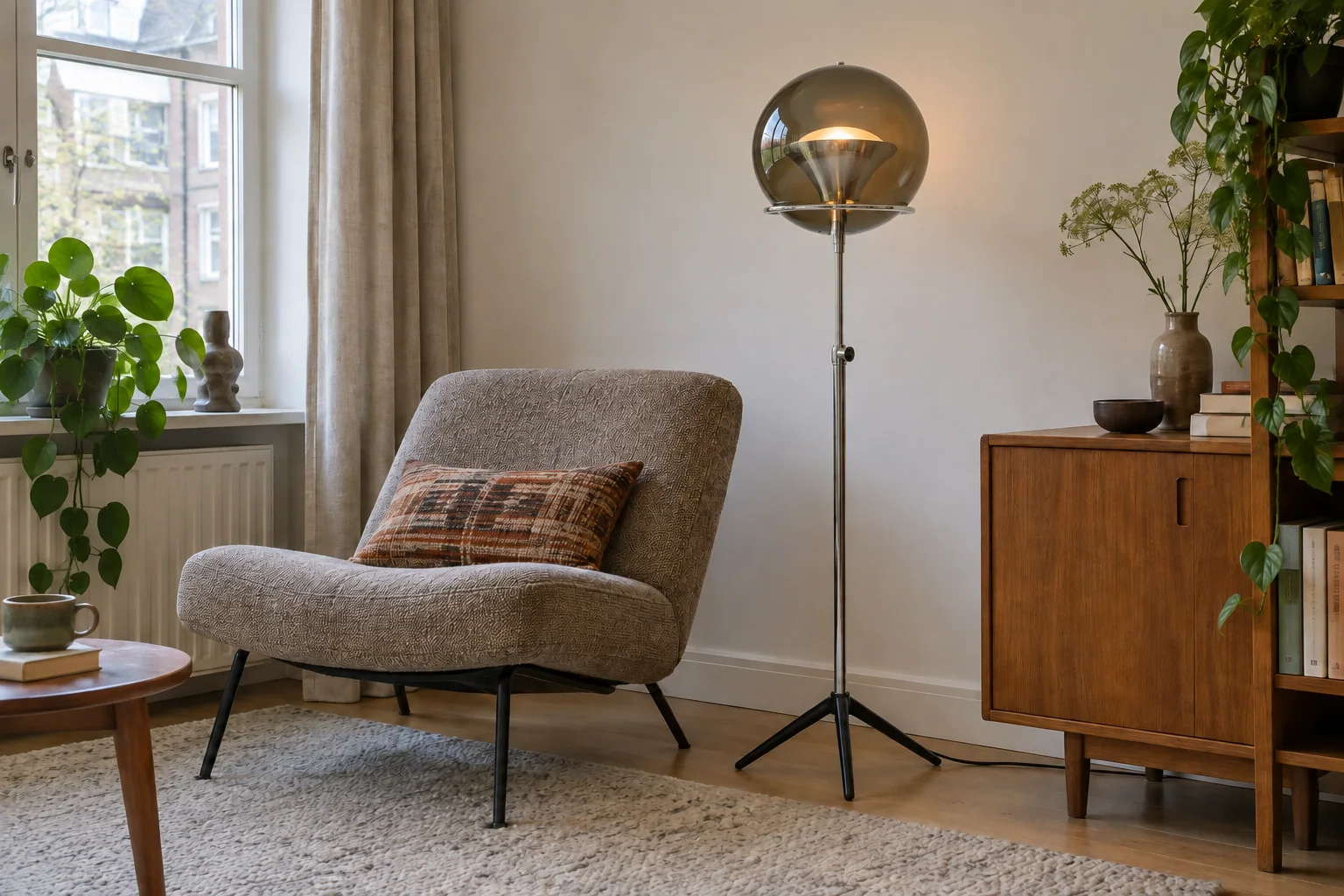
Look past the glowing sphere
Ztijl describes a Frank Ligtelijn RAAK Globe example with smoked glass, a metal reflector, a chromed stem and tripod base. The dealer discusses an adjustment screw as a feature of its particular example. Treat that as a record to compare, not a universal dating rule or a specification for every Globe offered online.[1]
Ask to see the lamp unlit from the side and above, with clear views of the glass opening and its support. Reflections can conceal an edge chip while making a harmless reflection look like a crack. Request another angle in plain daylight if a line remains ambiguous.
Have the seller describe any pads, liners or other material at the glass contact points. An unfamiliar strip of tape might hide a repair or be an improvised attempt to stop rattling. It should prompt an explanation and assessment, not become a part you automatically replace with fresh tape.
Why matching the diameter is insufficient
The sphere’s size is only one part of compatibility. Its opening, profile, reflector clearance and the geometry of the cradle determine how the assembly sits. A replacement globe from another lighting design can be the right approximate diameter and still be wrong for this lamp.
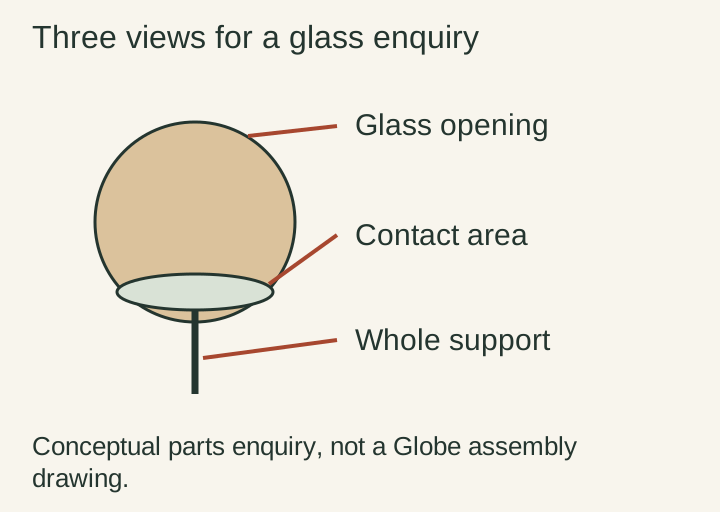
| View | Useful question |
|---|---|
| Glass opening and surrounding edge | Are there chips, cracks or previous grinding? |
| Glass resting in its support | Does it sit as intended without improvised packing? |
| Reflector and fittings | Are these present, secure and reported as replaced or original? |
| Stem adjustment and base | Does the sound assembly hold its normal position? |
Do not ask the seller to remove a fragile globe if they are unsure how to handle it. A lighting specialist can inspect the hidden contact areas and advise on packing. Avoid turning an unanswered question into accidental damage during a hurried video call.
Try the light where you will read
A globe can look bright in a photograph while the useful light falls elsewhere. In a complete, inspected example, compare the intended orientation with your reading position. Include the chair, the page and what you see from the adjacent sofa. The reflector’s direction matters more than the mood of the listing photograph.
Measure the base footprint and the space through which the globe moves during normal adjustment. Keep the position clear of a door swing or a chair back. A lamp that only fits when its most useful orientation is avoided is probably the wrong lamp for that corner.
Have mechanical faults assessed separately from the wiring. A working bulb does not establish that the stem holds securely, that the glass support is complete or that the electrical assembly is ready for continued use.
Agree the packing before agreeing collection
Ask a specialist who knows the assembly whether the glass should travel separately and who will prepare it. Record the parts included, the condition before packing and the responsibilities for unpacking. Do not let a courier improvise protection around an unsupported sphere.
Before buying an incomplete Globe
Please show the glass opening, cradle, reflector, stem control and base, and identify replacements or missing contact pieces. I need a specialist’s assessment of the complete assembly and an agreed packing plan.
If replacement glass is needed, obtain a confirmed source and fitted specification before treating the project as a bargain. A complete example with honest surface wear can be the more enjoyable purchase than a flawless-looking globe with an unresolved support underneath.