Find the height you actually use
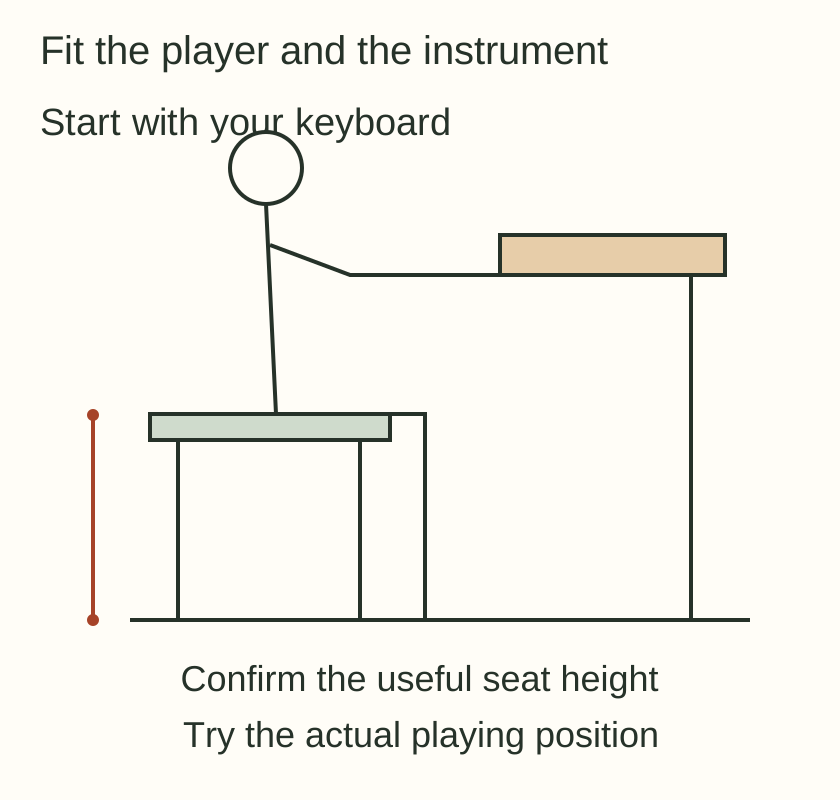
Yamaha advises placing the bench centrally, sitting towards its front and adjusting the height so the elbows are approximately at keyboard level, with feet resting comfortably on the floor. Use that as a practical starting point, then work with a teacher on your own playing position.[1]
Measure from the floor to the top of the keys and record the seat height of an arrangement that works for you. A different instrument, a different player or a replaced cushion can change the fit. There is no single vintage-stool height that suits everyone.
If a child needs support to reach a comfortable position or the pedals, discuss an appropriate purpose-designed arrangement with their teacher. Do not solve an unstable seat by stacking loose objects on it. The buying question is whether this stool can support the intended setup.
A round stool and a bench feel different
Compare the space to move along the keyboard, the front edge under your legs and how easily you can approach the instrument. A broad bench, a narrow screw stool and a seat with a small back have different advantages for different players. Try them rather than choosing by the name.
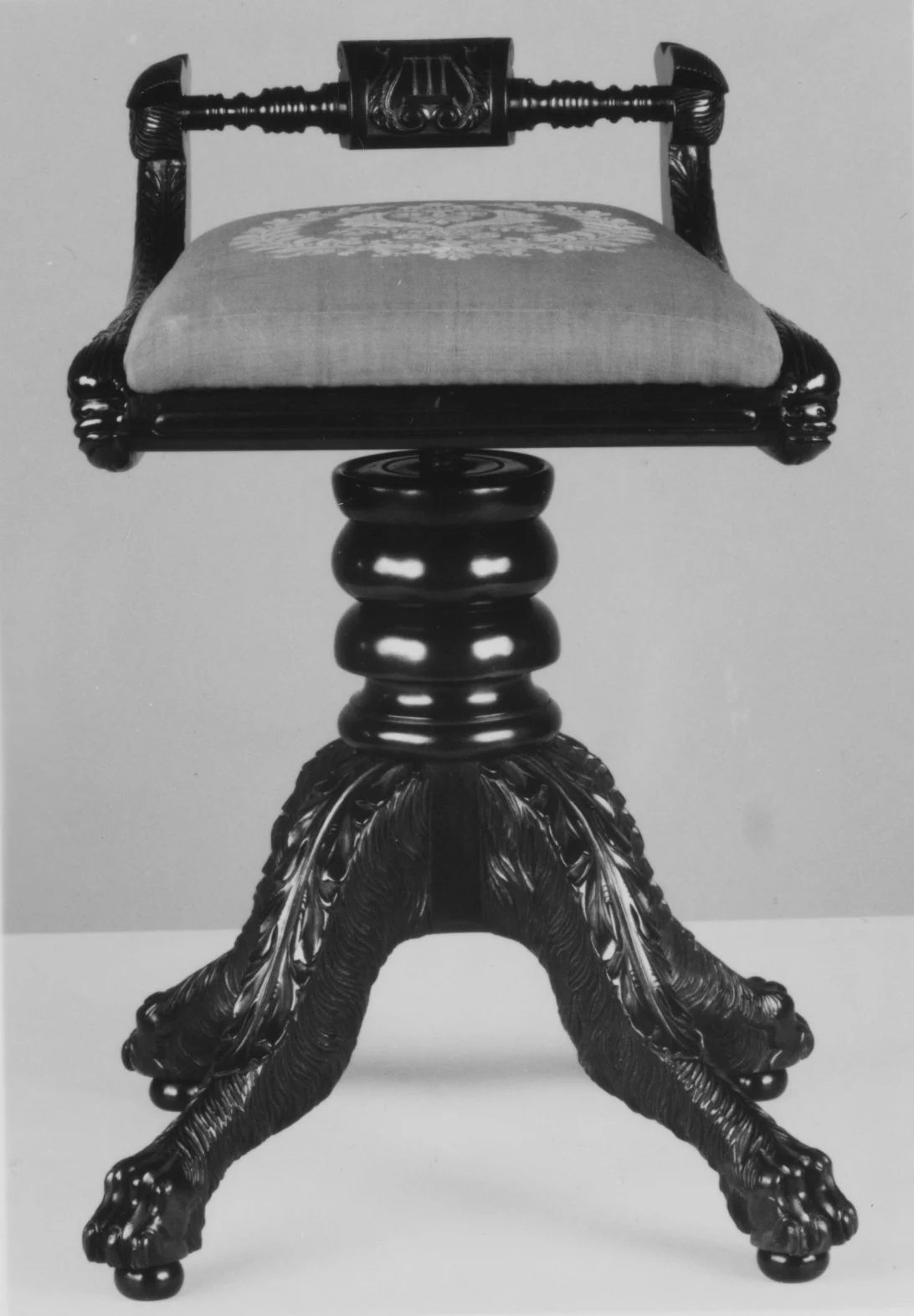
The Met’s piano stool 66.108.5, dated 1815–25, has a compact upholstered seat and a small back above a central pedestal. It is a documented example of how varied piano seating can be; it is not a specification for the height or mechanism of another stool.[2]
For duets or lessons, check whether the bench is intended for the number of people you expect to use it. Width alone is not a capacity statement. Two players who need different heights may be better served by separate suitable seats.
Check the position, then the adjustment
Ask the seller to demonstrate adjustment within its documented limits, with the seat unoccupied unless the instructions say otherwise. Observe whether the top rises evenly, the control works normally and the chosen position stays secure. Keep fingers away from exposed linkages.
For a screw stool, do not wind it higher simply to discover the limit. Find the permitted range from the identified maker or a competent repairer. A turning seat can be part of the design; sideways looseness or a seat that drops is a condition question.
Suppose your comfortable arrangement uses a 50 cm seat and the seller quotes only “about 45 cm high”. Ask whether that is fixed height or one setting, how it was measured and what usable adjustment is supported. Those example numbers are a method for comparing a listing with your position, not a recommended playing height.
Trace the seat down to the feet
Look at the seat attachment, adjustment housing, rails or pedestal, legs and feet. Ask about repairs, replacement mechanisms and altered feet. A newly covered seat can distract from a cracked frame or a loose fitting underneath.
With the seller, place it normally on a suitable level surface and observe its contact with the floor. If there is movement, establish whether it comes from the floor, feet or a connection. Do not bounce, lean back or rock it to test strength.
A storage bench adds hinges, lid supports and a compartment to inspect. Check ordinary opening without placing fingers in the closing path, and keep any heavy stored contents out of a handling demonstration. A working storage lid does not prove the seat frame is sound.
A new cushion changes more than the colour
Inspect the front edge, seams, underside and accessible filling. Ask when the upholstery was replaced and whether the original shape was changed. A much thicker pad can raise the working position and make the edge under your legs less comfortable.
If upholstery or mechanism work is needed, send an upholsterer or furniture repairer the whole seat and underside photographs before agreeing the purchase. Ask for the intended finished seat height as well as the price. An inexpensive stool can become costly when an unusual mechanism needs a specialist part.
Keep cosmetic choices separate. Small finish wear and an honest old repair may suit a piano room. Loose support, failing upholstery that affects seating or uncertain adjustment needs an answer before a playing trial.
Ask with the player’s setup in mind
Message to the seller
Our keyboard is [height] from the floor and the comfortable seat setting is about [height]. Could you confirm the stool’s documented usable height range, show normal adjustment and photograph the seat attachment, mechanism and feet? Please disclose any looseness, repairs or replacement upholstery and whether the seat is intended for one or more players.
Choose it when the playing position works and the support is accounted for. If the stool is beautiful but cannot reach a suitable position reliably, let it remain someone else’s decorative find rather than your everyday piano seat.