Ask what makes the pattern
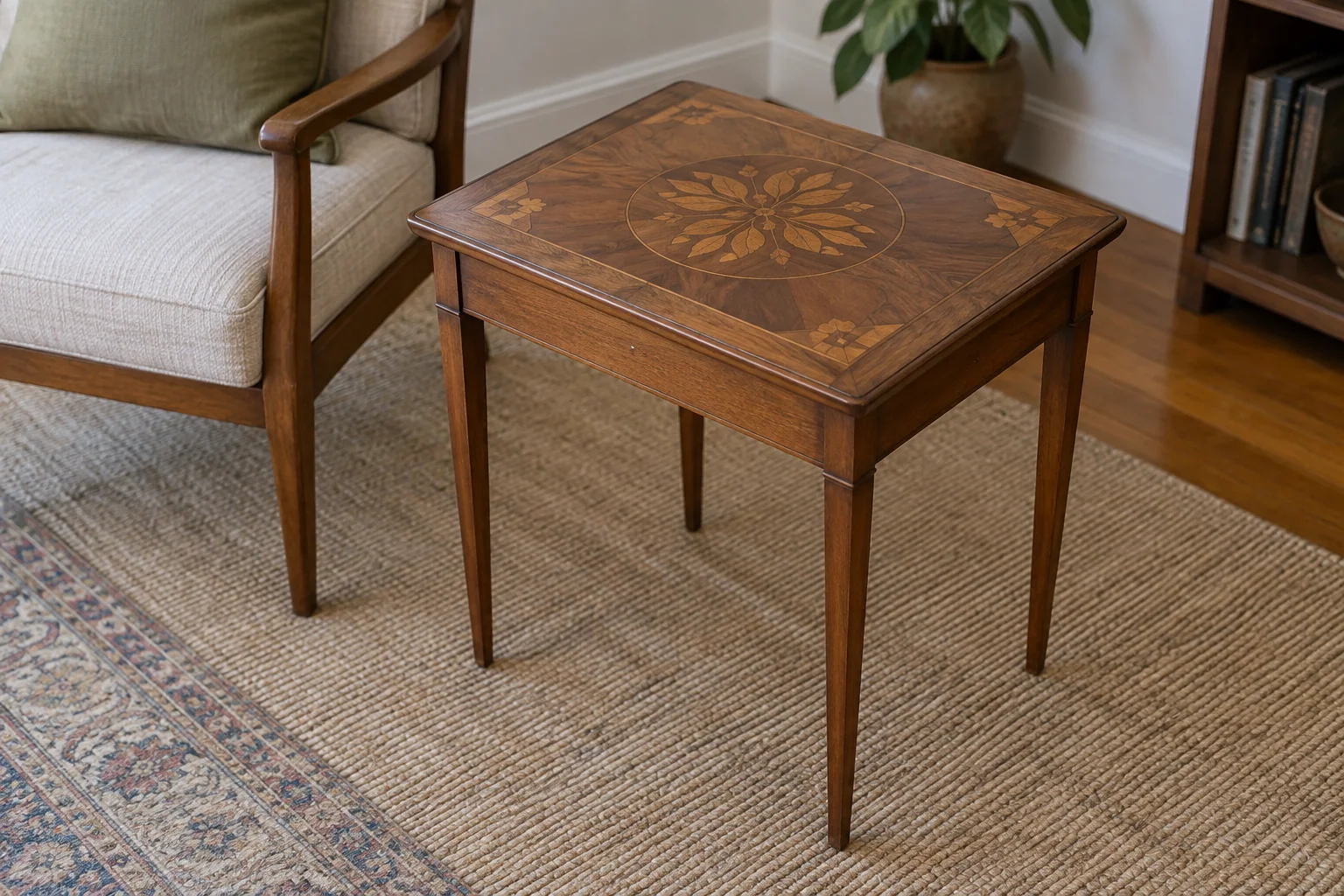
Marquetry uses assembled decorative veneers; an older patterned top may also contain other materials or use a different decorative method. Begin with the seller’s exact description. Request the whole top, edge, underside and any already exposed damaged area without creating a new chip or scraping a finish.
Repeated or mirrored grain can be part of a deliberate veneer arrangement. It does not by itself establish a printed surface. Equally, a convincing grain photograph cannot settle the construction. Use the material Guide for that broader distinction and ask a specialist when the asking price depends on a particular technique.
Look at the design from ordinary viewing distance before magnifying every blemish. A small old repair that is legible close up may leave the pattern thoroughly enjoyable. Decide which visible differences actually matter to you.
A missing piece and a moving top are different jobs
Galerie Balbach documents an Italian side table with detached and missing veneers across the top and base, including loose pieces saved in a bag. The workshop’s case shows why retained fragments can be useful and why the repair may extend beyond the most obvious patch.[1]
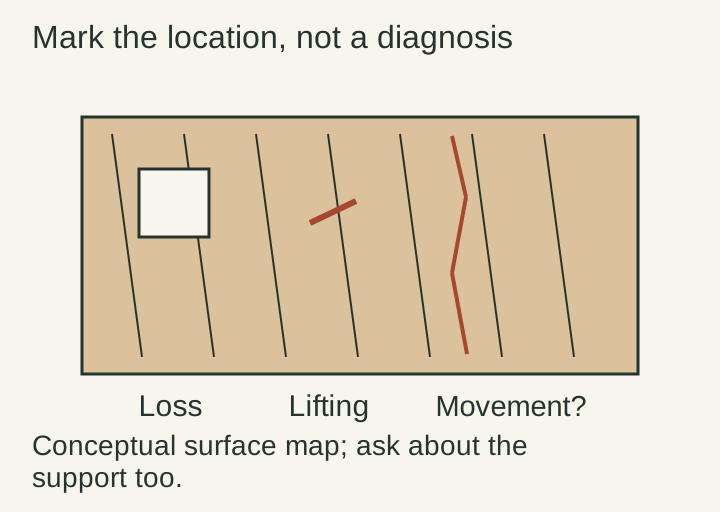
Ask the seller to keep any detached fragments with the object, without taping them onto the decorated surface. Photograph their original location if known. Do not press a lifted edge flat or put a heavy object on it to see whether it stays down.
In a separate Regency-style table treatment, Conservation & Design International records distortion and cracks involving both veneer and the wooden support, as well as lifting metal inlay. That case makes the wider question clear: some decoration problems belong to movement in the structure beneath them.[2]
Ask for a view across the top in side light and an underside view of the corresponding area. A repairer should assess whether the work is local adhesion, replacing lost decoration, correcting a support problem or a combination. A price for “touching in” colour is not an answer to a lifting surface.
Agree what the repair will still show
| Question | Useful answer |
|---|---|
| What is unstable? | Named areas and the proposed stabilisation |
| What is missing? | Retained fragments, proposed additions and how they will be recorded |
| What appearance will change? | Expected colour, gloss and visible repair limits |
| What use is appropriate? | The intended daily role and any care restrictions |
The documented Regency-style treatment left some cracks visible while restoring the pattern’s readability. A stable, legible result can be a successful outcome without pretending that the object never changed. Ask the repairer to show comparable work and explain what is realistic for your table.[2]
Do not specify sanding, bleaching or a new polish before the materials and existing finish are understood. The decorative layer is part of the object you are buying. Removing it to solve a surface problem defeats the reason for choosing the table.
Choose a role that lets the pattern remain a pleasure
A small patterned side table can hold a modest display or sit beside an armchair without carrying the demands of a busy dining table. Describe the intended use to the repairer and ask about suitable protection and handling after treatment. Do not assume a new glass cover is appropriate for every surface.
Ask the seller
Please show the complete pattern, any raised or missing pieces in context, the edge and corresponding underside. Are loose fragments retained, what repairs are known, and has a specialist assessed the top’s stability and the likely visible result of treatment?
Choose visible age you like and work you can define. Leave an uncertain lifting top unpriced until a competent assessment turns it into a real project.