
Separate the chair from the footrest
Some reclining chairs use a separate stool. Others have a footrest linked to the seat or operated by a lever. A chair with an adjustable back and loose footstool asks different inspection questions from a chair with a folding linkage under the seat.
Stressless publishes separate assembly documents for its different bases and functions, including discontinued models. Start with the matching maker’s document rather than applying the instructions for another chair that looks similar. A logo alone does not identify its base or mechanism.[1]
Ask for the model label, an accessible underside photograph and the original operating instructions if available. Also ask about replaced bases, controls, springs, fasteners or upholstery. This Guide covers manual recliners; powered and lifting chairs need their own model-specific electrical and operating assessment.
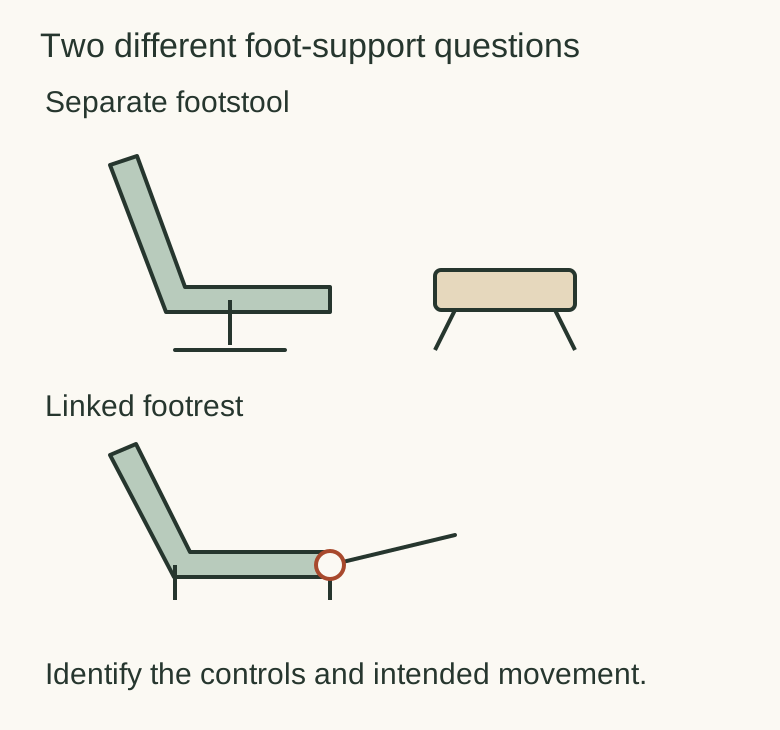
Let the seller demonstrate the ordinary movement
Begin with the chair standing in its intended arrangement on a suitable floor. Ask the seller to demonstrate the normal controls and positions, following the instructions. Observe from clear of the moving parts; do not put fingers into the linkage or reach underneath while the chair is moving.
Watch the back, seat, footrest and base as parts of one system. Does each part reach its intended position? Does the return movement finish normally? Ask whether any control is meant to lock a position or merely adjust resistance. Different systems should not be judged by an invented universal “click”.
Stop if a part drops abruptly, one side moves differently, a support remains partly folded or the seller must hold something in place. These are reasons to investigate, not a diagnosis you can settle by tightening whatever screw is visible.
Look past the leather
A neatly polished arm can distract from the base below it. Ask about visible cracks, loose structural joints, missing fasteners and previous repairs. Photograph the area in context as well as close up. Do not tip a heavy or unstable chair for a photograph without an appropriate handling plan.
Check accessible upholstery where movement folds or rubs it. Look for tears caught near a moving part, exposed filling and differences between the seat and back. Creases and even fading can be ordinary wear; they do not explain a moving joint or an unsupported seat.
If a repair is needed, obtain a view from someone who works on that mechanism. Ask whether parts are available for the identified model and what the repair would involve. A lower purchase price cannot make an unavailable mechanism part appear.
Comfort is a personal check
Only after the normal operation has been demonstrated and any consequential defect resolved, try the chair in the positions you expect to use. Notice where your head, lower back and arms rest. Try getting in and out at a normal pace; do not use the footrest as a step.
- In the upright position, can you reach the controls without an awkward stretch?
- When reclined, does the support meet your legs comfortably rather than pressing at an unpleasant point?
- Does the head support suit you when reading or watching a screen?
- Can you return upright and get up using the intended method?
A chair that fitted its previous owner may not fit you. If it is being bought for someone else, arrange for that person to try it where possible. Appearance and overall height cannot settle the fit.
Give the moving chair a place in the room
Measure the furthest reach of the back and footrest in the intended positions, including any swivel. Check the travel between those positions as well as the final footprint. Use the model’s clearance instructions where provided.
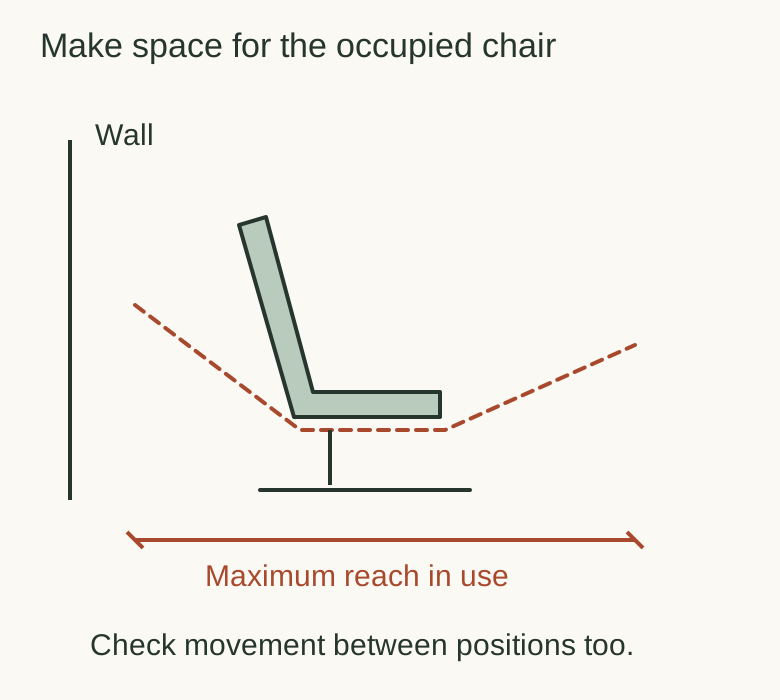
Rehearse the nearby walking route with the chair occupied. A wall behind the upright back or a side table beside the arm may obstruct movement. For a separate footstool, include the gap between it and the seat; that gap is part of the arrangement.
Agree a moving plan that protects the mechanism and uses documented lifting or disassembly points. Never treat the footrest as a carrying handle.
Ask about the mechanism before negotiating
Message to the seller
Could you identify the chair model and base, send the matching instructions and show a video of normal reclining and return? Please include accessible photos of the base, controls and footrest connections, disclose repairs or missing parts, and give the maximum dimensions in use. I would also like to try the fit before deciding.
Buy the chair you can operate comfortably and have room to use. If a movement fault remains unresolved, get a repair assessment before treating it as ready for everyday sitting.