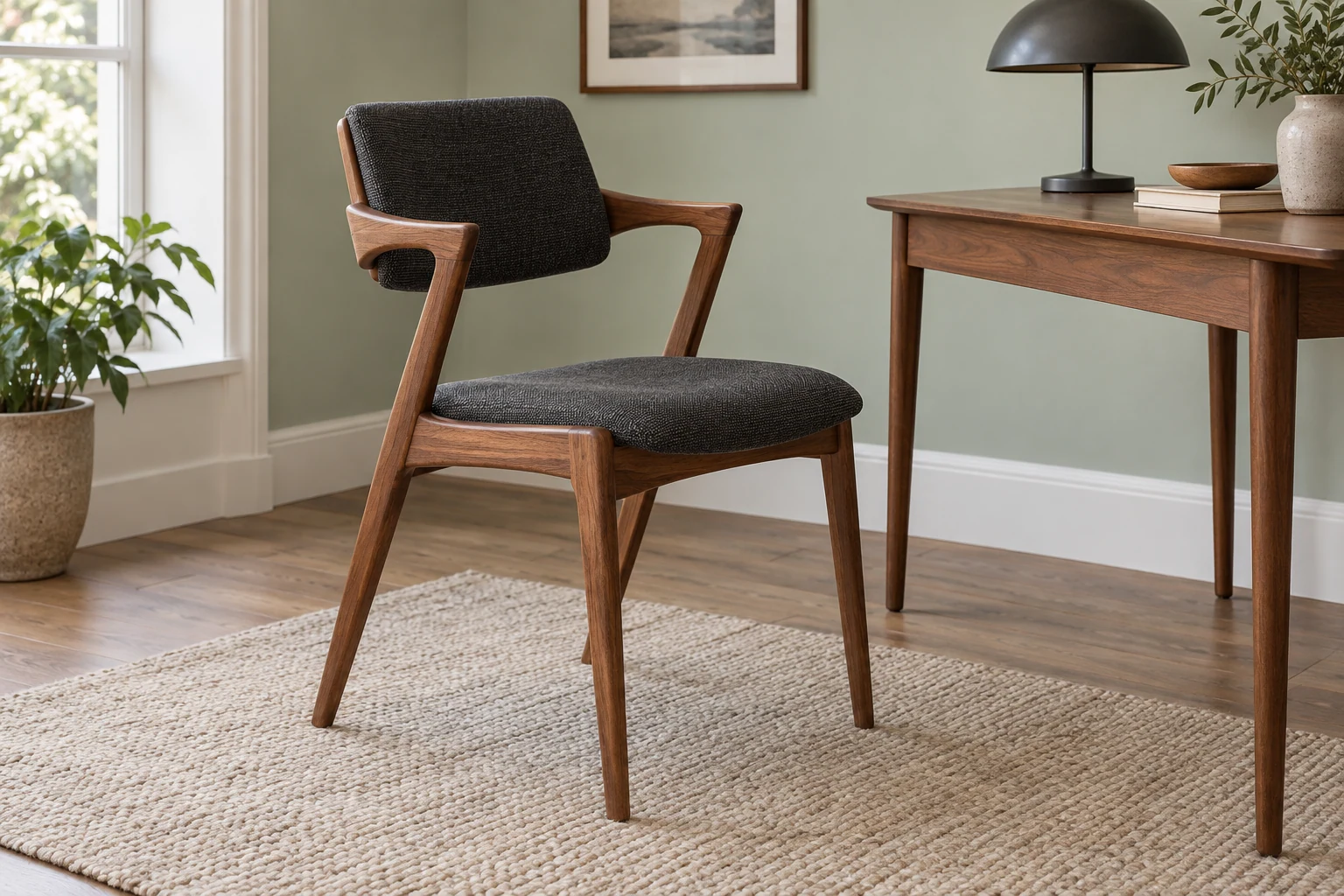
Why the back can move
Kai Kristiansen & Friends describes the No. 42, also known as the Z-Chair or Kai Chair, through its inclining back, half arms and inclined rear legs. Miyazaki’s product page likewise explains that the back is slightly movable. A seller’s remark that “the back moves” is therefore incomplete: the location and nature of the movement matter.[1]
Ask the seller to show the back and its attachments together, then describe what happens during ordinary use. Is the back inclining relative to the supports, or is a support moving at a timber joint? Is one side different from the other? A clear, unforced video can help a specialist understand the concern without pretending to measure strength remotely.
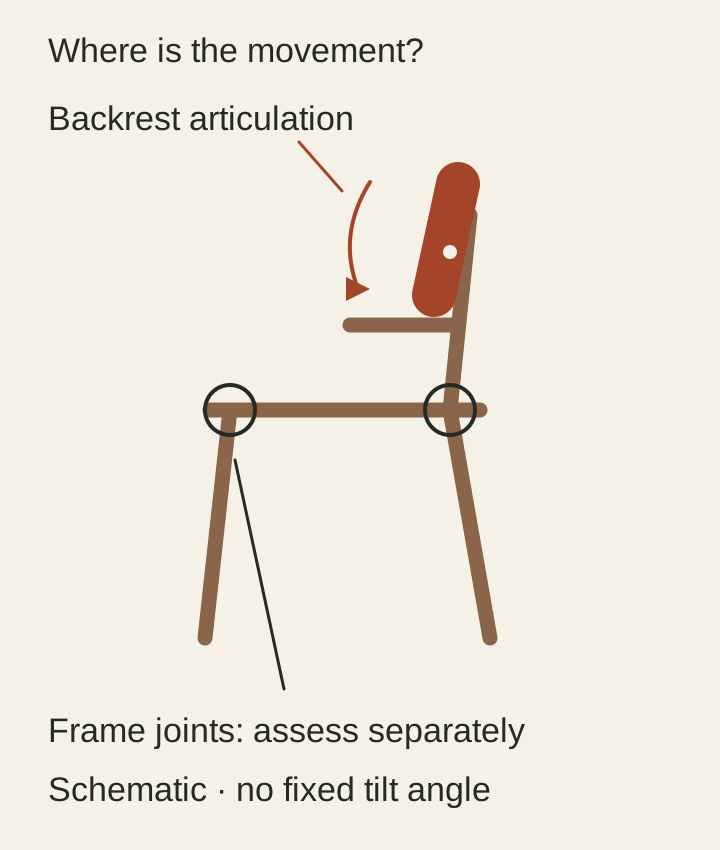
Do not tighten, glue or immobilise the back to make it behave like a fixed-back chair. Equally, do not accept a cracked support, altered attachment or loose frame as normal simply because the design includes movement. When the distinction remains unclear, let a restorer familiar with this production examine it before an ordinary sitting trial.
Danish design does not mean every chair is Danish-made
The design has more than one production chapter. Kai Kristiansen & Friends links to a restored No. 42 made by Schou Andersen Møbelfabrik and identifies Miyazaki Chair Factory in Japan as a current manufacturer. A Japanese producer name is therefore not, by itself, evidence of a copy.
Miyazaki’s account dates its No. 42 reissue work with Kristiansen to 2008 and describes his visits to check products. The older product page places the original design in the 1950s. Keep those statements separate: 2008 concerns the later production project, not the first design date and not the age of every Miyazaki chair.[2]
Ask what connects the offered chair to its claimed producer and period: records that belong to the piece, marks in place, dimensions and coherent construction. A wood species named in a listing or a newly applied finish does not establish an early date. If the seller cannot support a vintage-production claim, leave that claim unresolved while assessing the object itself.
If you are deciding between an older example and a later edition, read the original-versus-reissue comparison. Here the aim is to understand the particular No. 42 you might bring home.
The half arms still have to fit
Short arms can make a chair feel less enclosing, but they do not disappear beneath every table. Measure the highest part of the actual arm and the lowest obstruction beneath the table edge. That obstruction may be an apron, a drawer or a support rather than the tabletop itself.
Miyazaki’s published No. 42 specification gives the following reference dimensions. They describe its production and are not a universal measurement certificate for an older Schou Andersen chair or a later restoration. Measure the actual piece, including any changed upholstery.[3]
| Measurement | Published reference | What to compare at home |
|---|---|---|
| Overall width × depth × height | 53.5 × 54.5 × 75 cm | Clear width between table legs and room behind the chair. |
| Seat height | 46 cm | The actual seat-to-table relationship and your sitting position. |
| Arm height | 67 cm | The lowest apron or drawer obstruction, not only tabletop height. |
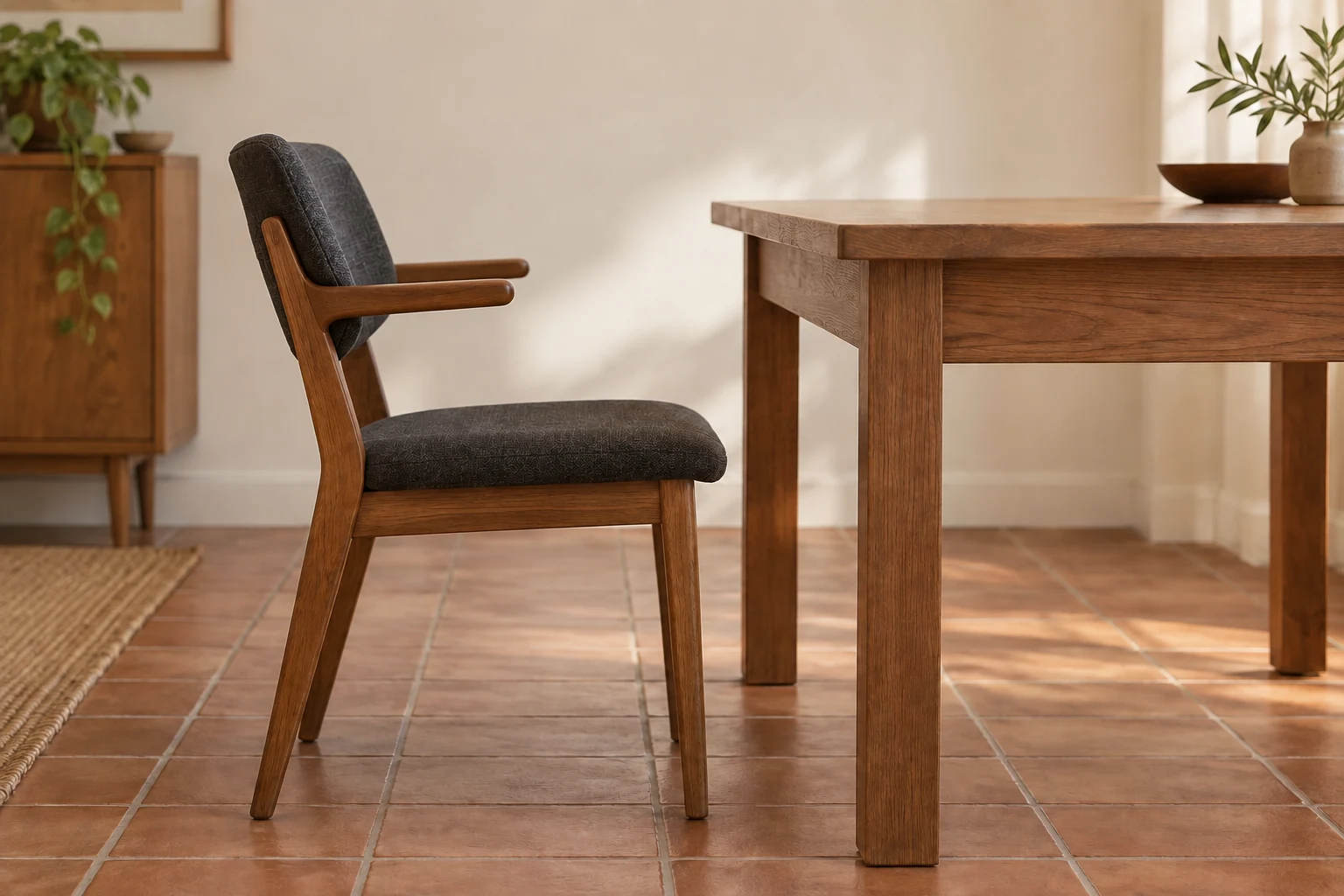
For example, a 74 cm-high table with an apron descending 9 cm has 65 cm of clearance there. A 67 cm-high arm cannot pass beneath that apron. Those are illustrative table dimensions paired with the maker’s arm-height reference. The short arm may still let the chair approach far enough for you, but you need to try the actual relationship rather than treating the collision as either harmless or automatically disqualifying.
During that trial, notice where your forearms rest, whether the arm ends obstruct your approach and whether you can reach the table without perching on the front of the seat. Include the rear legs and the space needed to pull the chair out. A handsome side view is not a seating trial.
Two upholstered parts, one sitting position
The seat and back should be assessed together. Ask whether both were renewed, which filling and covers changed, and whether the work altered the profile. A thick replacement seat can raise you relative to the arms; a rebuilt back pad can change where support meets your body.
Look at the side view as well as the fabric from the front. Ask the upholsterer to retain the appropriate contours and account for the back’s movement and attachment. A quote for covering the seat alone is not a quote for restoring the whole chair.
If the offered piece is ready for a normal trial, sit at the intended working or dining height and lean back gently as you ordinarily would. Stop if the frame moves, a connection shifts unexpectedly or something feels insecure. Do not turn the visit into a repeated rocking or loading test.
Confirm a repair route for this chair
Send any back-attachment concern to a specialist with photographs of both sides, the whole frame and the maker evidence. Ask whether the problem is in the upholstered back, its articulation or the timber structure. The repair plan should follow that diagnosis rather than begin with a generic upholstery price.
Do not assume that parts or support for a later Miyazaki chair extend to an older Danish example. Ask the relevant maker, dealer or restorer whether they can assess this production and supply or repair what is needed. Record the answer before making a purchase that depends on a replacement part.
For a set, repeat the enquiry for any chair that behaves or sits differently. One fixed back among several moving backs could reflect an alteration; a different seat height could reflect rebuilding. Those differences need an explanation. They do not become acceptable merely because all the chairs share the same fabric.
A message for the seller
Please confirm the claimed producer and age of each No. 42, with any object-linked records and marks photographed in place. Could you show both back attachments and describe any movement in the back or frame? I also need actual arm and seat heights, any upholstery or structural repair history, and details of parts replaced or work still required.