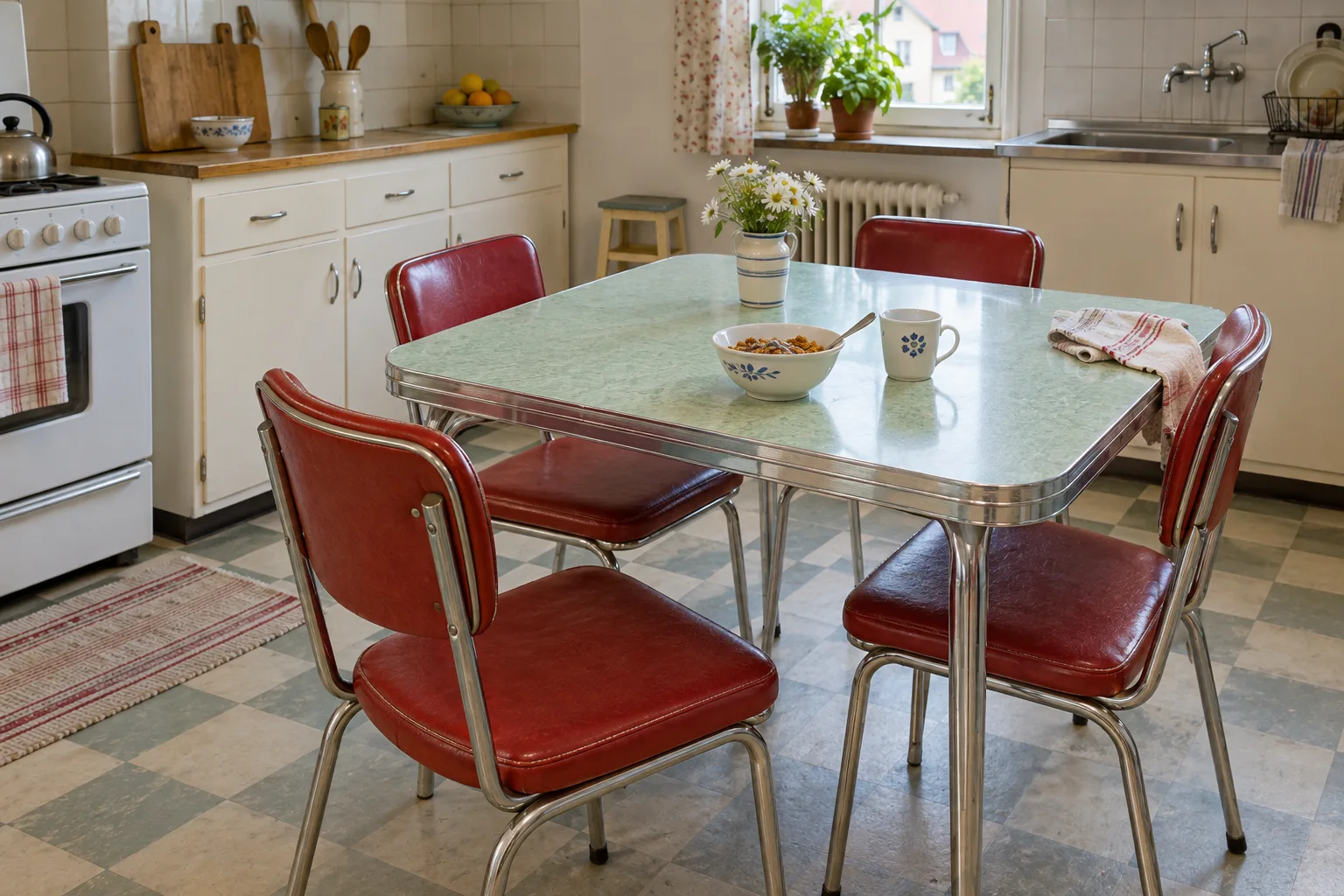
The chairs make the colour work
A pale green or speckled tabletop with chrome legs and coloured vinyl chairs can make a small kitchen feel like an actual room, rather than a place where appliances happen. Choose the combination you like, then imagine breakfast, a laptop and two people getting past each other.
Start by separating a manufacturer claim from a material description. Formica is a brand; other makers also produced decorative laminates. Ask for a label or documented specification if the brand or date affects the price. A pattern which looks convincingly mid-century is not enough to establish either.
Ask whether the chairs were sold with the table, assembled later or re-covered. A later pairing may suit you beautifully. The useful question is whether the seat heights, arm clearances and leg positions make a comfortable set now.
Follow the whole perimeter
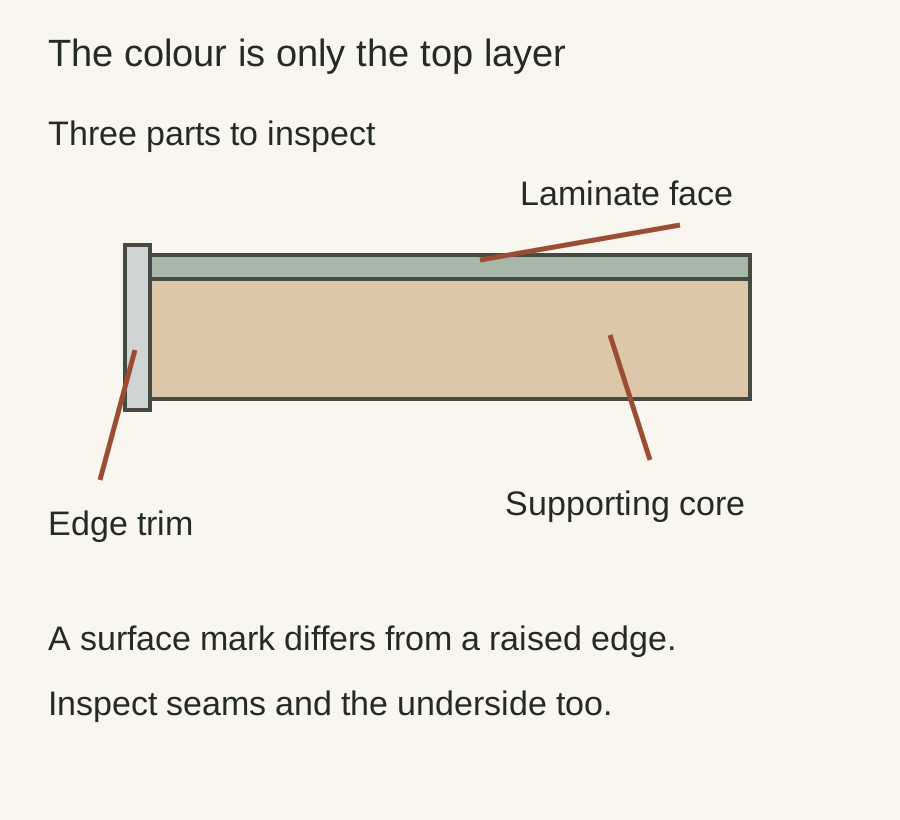
View the top from a low angle in ordinary light, then look underneath. Follow the corners, metal or plastic edging, extension seams and any screw holes. Is the surface flat? Does the trim remain close to it, or is there a gap or a raised area? Ask for a side view where a reflection makes the shape hard to read.
Formica’s care guidance warns against flooding seams because liquid can swell the supporting core. That explains why a raised edge needs more attention than an isolated scratch. It does not prove the cause of a particular bulge, nor establish which core material your table contains.[1]
Keep three observations separate: a mark on the decorative face, trim coming away, and a change in the shape or integrity of the underlying board. A specialist can assess whether local work is feasible. Replacing a top can also change the detail and proportions that attracted you to the table.
Try dinner with all the pieces present
Have the seller show the complete extension sequence if the table extends. Check that the leaf belongs to the current mechanism, sits in its intended position and has its necessary supports. A colour difference on a leaf can reflect a different exposure history; it does not explain a step between surfaces or a missing support.
Sit at the table with each chair that will be used daily. A broad metal apron can leave less thigh room than the tabletop height suggests. Check where your knees and feet go, whether neighbouring chair legs collide, and whether the occupied chairs leave a usable route through the kitchen.
Inspect the vinyl at front corners, seams and beneath the seat where accessible. Ask what has been replaced. New covers can be a useful improvement, but do not assume they include new padding, sound seat boards or secure fixings. Look at the metal frames independently of their shine.
For an incomplete or reluctant extension, continue with the extending-table guide.
Choose the amount of work you mean to buy
| What the set needs | Decision before making an offer |
|---|---|
| Usable top, ordinary marks, comfortable sound chairs | Decide whether you like it as it is, and price delivery. |
| Sound table, worn chair covers | Obtain a chair-by-chair upholstery scope; compare the finished set. |
| Raised core, loose structure or incomplete extension | Resolve the repair and replacement route before calling it ready for use. |
Imagine two equally appealing sets: one is complete and usable, the other needs four seats re-covered. Add the actual upholstery estimate and transport to the second asking price. That calculation is more useful than the seller’s claim that vinyl is cheap or that the table will clean up.
One set, one useful enquiry
Please show the top in low side light, its complete edge and underside, and the table fully extended. For each chair, please describe movement, seat condition and any replaced parts. Are the table and chairs documented as an original set, or are they a later pairing?
Clean the face without soaking the joins
For a confirmed, sound laminate surface, use the maker’s suitable mild cleaning method, avoid abrasive pads and keep seams dry. Formica recommends protection from direct cutting and hot cookware. A heat-resistant material is not an invitation to put a pan straight from the hob onto an old table.[1]
Do not sand it as though there were fresh timber beneath the pattern. The decorative face is part of a layered surface, and polishing harder cannot replace it. Keep ordinary wear when you like the table enough to enjoy it; scope a damaged edge before a fresh shine distracts from the real job.
For the material distinction, read solid wood, veneer or laminate.