
The space beneath the seat explains the appeal
LK Hjelle describes Sigurd Resell’s 1971 Falcon as a hammock-inspired chair, with a suspended seat that can move gently within its frame. The current range includes different backs and cushions. This helps explain the design’s appeal, but current specifications do not identify the materials and fittings of every older example.[1]
That suspended construction changes the buying inspection. On an ordinary armchair, a loose cushion sits on a seat structure beneath it. Here, you need to understand the sling and how it connects to the surrounding frame, as well as the soft cushion resting inside it.
Ask for one whole view and four located details
Request photographs of the complete chair from the front, side and rear, then each suspension area with enough surrounding structure to locate it. Number the corners on a copy of the overall photograph. An isolated close-up of a strap or ring is difficult to interpret when you cannot tell where it belongs.
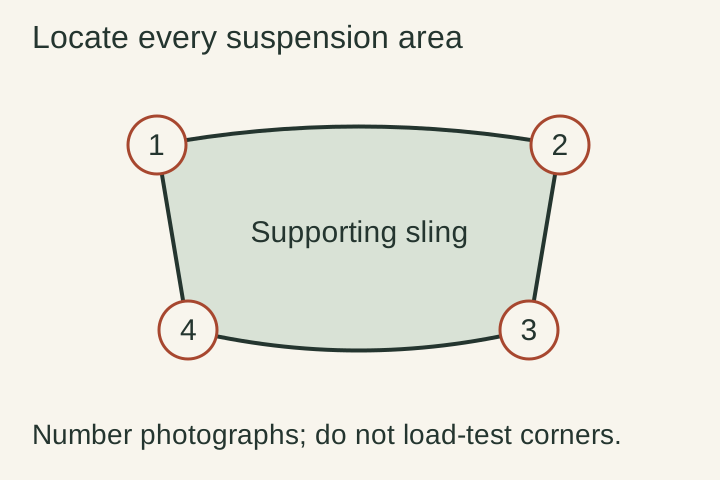
| Area | What to have assessed |
|---|---|
| Supporting sling | Tears, worn edges, distorted shape, patches and its fit in this frame. |
| Attachment areas | Completeness, wear and any mismatched or improvised connection. |
| Outer frame | Loose joints, damage and previous structural repairs. |
| Loose cushion | Cover, seams and filling, independently of the support beneath it. |
Compare counterpart areas, but do not assume every component must be identical where the design gives it a different role. Have unexplained differences identified by someone familiar with the version. A shiny new fitting may be an appropriate replacement or an unsuitable substitution; appearance alone cannot settle it.
Gentle movement is different from an unexplained fault
A suspended seat may move in normal use; that does not excuse a frame joint opening or a connection slipping. Ask the seller to distinguish the intended movement from the fault you have observed. If a support, corner or frame is visibly compromised, postpone sitting until it has been assessed.
Do not bounce in the chair, pull hard on the sling or load one corner to prove its strength. Nor should a belt, cable tie or convenient piece of upholstery webbing be treated as a substitute for a specified load-bearing connection. Describe what is missing and let the repairer identify the appropriate solution.
If the chair is confirmed ready for use, try it with the included cushion and any footstool you intend to use. The amount you settle into the seat, the position of your head and the ease of getting up are personal fit questions. A familiar silhouette cannot answer them.
A cushion quote is only one line of the budget
The current Falcon First information describes replaceable components. Use that as a reason to ask about service, not as a guarantee that a new part fits every older chair. Send the manufacturer or specialist clear identification evidence and the measurements they request before ordering.[1]
Ask for a written scope naming the sling, attachment components, frame work and cushion work separately. Include inspection where photographs cannot establish the condition. If several supporting elements have been replaced, keep that history with the chair instead of describing the entire object as untouched.
A worthwhile comparison
Compare a complete sound Falcon with the project delivered to a specialist, repaired with agreed components, upholstered as needed and returned. If a critical attachment remains unidentified, the project total is still open.
The airy outline is most enjoyable when you no longer have to wonder about its hidden supports. Put the investigation into the suspended structure first; choose the cushion colour once that question is settled.