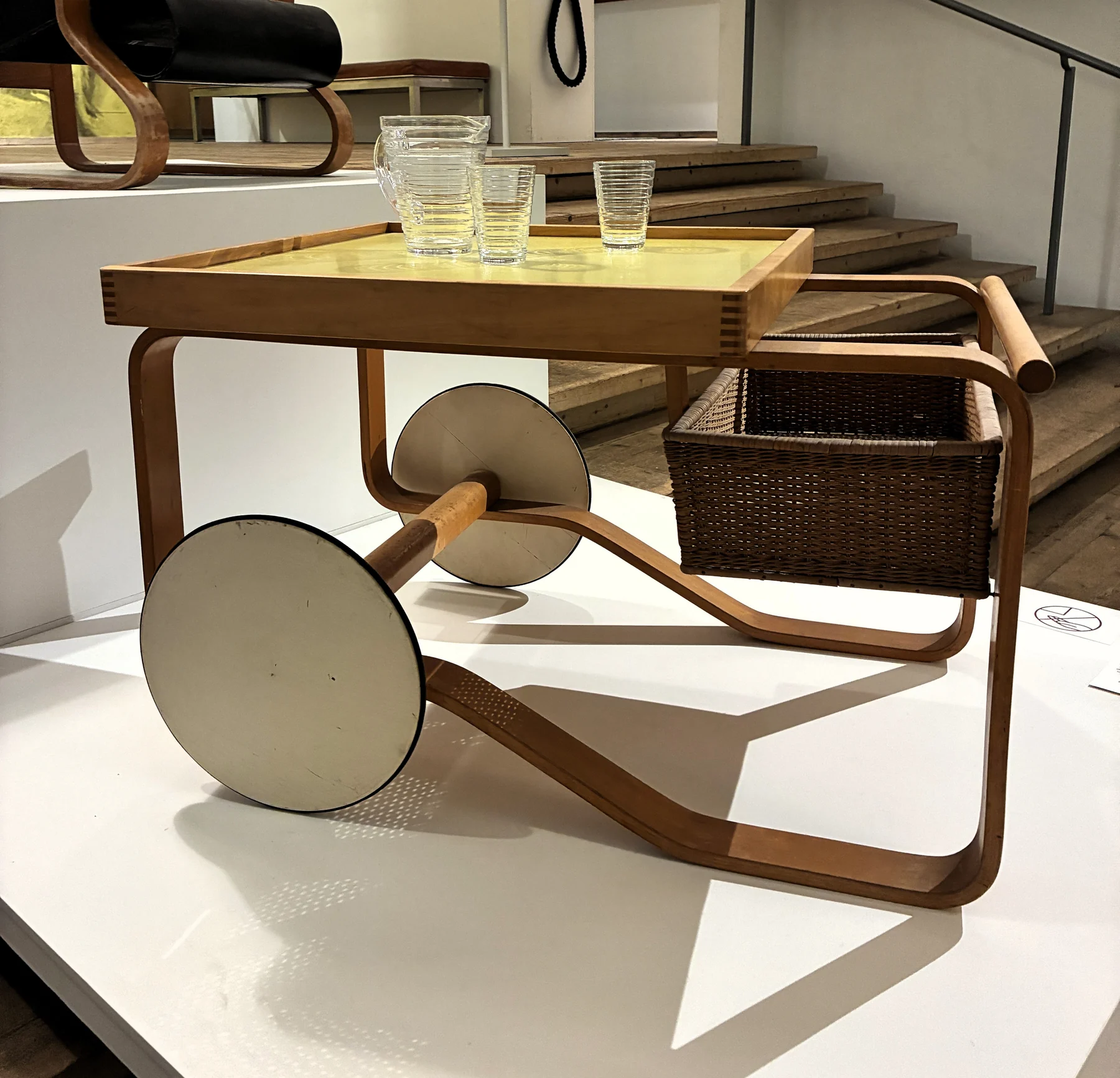
Decide whether it will move or mostly stay put
A cart used as a stationary drinks display has different demands from one wheeled from kitchen to dining room. Write down the route, floor surfaces and thresholds, then measure the widest part of the trolley including handles and projecting wheels. Include turning space, not just door width.
Plan its parked position too. Keep the normal route clear and avoid a place where a door can strike glassware. If children or pets can reach the contents, choose storage and access arrangements appropriate to the household rather than relying on the cart’s height.
Inspect each wheel and its attachment
Ask the seller to show the empty trolley moving slowly over a suitable level surface. Watch whether each intended moving part rolls or swivels freely, whether the cart tracks as expected and whether a wheel or fixing shifts relative to the frame. Stop if something catches or the structure moves unexpectedly.
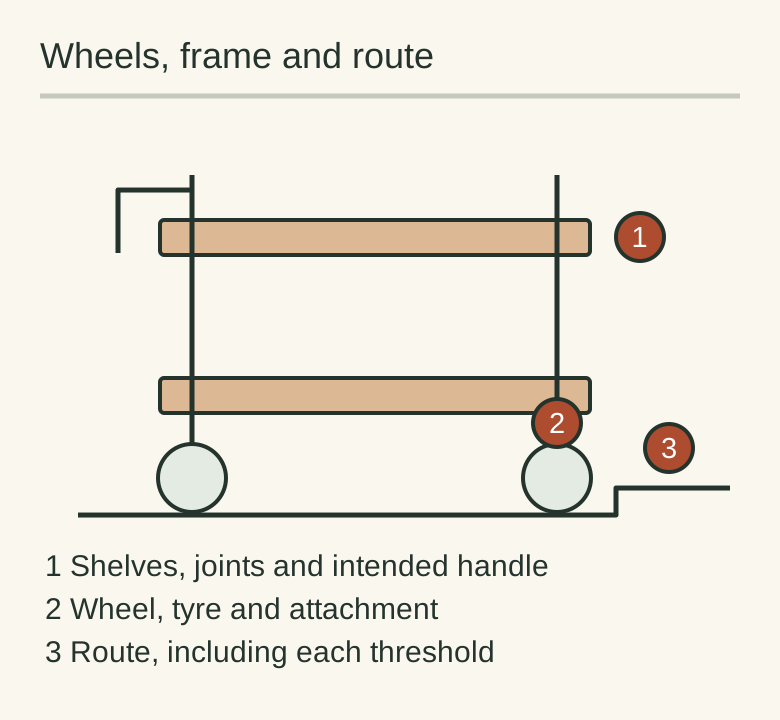
Look for missing tyres, damaged tread, bent stems, loose sockets and mismatched replacement wheels. If brakes are part of the design, establish their intended operation. Do not assume every trolley has brakes or add generic castors without checking fit and effect on height and stability.
Read the materials one part at a time
Artek’s current Tea Trolley 900 specification distinguishes a form-bent birch frame, MDF wheels, a rattan basket and a ceramic-tile top. This product-specific list shows why one cleaning method or replacement material cannot be assumed to suit every component of a serving trolley.[1]
For the candidate you are buying, inspect shelf supports, raised edges, joints and any loose tray. A decorative gallery may help contain objects, but it is not necessarily a carrying handle. Ask which parts are intended to be lifted and which remain fixed.
A replacement glass shelf should be documented for the exact support arrangement. Loose tiles, lifting veneer, cracked basket attachments or failed metal joints need assessment. The material name in a listing does not establish the remaining strength of the assembly.
Plan the load without making one up
List the objects you intend to use: bottles, cups, plates or a tray. Their combined weight and position matter, but this guide cannot provide a safe kilogram limit for an unidentified vintage trolley. Ask for the exact manufacturer’s information where available and a suitable assessment when the structure or loading remains uncertain.
A useful empty-trolley inspection
- All wheels and fixingsPhotograph each type and any replacement.
- Frame and handleShow the connections, including accessible undersides.
- Shelves and galleriesCheck retention, damaged edges and intended removable parts.
- Route and parkingMeasure turns, thresholds and the place it will stand.
Rehearse the route empty after the trolley has been judged suitable for use. Do not start with hot drinks or valuable glassware. If a threshold or rug edge makes the route awkward, use the piece in a stationary role only if that role is itself appropriate, or choose a different cart.
Ask about replacements before buying parts
Ask the seller
Please show the empty trolley rolling and turning, all wheel fixings, the handle joints and the shelf supports. Which wheels, tyres, shelves or fittings are replacements? Is there model-specific loading or operating information, and what parts are intended to detach for transport?
A missing wheel tyre may be repairable, but confirm the correct part and work before counting it as a trivial expense. Buy the trolley for a route and use that it can actually serve, with the necessary work included in the decision.