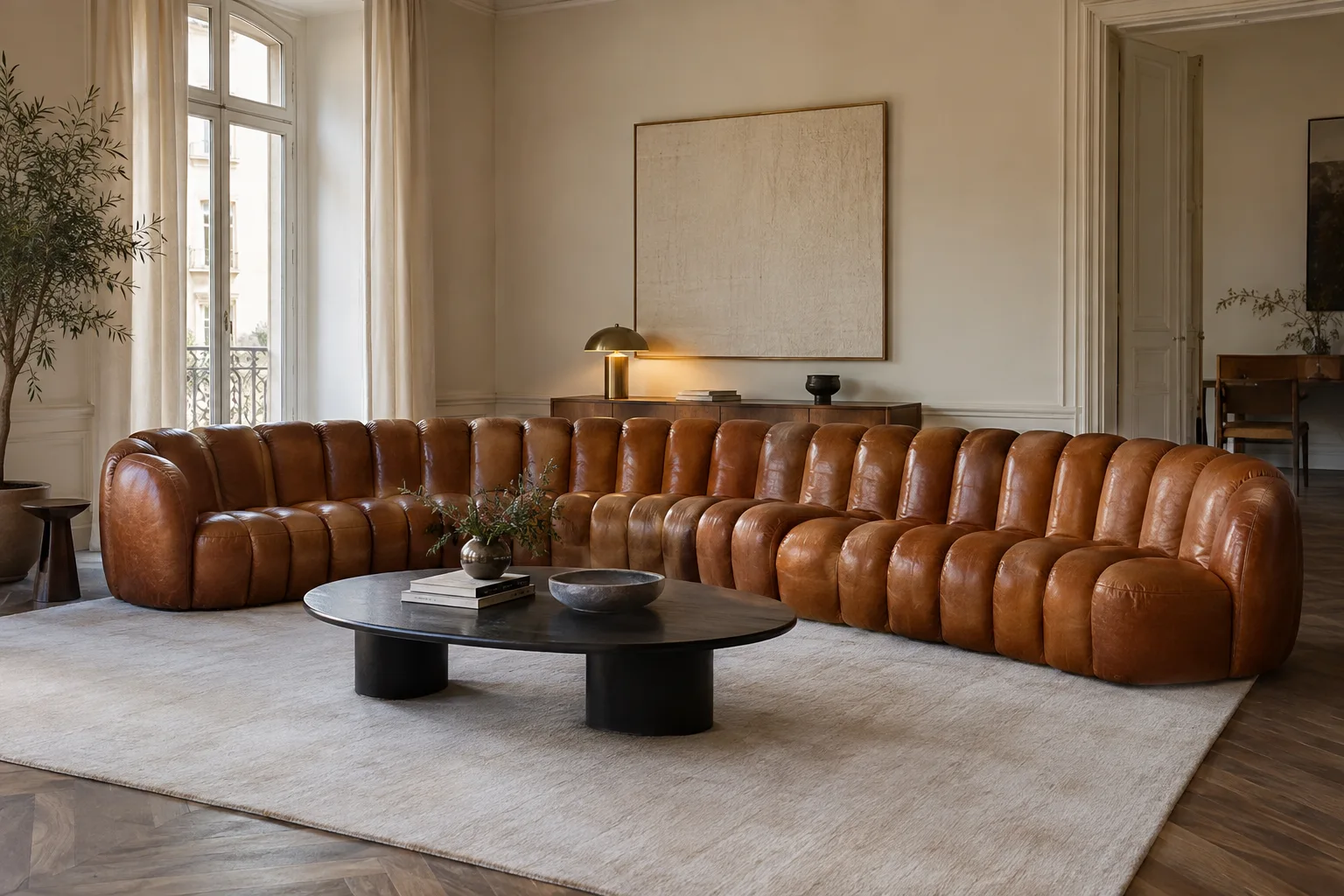
A line of seating, not an ordinary sofa
A DS-600 can give a living room a surprisingly relaxed shape. Instead of lining up three cushions against a wall, it can turn towards a window, open around a table or bring two parts of a room together. The attraction is the curve. The buying mistake is to admire that curve without checking what makes it hold together.
de Sede dates the system to 1972 and describes repeated elements with an L-shaped rigid foam core, connected by a plug-in hinge and a leather-and-zip construction. The maker also lists distinct end and other elements in the current family. This gives you a useful component vocabulary; it does not establish the age or compatibility of pieces assembled by a previous owner.[1]
Ask for one photograph of the complete sale, followed by views of both ends and the backs. Give the pieces references in a simple inventory. A seller who describes “twenty sections” should confirm whether that count includes the ends and whether any sections are separate, incomplete or from another purchase.
Count places to sit by trying the arrangement, not by counting the vertical divisions. Several narrow elements can support one person. If your aim is an everyday sofa for three people, view it with that use in mind: where will shoulders, feet and a side table go?
The connection is part of the purchase
| Record | What to establish |
|---|---|
| Middle elements | Quantity, covering, actual dimensions and any visibly different pieces. |
| Ends and special pieces | Which end each completes and whether it belongs to the planned arrangement. |
| Connections | Both sides of each connection, included parts and any missing or damaged components. |
| Previous work | Which elements were recovered, refilled, repaired or acquired separately. |
Ask the seller to demonstrate the ordinary connection and rearrangement process only if they know the instructions for that production. Do not force a stiff connection or ask for a dismantling experiment. If the seller cannot show a complete assembly, make that a question for a specialist before treating all the pieces as a working sofa.
A closing zip does not answer every question about the underlying connection. Likewise, a missing connector is not automatically a cheap fix. Send photographs of the actual parts, the identification evidence and the numbered inventory through de Sede’s retailer service route. Obtain compatibility, availability and lead time for your example. The maker offers a spare-parts enquiry route, not a universal promise that every older element can be completed.[2]
If you intend to add another run later, ask that question now. An attractive second-hand element with similar leather may have a different history, condition or fitting. Price the arrangement you can confirm today; regard an unconfirmed future extension as optional.
Draw the space around the curve
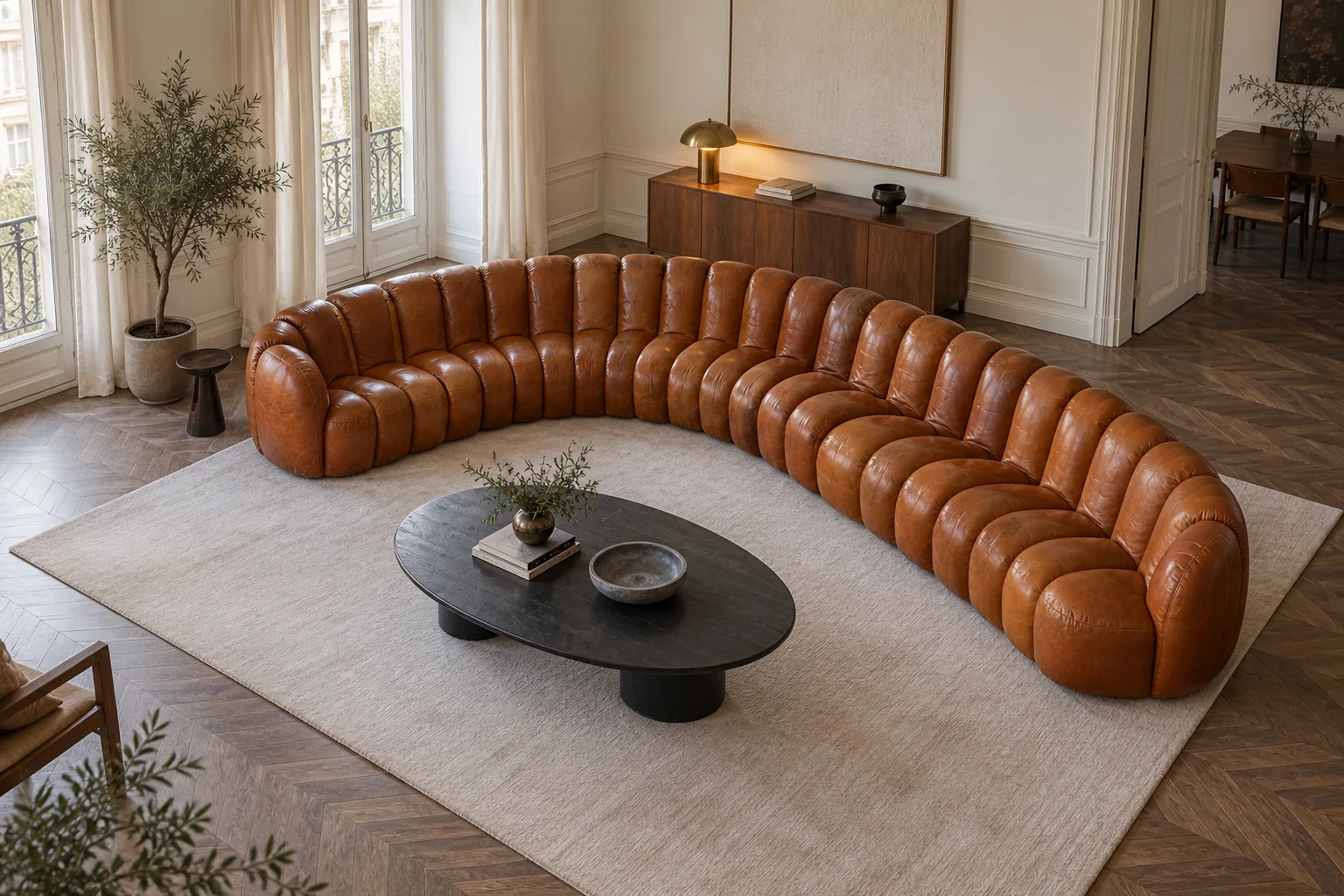
Ask for the overall footprint in the proposed curve as well as the dimensions of separate pieces. The length of a straightened run will not tell you how much floor a semicircle takes. A photograph from above, or a simple seller sketch with maximum width and depth, makes the first room comparison much easier.
Mark the outline on your floor with paper or another method that will not affect the finish. Add the table, the door swing and the route people will take behind the sofa. Try sitting where the inside of the curve will be. If reaching the coffee table means squeezing between seats, the shape needs another look.
Consider a modest curve before assuming the largest arrangement is the best one. Keeping both ends accessible can matter more than fitting every possible element into the room. A useful plan identifies any spare pieces and where they will live; it does not hide surplus modules outside the photograph.
Agree how the carrier will separate, number, protect and reassemble the run. The inventory should travel with the furniture. Small repeated pieces make an apparently simple delivery surprisingly easy to miscount, especially when ends, loose pads or fittings are packed separately.
A repair brief for the sofa you will keep
Compare the upholstery along the whole run in neutral light. Record colour differences, compressed areas, open seams and earlier patches by element number. A single newly covered section can stand out beside older neighbours. Decide whether that variation is welcome before asking for a perfectly uniform finish.
Separate covering work from rebuilding the padding and repairing connections. de Sede’s repair service describes full or partial recovery, foam work and spare parts through a retailer. Ask which of those services applies to your run and what must be inspected before the quotation becomes firm.[2]
A useful enquiry
I am considering the attached DS-600 arrangement. The numbered inventory identifies the ends, middle elements and uncertain connections. Please confirm the proposed layout, any incompatible or missing parts, and separate prices for agreed covering, foam and connection work. Include transport, reassembly and the expected finished appearance.
Then compare that completed cost with a usable, already complete example. There is nothing wrong with buying a project whose variation and repairs you understand. The decision becomes much harder when the missing end, the unmatched leather and the delivery plan all remain somebody else’s problem.