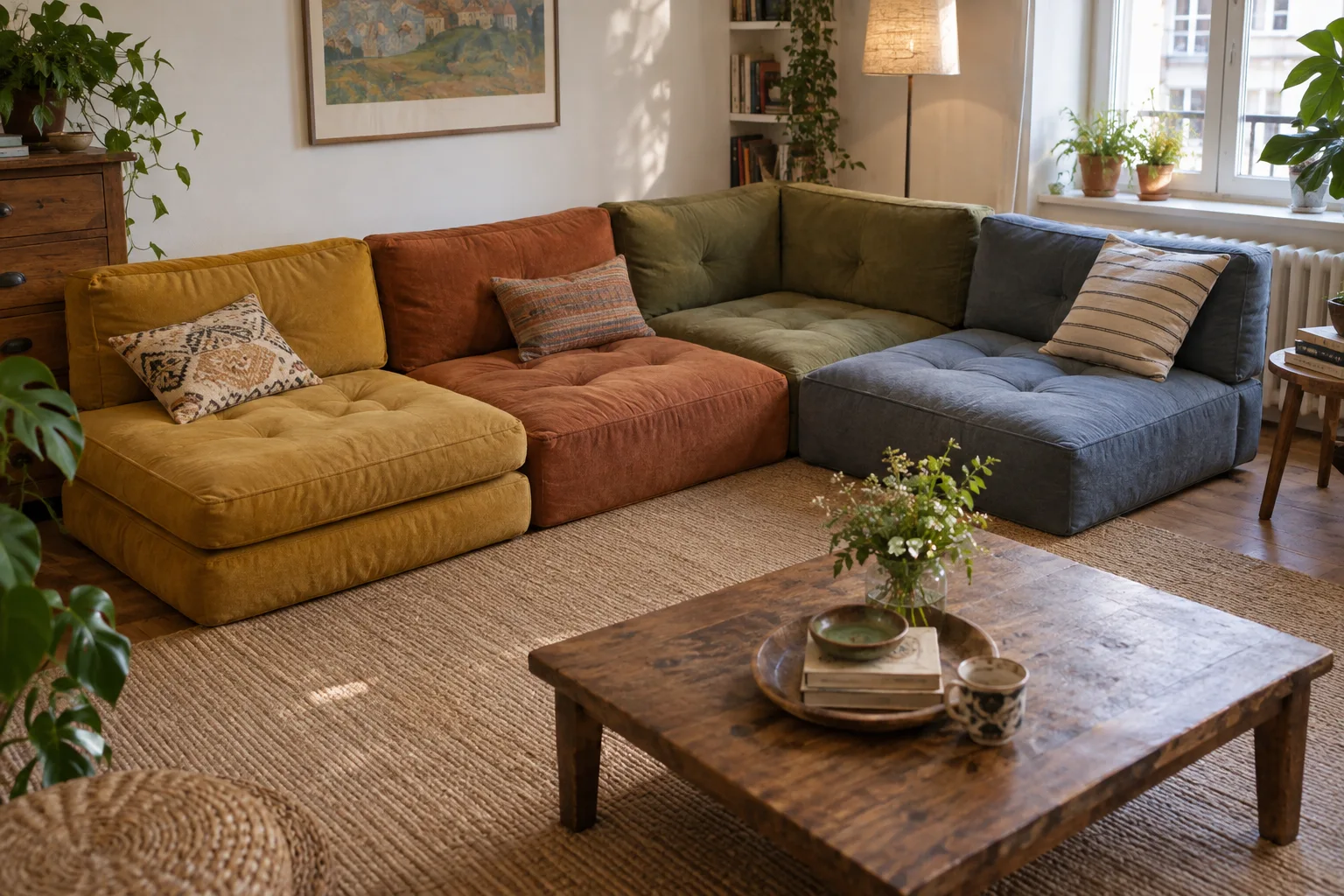
The photograph is an arrangement, not an inventory
The pleasure of Mah Jong is that the room can change: a long low run for conversation, a corner to curl into or separate places around a table. A used listing often shows only one attractive arrangement. It may conceal a second layer of pads or leave several back elements out of view.
Roche Bobois’s collection brochure describes a system built from seat cushions, straight backrests and corner elements. Its dimensional references include a square pad 95 × 95 cm and 19 cm high, with other shapes and heights listed separately. Use the brochure to understand the component vocabulary, then measure the offered pieces. It is not a promise that every generation or altered example has identical dimensions.[1]
| Component | Record for each one |
|---|---|
| Square seat pad | Quantity, actual width and depth, thickness, covering and underside condition. |
| Straight back element | Quantity, overall size, adjustment if present, and the seat position it belongs with. |
| Corner element | Shape and orientation, dimensions and the arrangement it can actually complete. |
| Chaise or other special element | Exact shape, size and associated supports or parts; do not count it as another square pad. |
Give every piece a simple reference such as P1 or B2 and ask the seller to use the same references in photographs. You can then connect “small repair on P3” with the pad in your proposed reading corner. A description saying “some wear” across fifteen pieces is too vague to price usefully.
Six pads, three places: do the room arithmetic
For a planning example, suppose the actual square pads measure 95 cm on each side and you want a straight run of three double-layer positions. You need six pads for those three positions, plus the appropriate backs. The pads occupy 285 cm in length before you consider gaps, adjoining furniture or circulation. This is a counting example, not an assembly instruction.
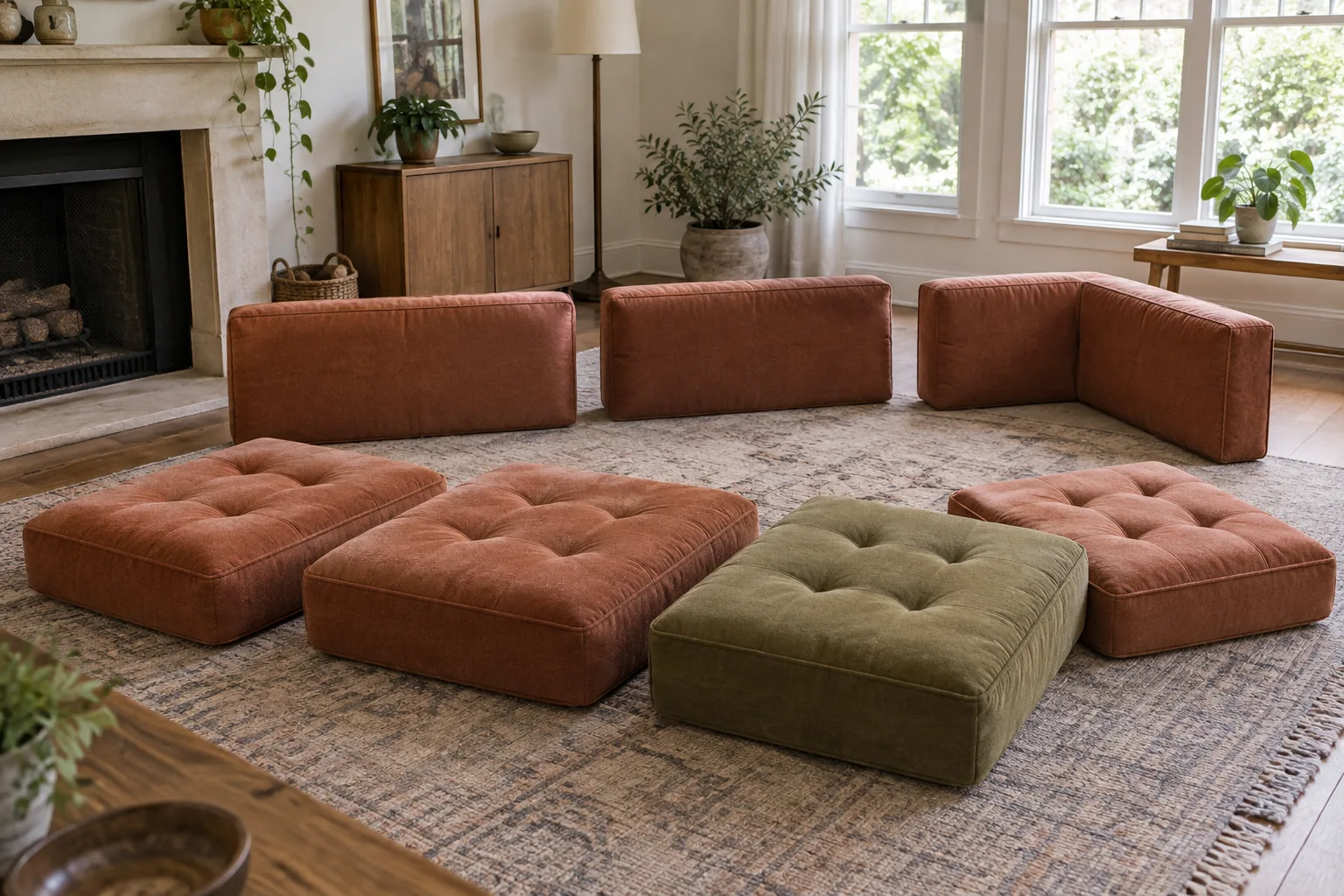
Now sketch the arrangement you would use most days. Add the doors that open into it, the coffee table and the path to the window. A low composition can look airy while taking a substantial area of floor. The full depth matters just as much as the long edge.
Try the actual layered seat with its back before choosing how high to build it. Unoccupied cushion thickness is not the same as occupied seat height. Ask whether the seller can show your intended configuration assembled correctly, following the instructions for those elements. Do not improvise stacks simply because the photograph makes them look plausible.
If you plan to rearrange it often, move one appropriate element during the viewing with the seller’s agreement. Think about where spare pieces will live and who will move them. The most useful modular sofa is the one you will actually reconfigure, rather than the one with the largest theoretical number of combinations.
Decide which colours you are willing to keep
A mixed set can be the attraction. Decide which combinations you enjoy before treating reupholstery as the answer to every mismatch. Arrange the seller’s component photographs together and mark the positions you want. Look at the quieter sides and backs too, especially where the sofa will stand away from a wall.
Ask for daylight views of adjoining pieces. A different colour may be intentional, faded or replaced; those explanations have different implications if you intend to add matching fabric. Confirm the current availability of a named covering instead of assuming that an old collection can still be ordered.
Ask an upholsterer familiar with the system to quote by identified element. Tufting, edge shape, back details and the relationship between adjoining pieces all belong in the brief. A price for “six cushions” is not enough if two of them are special shapes or if the backs also need work.
Mark the inventory before asking for a quote
P1–P4: keep and clean if suitable. P5–P6: assess filling and replacement covers. B1–B3: retain covering, inspect support and adjustment. Please price each agreed task and explain any change to the finished dimensions or appearance.
That is an example of a useful brief, not a diagnosis of your set. Let the inspection determine the work. Separating retained pieces from proposed repairs prevents an appealing purchase from becoming an unplanned complete rebuild.
Buy the arrangement you can finish
Before paying for an incomplete set, send its identification details, dimensions and photographs to Roche Bobois or a suitable specialist. Ask whether the missing element can be supplied for that configuration, in a covering and timescale you accept. A related name or similar square shape is not enough to establish compatibility.
The Outdoor collection is separately specified by Roche Bobois, including outdoor materials and bases. Its existence is a reason to identify the offered collection carefully, not permission to move an indoor vintage set into the garden or mix generations without confirmation.[2]
Compare the full price of your intended arrangement: purchase, any extra elements, agreed upholstery work and delivery. If one missing corner determines whether the sofa works in your room, obtain a real answer about that corner first. Otherwise you are buying a hopeful pile of pieces rather than the living room you drew.
Ask the seller to attach the final numbered inventory to the sale record. It should state what is included, known alterations and how the pieces will be packed. When the delivery arrives, the same list lets you check a complicated purchase without relying on memory or the original styled photograph.