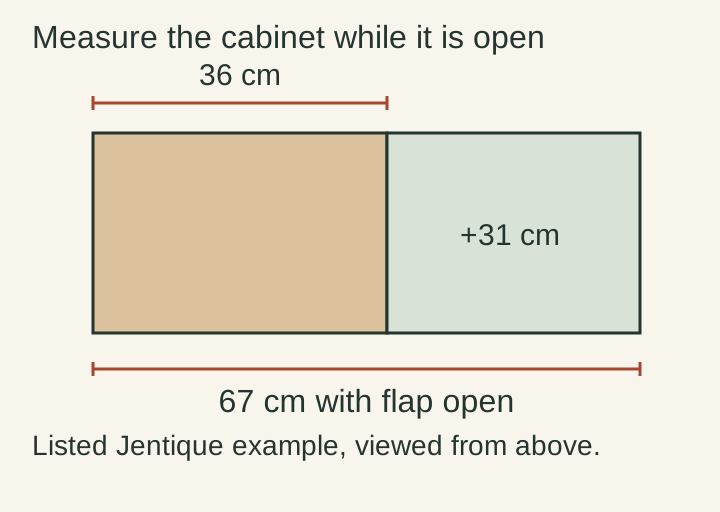
A 36 cm cabinet can become a 67 cm working surface
Pavement Vintage’s record for a Jentique cocktail cabinet gives a closed depth of 36 cm and an open preparation-surface depth of 67 cm. In that example the working arrangement extends 31 cm beyond the closed depth. These are measurements reported for one cabinet, not specifications for every Jentique model.[1]
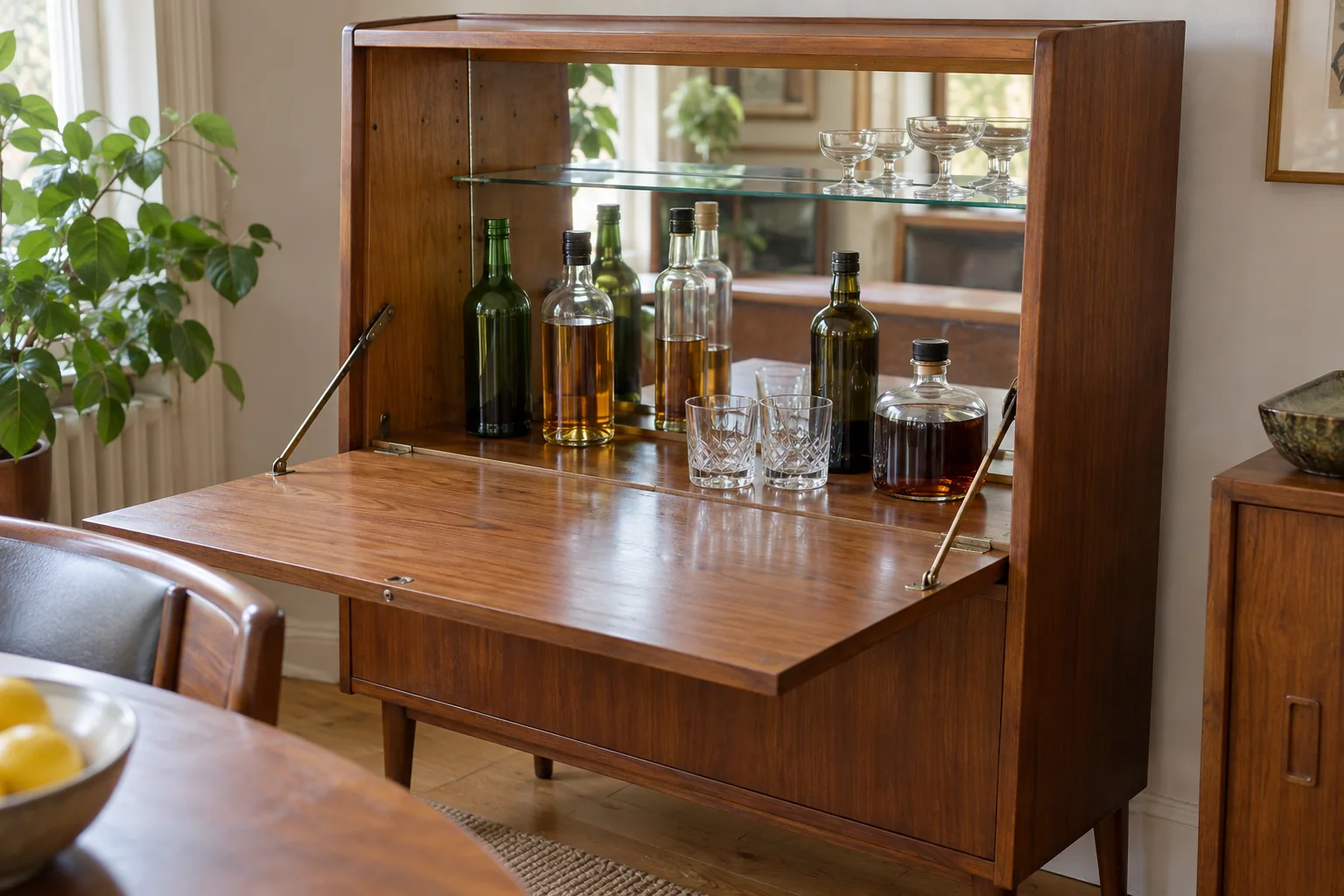
Mark both depths in your room, then stand where you would prepare a drink. Check the route past the cabinet with the flap open. Do not use the front edge as a handhold or assume it is strong enough to lean on; its supports and intended use need confirming.
Have the seller demonstrate the flap gently. Ask for both side supports, their connections to the cabinet and the hinges. Unequal movement, a loose fixing or a replacement stay deserves a specific explanation. A working lock tells you little about the condition of the supports.
Bring a bottle list, not a picture of a perfect bar
Design by Davies records a Nathan example with an upper interior 34 cm high, 58 cm wide and 25 cm deep, including a half-depth glass shelf and rail. That is useful information precisely because it describes the interior. Its 120 cm overall height would not tell you whether a particular bottle fits.[2]
Measure your tallest bottle with its stopper and the glasses you actually use. Check the clear space below and beside shelves, the opening past a rail and the movement needed to lift an object out. A bottle that stands inside a compartment may still be awkward to remove without tilting.
Choose a modest working set before filling every shelf. Leave room to put a glass down and move a hand. You can enjoy the cabinet’s period details without trying to recreate an entire bar service.
| Object | Measurement to compare |
|---|---|
| Tall bottle with stopper | Clear height and the route out of the compartment |
| Glass on a shelf | Shelf depth, rail position and space above the rim |
| Tray or shaker | Working surface and storage opening |
| Spare bottles | Lower shelf space and the seller’s confirmed support arrangement |
A bright interior can hide missing or altered parts
Check mirror edges, corners, shelf supports and any loose rail. Ask about chips, cracks, replaced glass and repairs; avoid touching a suspect edge. Mirror ageing can be an acceptable visual choice, while a cracked shelf has a different consequence. A glass specialist should specify a necessary replacement from the actual support and use.
Identify the flap’s surface rather than treating every shiny panel as wood. The cited Jentique record describes a Formica preparation surface. Ask how the offered surface has been treated and whether it is lifting or damaged. Do not choose a wood-polishing product by the colour of the cabinet around it.[1]
If there is a light, request the repair and inspection record for the electrical assembly. “Lights up” does not settle its suitability for use, and a removed plug does not tell you what work remains. Keep the lamp off until a qualified person has assessed an uncertain installation.
Make the contents of the sale explicit
Ask the seller
Could you show the flap fully supported, both stays and hinges, the glass shelf and its supports, and every included key or loose fitting? Please measure the closed depth, open projection and clear bottle compartments. If there is a light, what electrical work and inspection are documented?
Compare a complete working cabinet with the total cost of an incomplete one plus the missing glass, fittings and professional work. Buy decorative wear you like. Price every change needed before the first drink has somewhere dependable to stand.