Start with who can reach it
CPSC warns that storage and toy chests can trap children inside or injure them when lids fall. Its notice includes cedar, hope and blanket chests, even those kept in bedrooms or storage areas. The hazard is not limited to furniture sold as a toy box.[1]
Consider children who live in or visit the home and everyone who may use the storage. Keeping blankets inside does not prevent a child from opening it. An antique chest should not become children’s toy storage simply because its lid currently stays up in a photograph.
If access and lid safety are unresolved, pause the purchase. A chest already at home should be kept inaccessible pending the appropriate remedy and assessment. Do not rely on supervision or a missing key as the solution.
Identify the lock and the actual recall position
Ask for the maker’s name, model or serial information and photographs of the latch, lid fittings and labels. Use the manufacturer and relevant national product-safety service to check the exact piece. Save the current notice with your inspection record.
CPSC’s current warning says replacement locks for recalled Lane and Virginia Maid cedar chests are no longer available and urges complete removal of the locks on those recalled chests. Follow the current official remedy for an affected piece; an old seller promise of a replacement lock may be obsolete.[1]
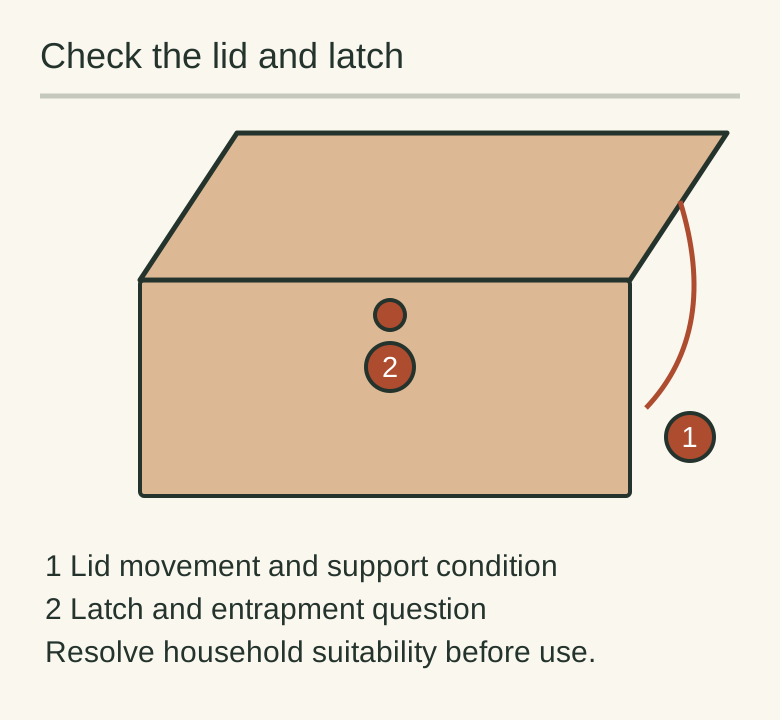
Do not copy a hardware modification from a different chest. Resolving a latch issue does not by itself establish the safety of the lid, hinges or overall use.
Inspect the structure before discussing the finish
Have a suitable person show the empty chest without placing hands or a head in a closing gap. Request photographs of hinge attachments, cracks around screws, lid distortion and any missing or replaced supports. Do not test an uncertain lid by letting it fall.
Check the base, corners and any lower drawer as well. A chest used as a bench may have suffered loads it was not intended to carry. Ask whether seating is documented for the exact design; a broad flat lid is not enough to establish it.
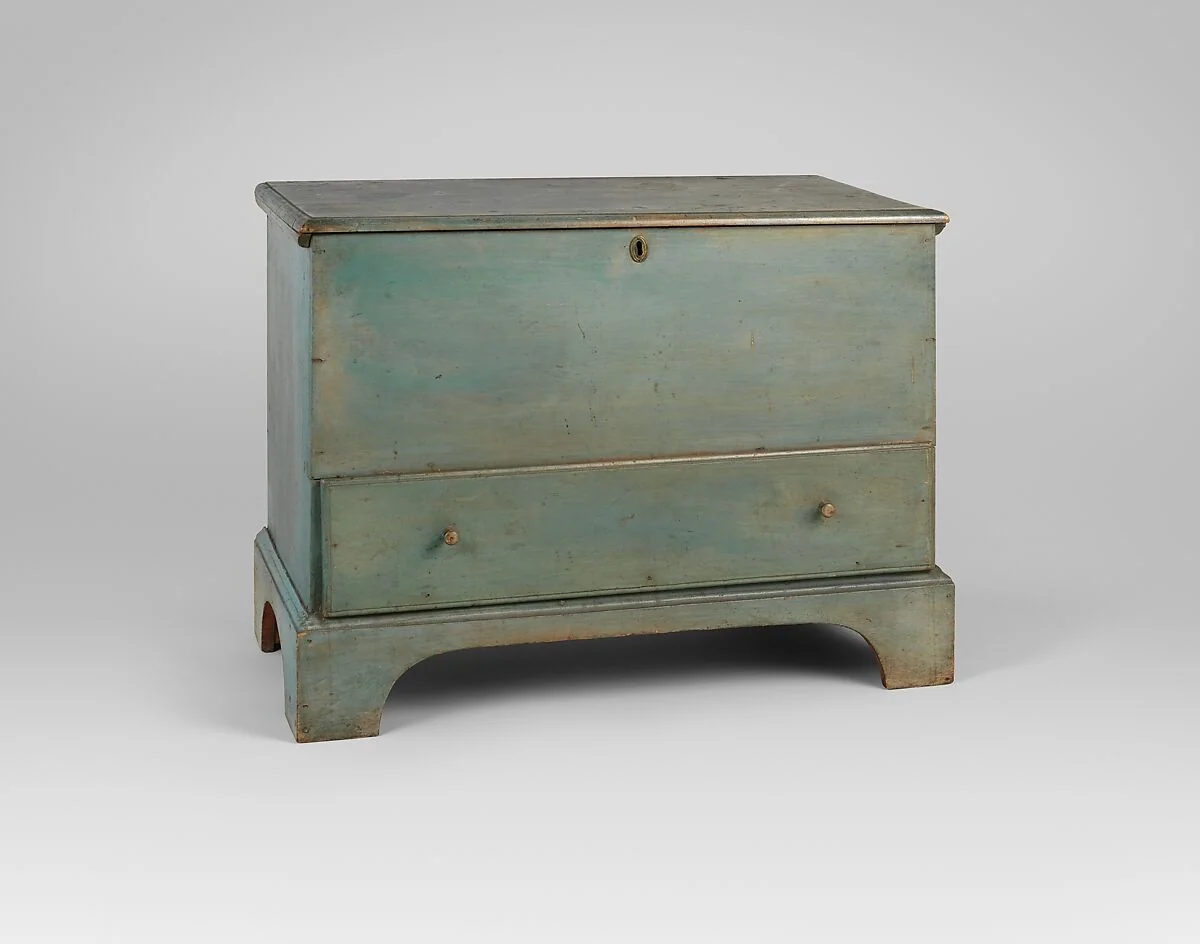
The illustrated Met blanket chest, object 66.10.15, is recorded as Shaker pine furniture from 1835–75 with a deep lower drawer. That combination shows why the top compartment and drawer need separate dimensions and condition observations.[2]
Decide what can sensibly be stored
Once household suitability is resolved, measure the clear opening and inside dimensions, including projections from fittings. Check the size of your folded blankets or storage boxes before assuming the chest will take them. A deep compartment can be awkward to reach even when its volume looks generous.
For textile storage
- Interior conditionRecord odour, staining, loose paint, splinters and any unknown lining.
- Storage historyAsk about damp, pests, cleaning and previous treatments.
- AccessCan the intended user retrieve items without leaning into an uncertain lid arrangement?
- PlacementLeave room for the approved opening position and any lower drawer.
Cedar scent is not a guarantee of pest protection, and a fresh liner does not explain the surface underneath. If an odour or contamination question remains, follow the separate home-entry assessment before putting clean textiles inside.
Make the purchase conditional on answers
Ask the seller
Please send the maker and model information, labels, latch, hinges, lid supports and empty interior. Has this exact chest been checked against current recalls, and what documented remedy or assessment exists? Please also describe repairs, storage history and any intended seating use.
If the chest cannot be made suitable for the household through an appropriate, documented process, choose another form of storage. Its age and decorative appeal can be appreciated without turning it into an unresolved daily-use hazard.