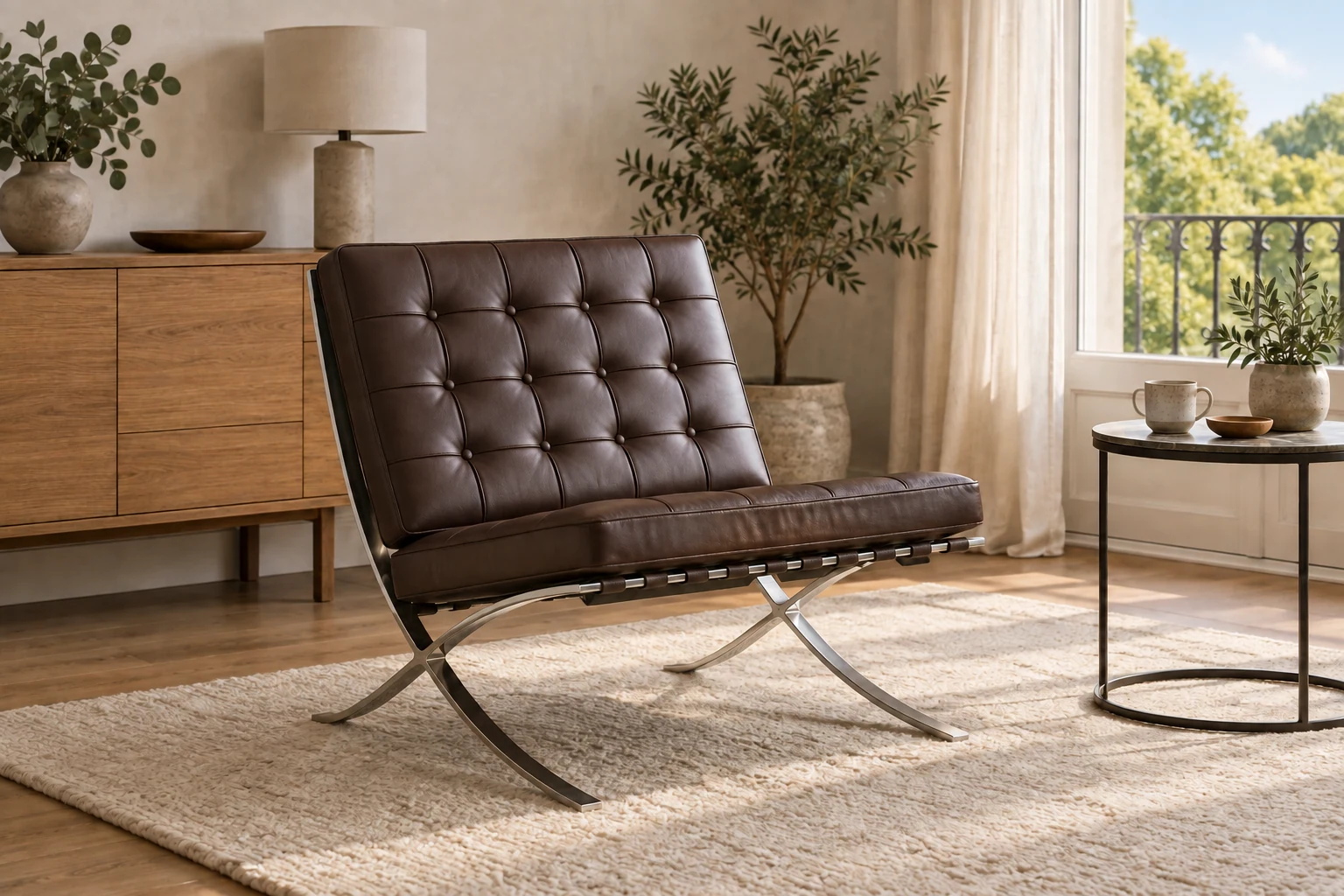
Begin with the parts the upholstery hides
The most persuasive sale photograph often shows a freshly covered seat against a bright wall. Ask for a view that explains how that seat is supported. With the seller handling the chair appropriately, photographs of the accessible frame, straps and cushion backs can turn “recently restored” into a useful account of actual work.
Look for missing or visibly damaged straps, uneven support and repairs at their attachments. Ask whether the straps were renewed with the cushions or retained. A repairer needs to assess the material and its connections together; a close-up of the leather’s colour cannot settle whether the support is sound.
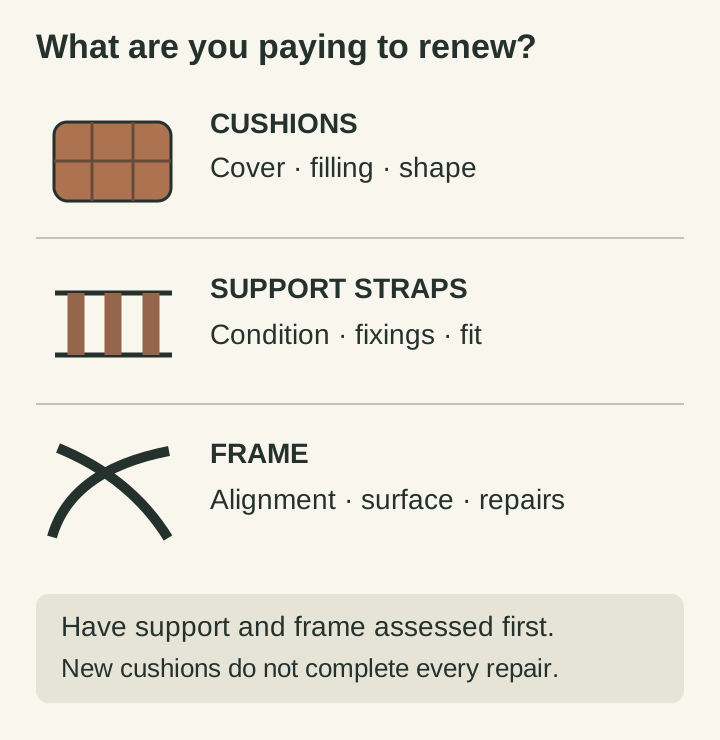
Have any distorted frame, suspect connection or failing support assessed before a sitting trial. Ask what needs doing to make the existing chair usable, then discuss the cosmetic result you want. This order helps prevent a beautiful upholstery bill becoming the first instalment of an unexpected structural project.
Which parts belong to which production?
Knoll records the Barcelona design as dating from 1929 and its production rights from 1953. These dates describe the design and a manufacturing relationship. They do not date an individual frame offered today. Request an object-linked record for the seller’s more specific period claim.[1]
Separate that frame record from the upholstery history. Replacement cushions can make an older chair enjoyable again. They also mean that the seat’s present colour, stitching or filling may tell you about a later repair rather than the original delivery. Save invoices and any photographs taken before the work.
The current Knoll range includes standard and relaxed cushions, leather and fabric upholstery, and several frame finishes. These documented options are a reason to research the offered version carefully. A soft-looking cushion, textile cover or dark frame is not sufficient evidence that a chair is an unauthorised copy.[1]
Ask for marks in their location on the frame, along with complete front, side and rear views. A cropped signature image should accompany the object record. Where attribution remains uncertain, keep the seller’s claim qualified rather than relying on one appealing detail.
What the visible cushions can tell you
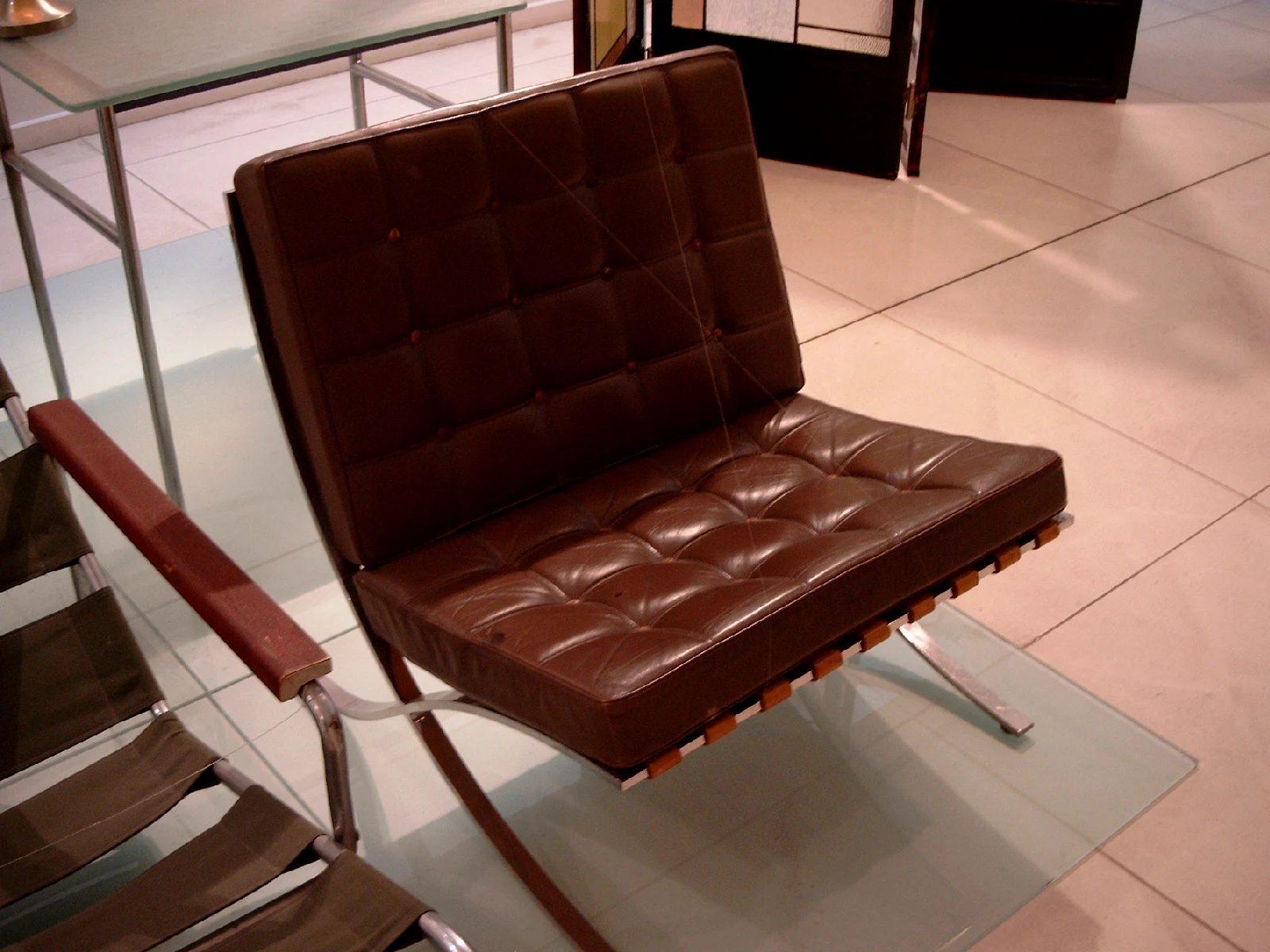
The accompanying Wikimedia Commons record identifies the photographed object as a Knoll Barcelona Chair. Its visible cushion surface gives useful orientation, but this photograph cannot establish the production or condition of a different chair in a sale listing.[2]
On the offered chair, follow the seams around the front edge and corners and inspect the accessible cushion backs. Ask about opened stitching, missing buttons, repairs and previous recolouring. A uniformly dark photograph can hide a patch; several unfiltered views in ordinary light give you a better basis for deciding whether you like the surface.
Describe the result you want before requesting a quote. Keeping an older cover and renewing an insert is a different project from making an entirely new cushion pair. Ask how each option would affect the profile, fit and sitting position, and have the restorer explain what can reasonably be retained.
If the leather itself needs assessment, use the vintage leather Guide alongside this model-specific enquiry. Avoid applying a treatment simply to see whether a questionable area improves.
Try the chair where your body needs support
Knoll’s current US 250L reference gives a width of 29.5 inches, depth of 30 inches and seat height of 17 inches: approximately 75, 76 and 43 cm. Use that as an orientation point, then measure the actual chair, including its present cushions.[1]
Sit for long enough to notice where your lower back and thighs are supported. Can you reach a nearby table without shifting awkwardly? Can you stand up comfortably from the seat? The open sides provide no conventional padded arms, so your preferred way of sitting and rising matters as much as the chair’s outline.
If a stool is part of the attraction, try the pair together and confirm that both pieces are in the sale. Put their actual footprints on the floor plan with the space between them. A chair-and-stool arrangement needs more room than the chair dimensions suggest, particularly when it sits across a walking route.
Compare the cost of complete chairs
| Scope | What should be explicit |
|---|---|
| Frame and support | Assessment, necessary frame work, straps and attachments; what can be retained. |
| Cushions | Existing covers or new pair, filling, profile, fitting and any matching stool work. |
| Getting it into use | Collection, return delivery, fitting, taxes where applicable and work excluded from the price. |
For a claimed Knoll example, its customer service is one route for an initial product or service enquiry. Give the contact the actual production information and photographs, and obtain confirmation of any suitable parts before ordering. A maker’s current catalogue is not a promise that every older frame accepts a current replacement.[3]
A useful repair enquiry
I am considering this chair and would like to retain its character. Could you assess the frame and supporting straps separately from the cushions, identify what is reusable and quote the necessary work? Please state which replacement components fit this production, whether the proposed filling changes the seat profile, and what collection, fitting and delivery add to the total.
Compare that complete figure with an already usable example whose surface and comfort you like. Choose the project when the surviving chair is the one you want and the work is understood. If the attraction depends entirely on changing its upholstery, shape and finish, reconsider how much of this particular offer is worth paying for.