Use the right manufacturer reference
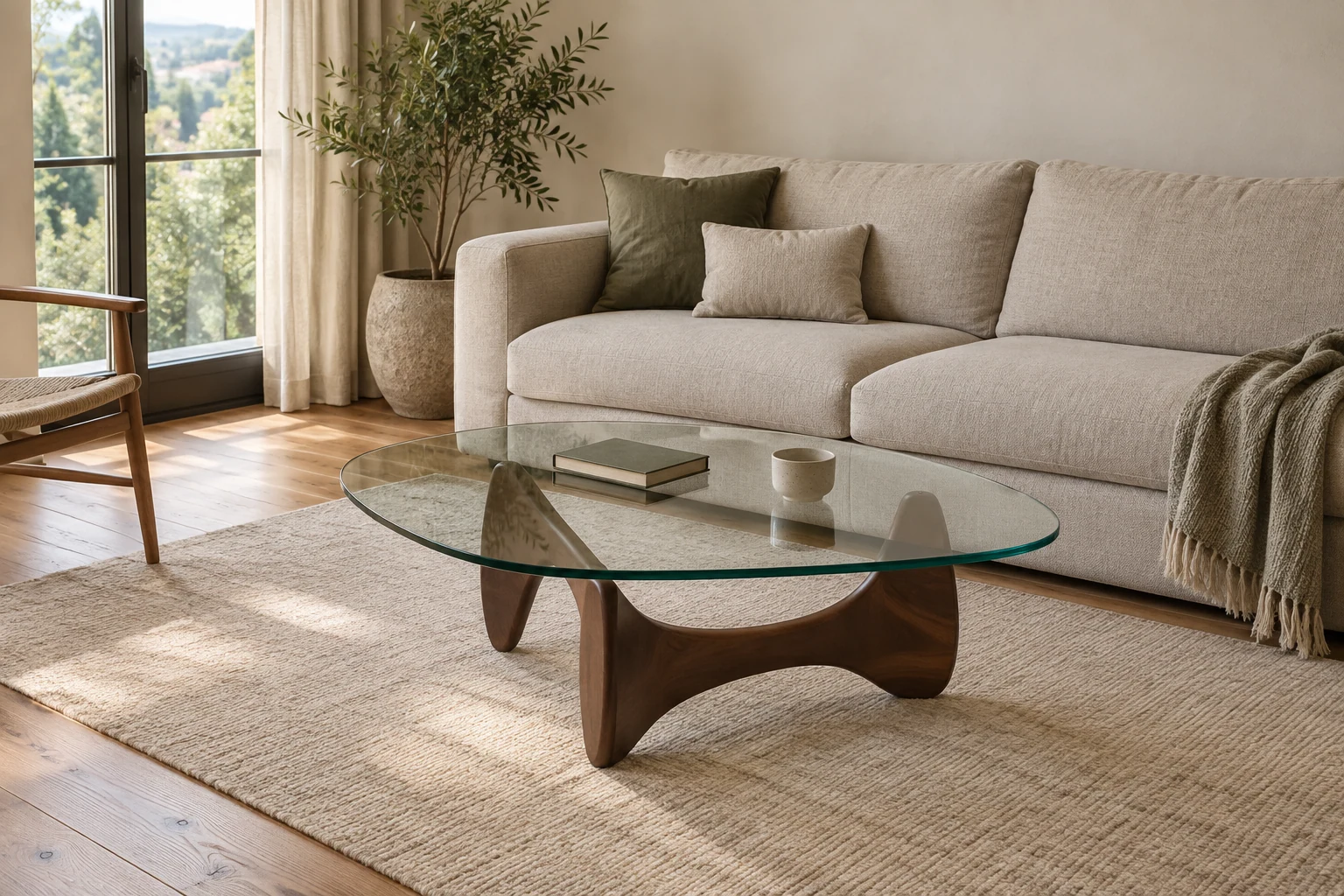
The Noguchi Museum’s shop identifies its coffee table as Herman Miller production. Vitra also publishes a Coffee Table by Isamu Noguchi in its own collection. This gives you two concrete research routes; it does not identify the producer of an unmarked table in a listing.[1][4]
Begin with what the seller claims: manufacturer, approximate production date and the basis for both. Keep whole views, marks in their actual positions, purchase records and replacement history together. The design name on its own is not enough to choose the right specification.
Current references illustrate the problem. Vitra’s Japanese shop lists 128 × 93 × 40 cm. Herman Miller lists 50 × 36 × 15¾ inches, approximately 127 × 91.4 × 40 cm. A small difference from a specification found online therefore needs an explanation before it becomes an authenticity verdict.[2][3]
| Reference | Overall size | Glass thickness |
|---|---|---|
| Vitra | 128 × 93 × 40 cm | 19 mm |
| Herman Miller | 50 × 36 × 15¾ in; about 127 × 91.4 × 40 cm | ¾ in; about 19 mm |
Herman Miller’s inch dimensions and glass thickness are the source for its row above; Vitra supplies its metric references. Small differences can matter when discussing a replacement. Neither row is permission to interchange parts or to order glass for an older base without confirming the appropriate specification.[3]
The wood name is only part of the description
Vitra’s current international page describes a 19 mm glass top with ground, rounded edges, supported by two wooden elements. Its stated wood-and-finish options include oiled walnut, lacquered black ash and lacquered maple. Those pairings explain why “a Noguchi base” is not a complete material or care description.[4]
For the offered base, ask what is known about the wood, finish and any refinishing. A dark appearance does not establish walnut, and a newly uniform colour does not establish untouched production. If the two elements differ noticeably, ask whether they were acquired or treated together.
Look at the whole assembly from above, at seated height and near floor level. Record cracks, repairs, distorted contact areas and changes to the connection between the wooden elements. A base that has been altered to support a different top needs more than a reassuring design name.
Do not ask the seller to improvise the base angle until the table seems stable. Obtain the instructions that apply to the identified production and have uncertain assembly or damage assessed. A product photograph can help research the form; it cannot establish that your table is safely assembled.
Rotate a paper outline before you buy
The table’s footprint has no single straight front. One orientation may bring more surface towards the sofa; another may suit a chair placed at an angle. Plan that choice with paper or cardboard, before handling the real glass. Include the farthest edges, not just the smaller wooden base visible beneath them.
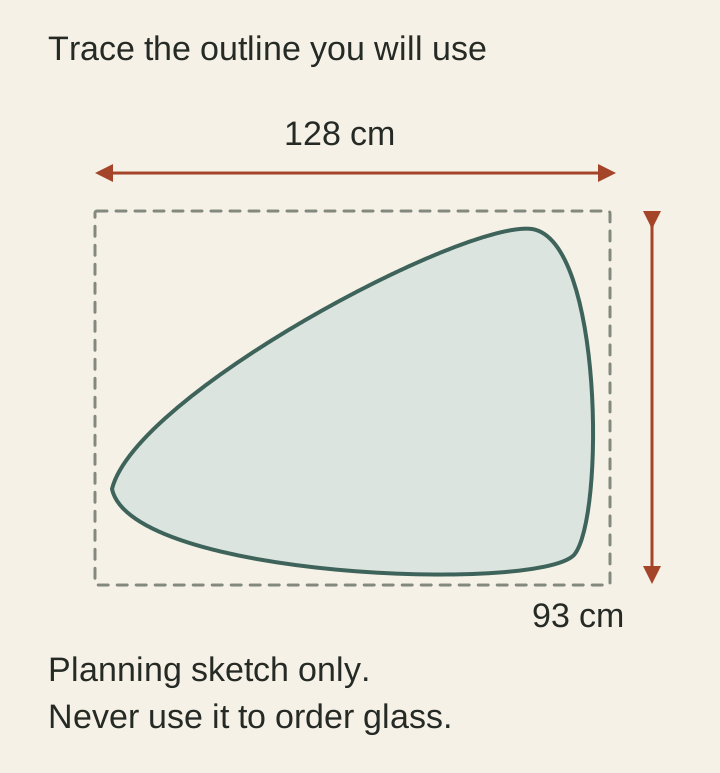
Ask for the actual overall length and width and, if available, the appropriate maker’s plan or a dimensioned outline of the offered top. A rough rectangle helps reserve space; a full outline helps test reach and walking past the narrower end. Do not treat an oblique listing photograph as a scale drawing.
Sit in your usual place, mark where your feet rest and see where you would set down a cup. Then try the neighbouring chair and walk through the room carrying a tray. If rotating the paper solves one seat’s reach but pushes an edge into the main route, the room may need a different placement or a different table.
Replacement glass is a separate purchase
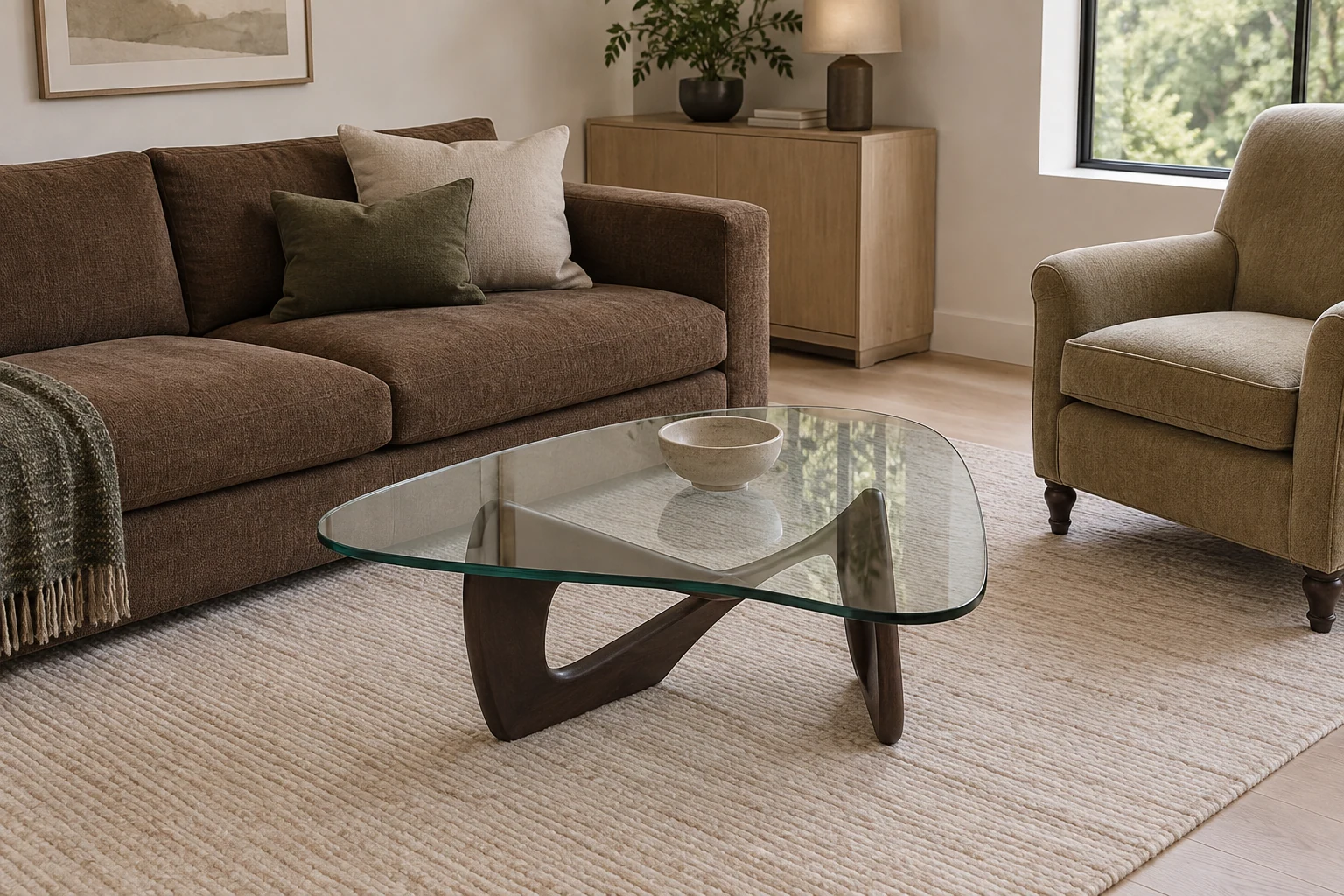
A table can remain useful after glass replacement, but the change should be disclosed and its suitability confirmed. Ask who supplied the top, which specification was used, and whether there is an invoice or drawing. “Cut to fit” leaves too much unanswered when the base, support arrangement and intended glass specification are uncertain.
If you are considering a base without its top, first seek the correct replacement route for that production. Give the manufacturer, supplier or competent glazing specialist the actual base record. Ask them to confirm the required profile, thickness, edge treatment, relevant safety specification, support and finished fit. Overall length and width are only two of those fields.
Obtain the complete price for the suitable finished top, transport and assembly before comparing a bare base with a complete table. Do not treat a thin, roughly similar glass shape as an economical equivalent. If compatibility cannot be established, the attractive base is still an unresolved project.
For cracks, edge chips, scratches and an appropriate viewing record, use the glass-table inspection Guide. A suspect top should be assessed before further use or handling.
Keep the assembly record through delivery
Agree how the glass and wooden elements will travel and who will put the table back together using the applicable instructions. Record the parts and condition before collection. The two sculptural base elements are attractive objects by themselves, but the purchase is the complete, correctly assembled table you intend to use.
A message for the seller
Which producer and production period are claimed, and what records support them? Please show the complete table, both base elements, their connection and any marks in place. I would like actual top dimensions and thickness, the wood and finish if known, and details of replacement glass or base repairs. Please also confirm the packing and reassembly plan.