Design story

Well Proven: wood shavings become part of the seat

Wood shavings usually disappear from the furniture story. Well Proven Chair gives them a visible role, letting an experimental seating body meet a more familiar wooden support.

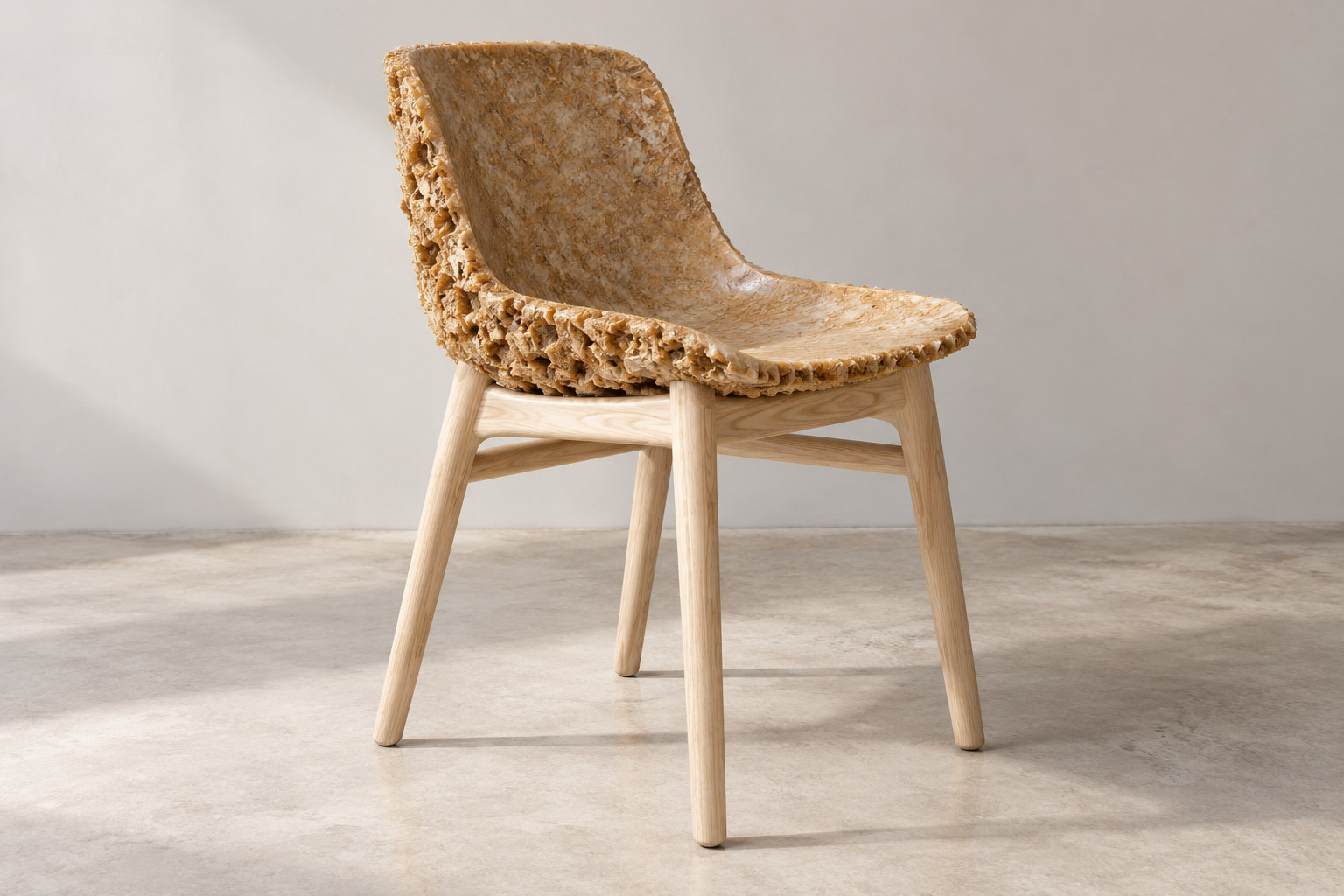
A chair combines an irregular textured composite seating body with pale wooden supports beneath it.
PatinaHall editorial reconstruction. It is not a documentary photograph. The image contrasts a textured wood-and-resin body with a timber support. Texture and colour are interpretive; it is not a making recipe or a photograph of NGV’s particular chair.
On this page
Key facts & takeaways

At a glance

Subject
Well Proven Chair
Entry
Design story
Last reviewed
23 October 2026
Designed
2012documented

Three things to remember

  1. The design is credited jointly to Marjan van Aubel and James Shaw.
  2. NGV dates the design to 2012 and its chair to 2016.
  3. Wood shavings, bioresin and ash have different roles.

The shavings leave the floor

Woodworking produces more than finished boards. It also produces curls, chips and shavings that usually leave the furniture story. Marjan van Aubel and James Shaw’s Well Proven Chair brings that material into the visible body of a seat. NGV credits the designers jointly and distinguishes the 2012 design from its example manufactured in 2016.1

The contrast makes the object easy to approach. A recognisable timber support meets an irregular, textured seating body. One part speaks the familiar language of a wooden chair; the other lets the workshop’s smaller fragments take a much less familiar role.

Two ways of using wood

NGV lists ash, wood shavings and bioresin among the materials. The shavings and binder become a shaped composite rather than another clean-cut board. The ifa account places the project within an exploration of materials usually treated as waste.2

Look at the meeting between the comparatively regular frame and the rougher body above it. Their difference makes both processes more visible. Wood can be selected and worked as timber, or its fragments can be combined into another material. The chair brings those possibilities close enough to compare without a sample drawer or a laboratory bench.
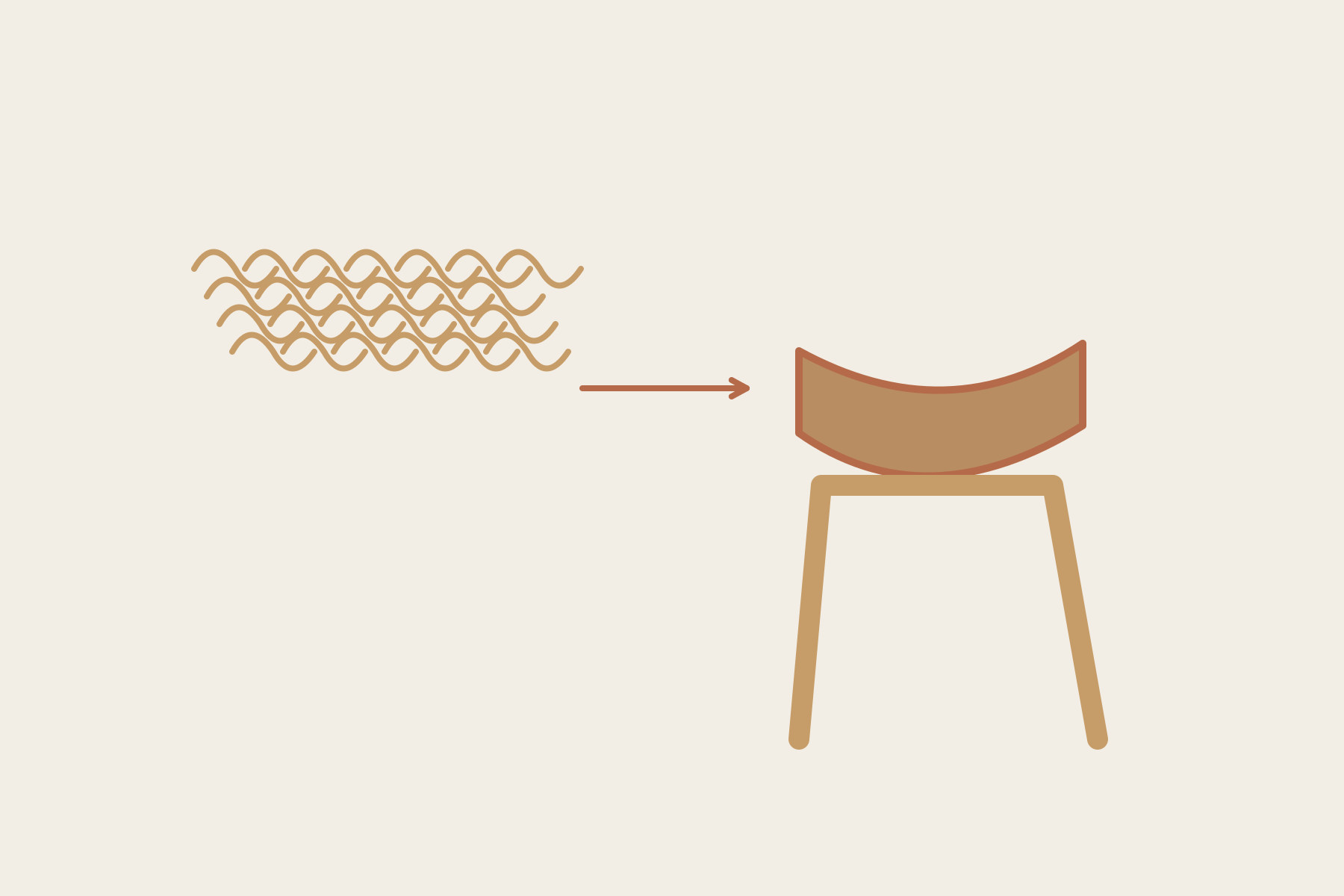
Curled shaving symbols lead towards a textured seating shape above a separate pale frame.
Original PatinaHall schematic, not to scale. Small wood fragments lead towards a composite seating body above a separate timber support. This material-role diagram omits chemistry, proportions and any recipe or load-bearing claim.

An experiment needs a furniture question

The American Hardwood Export Council describes the collaboration within its Out of the Woods project.3 A seat gave the material investigation a demanding everyday subject: something recognisable, shaped around a person and carried by a support. This Dutch–British collaboration was developed in London; the connection is not evidence of manufacture in the Netherlands.

The value of the story lies in that encounter between experiment and use. It supplies neither a home resin recipe nor a measured environmental advantage. It does make a satisfying change of perspective possible: what leaves a woodworking operation can become the part of a new chair that you notice first.

Research notesEvidence, connections and limits

This is a Dutch–British collaboration developed in London. NGV’s specific materials and dates remain tied to its object. The foam-like material is described historically, without a resin recipe or an unsupported environmental or strength claim.

Evidence map

Connected subjects and evidence

Reviewed facts

  • Designed 2012documented

    This is a Dutch–British collaboration developed in London. NGV’s specific materials and dates remain tied to its object. The foam-like material is described historically, without a resin recipe or an unsupported environmental or strength claim.

    Reviewed 23 October 2026 by PatinaHall editorial.
    • Source 1Well proven chair, 2017.30: designed 2012, manufactured 2016

Reviewed connections

  • Well Proven Chairdesigned byMarjan van Aubeldocumented

    The cited record explicitly identifies this designer for the repeatable design or coherent project family.

    Reviewed 23 October 2026 by PatinaHall editorial.
    • Source 1Well proven chair, 2017.30: designed 2012, manufactured 2016
  • Well Proven Chairdesigned byJames Shawdocumented

    This source credits both designers jointly; a current product heading does not erase the collaboration.

    Reviewed 23 October 2026 by PatinaHall editorial.
    • Source 1Well proven chair, 2017.30: designed 2012, manufactured 2016

Research trail

Sources and further reading

  1. Well proven chair, 2017.30: designed 2012, manufactured 2016National Gallery of VictoriaAccessed 23 October 2026
  2. The Well Proven Chair: Pure GoldifaAccessed 23 October 2026
  3. The Well Proven Chair, Out of the Woods projectAmerican Hardwood Export CouncilAccessed 23 October 2026

Last reviewed 23 October 2026. Found an error or a stronger primary source? Contact PatinaHall.