Design story

Until Dawn: a curtain with a reflection in its pattern

Until Dawn seems to contain a reflection of its own pattern. That effect begins before the curtain is opened: the sheet is folded into four layers and die-cut together. Tord Boontje makes the sequence of production part of what the viewer sees against the light.

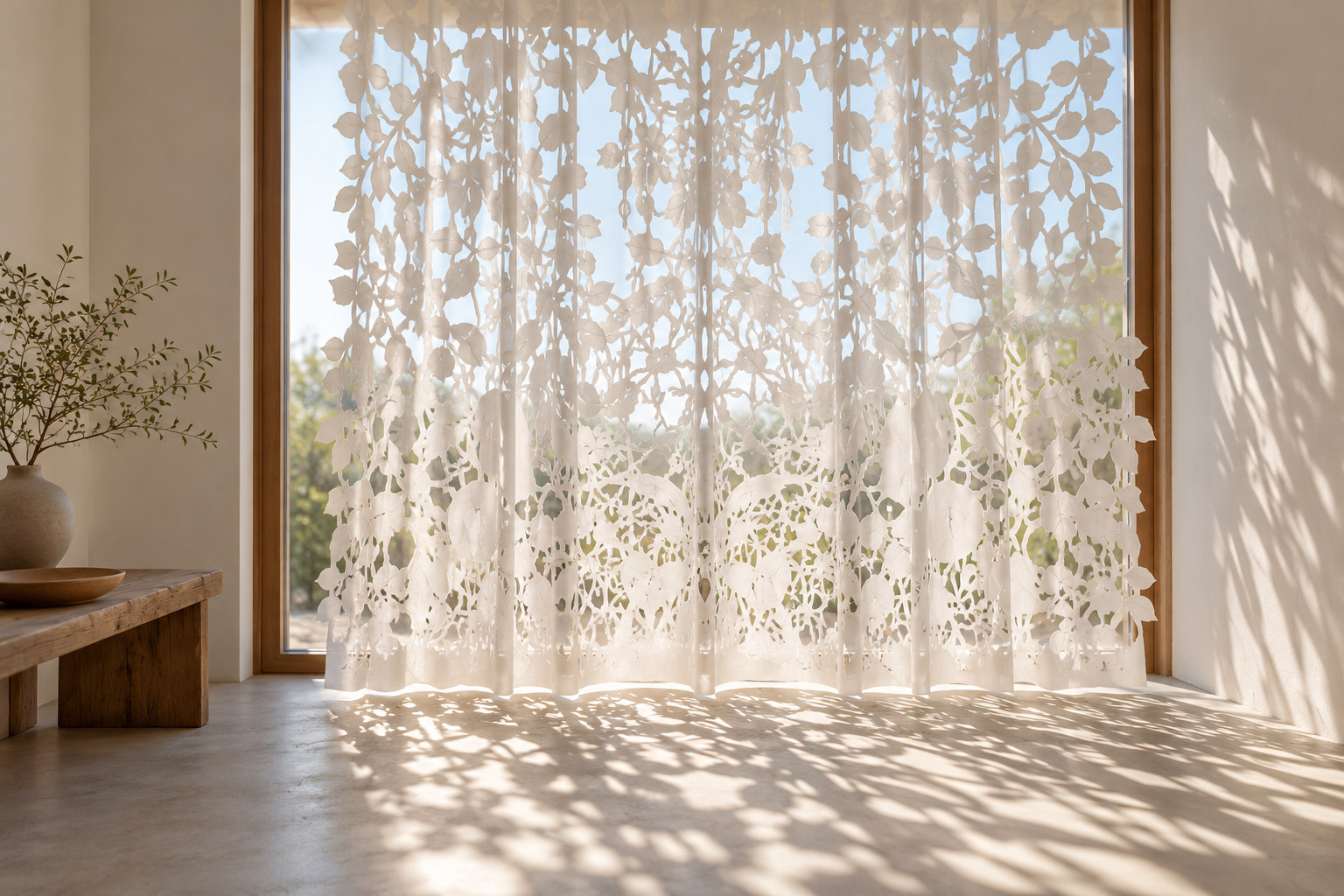
White cut-out botanical panel in front of a window, casting patterned shadows into a neutral room.
PatinaHall editorial reconstruction. It is not a documentary photograph. A conceptual open panel lets light and shadow carry an original botanical pattern into the room.
On this page
Key facts & takeaways

At a glance

Subject
Until Dawn curtain
Entry
Design story
Last reviewed
26 October 2026
Designed
2004documented

Three things to remember

  1. The studio describes cutting four folded layers together.
  2. Unfolding makes reflected relationships visible in the pattern.
  3. The open areas let a flat panel work with light and shadow.

A forest that fits in a flat sheet

A curtain normally brings a broad surface between a room and its light. Until Dawn gives that surface a different role. Leaves, creatures and the spaces between them make a panel through which the eye can continue looking.

Studio Tord Boontje labels the design 2004, names Artecnica and identifies the sheet material as Tyvek. Its account describes an elaborate panel of flora and fauna that works with light and shadows.1

The interest is not confined to the cut shapes. Open space supplies another part of the pattern. A wall, a window or the brightness beyond can appear within the image, making the same flat sheet read differently in changing light.

The fold remembers its position

The studio describes folding the material into four layers to fit the die-cutting machine. The folded stack is cut together, then opened. Reflected relationships appear because the corresponding cuts were made through several layers at once.1

The result is a useful reversal of attention. What might first look like a freely composed natural scene also carries a trace of a very definite production arrangement. The fold has disappeared as an action, but remains legible in the symmetry.

Boontje’s account points to a deer and its reflected partner, a half dragonfly becoming whole and birds answering one another. Those examples explain how an industrial operation can suggest a small scene rather than advertise itself as a machine process.1
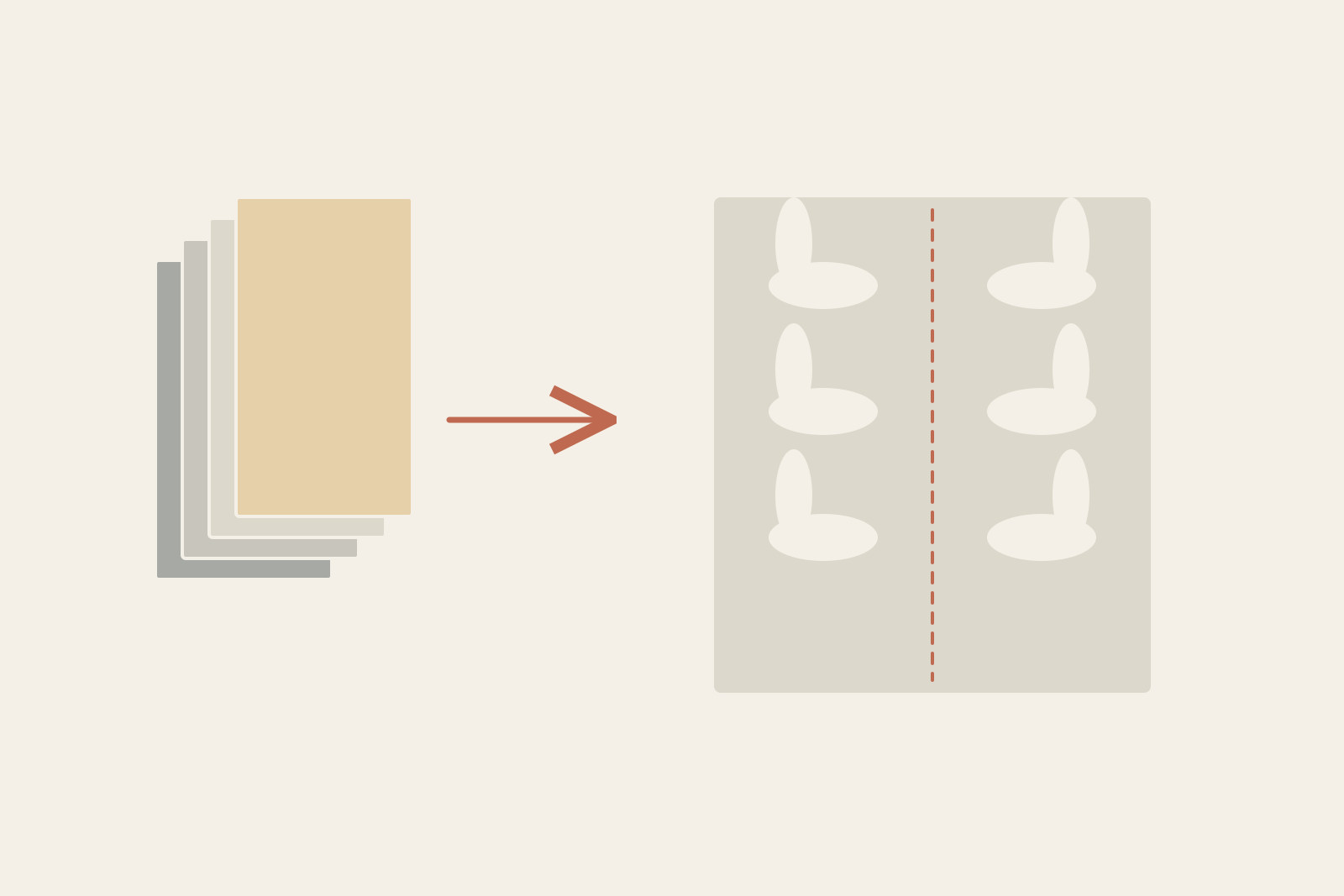
Four folded layers and an original symmetrical cut-out panel show how folding produces repeated reflections.
Four folded layers and an original symmetrical cut-out panel show how folding produces repeated reflections. Original PatinaHall schematic, not to scale.

A sheet can remain adaptable

The studio describes loops for hanging and a length that can be trimmed without sewing. These belong to its explanation of the product, alongside the production method. The curtain is conceived as a light sheet with an open pattern, rather than a heavy textile requiring a complicated edge treatment.1

That character suits the design’s visual argument. The panel can fill a substantial area while its openings keep it from reading as an entirely solid boundary. It gives the room both an image and a changing relationship with what lies beyond it.

Nature through precise means

Boontje’s studio biography places lighting, furniture and products within the same practice. Until Dawn makes one connection particularly clear: an interest in natural forms can work through exact production methods rather than asking the method to disappear.2

Look across the panel, then back towards its line of reflection. The pattern supplies a scene, while its repeated relationships quietly retain the memory of a folded stack entering a machine. The making is already in the image.
Research notesEvidence, connections and limits

The studio’s 2004 Tyvek design record is the subject here. The illustrations use original simplified patterns and establish neither an exact surviving curtain nor a material safety or installation specification.

Evidence map

Connected subjects and evidence

Reviewed facts

  • Designed 2004documented

    The studio’s Until Dawn work record is labelled 2004 and names Artecnica. This is the date attached to the design record, not a manufacture date for an identified surviving curtain.

    Reviewed 26 October 2026 by PatinaHall editorial.
    • Source 1Work or object record and accompanying maker account: Until Dawn curtain. Until Dawn

Reviewed connections

  • Until Dawn curtaindesigned byTord Boontjedocumented

    Studio Tord Boontje presents Until Dawn as Boontje’s design for Artecnica. The work record identifies Tyvek and an open flora-and-fauna pattern. The article does not reproduce that exact pattern or claim a separately identified museum object.

    Reviewed 26 October 2026 by PatinaHall editorial.
    • Source 1Work or object record and accompanying maker account: Until Dawn curtain. Until Dawn
  • Until Dawn curtainuses techniqueFour-layer folded die-cutting in Until Dawndocumented

    The studio explains that four folded layers are die-cut together, producing reflected symmetry when opened. This establishes the relationship between process and pattern. It does not certify fire performance, safe placement or every detail of a historic curtain.

    Reviewed 26 October 2026 by PatinaHall editorial.
    • Source 1Work or object record and accompanying maker account: Until Dawn curtain. Until Dawn

Research trail

Sources and further reading

  1. Until DawnStudio Tord BoontjeAccessed 26 October 2026
  2. About Tord BoontjeStudio Tord BoontjeAccessed 26 October 2026

Last reviewed 26 October 2026. Found an error or a stronger primary source? Contact PatinaHall.