Design story

Stripped: a branch finds three new jobs

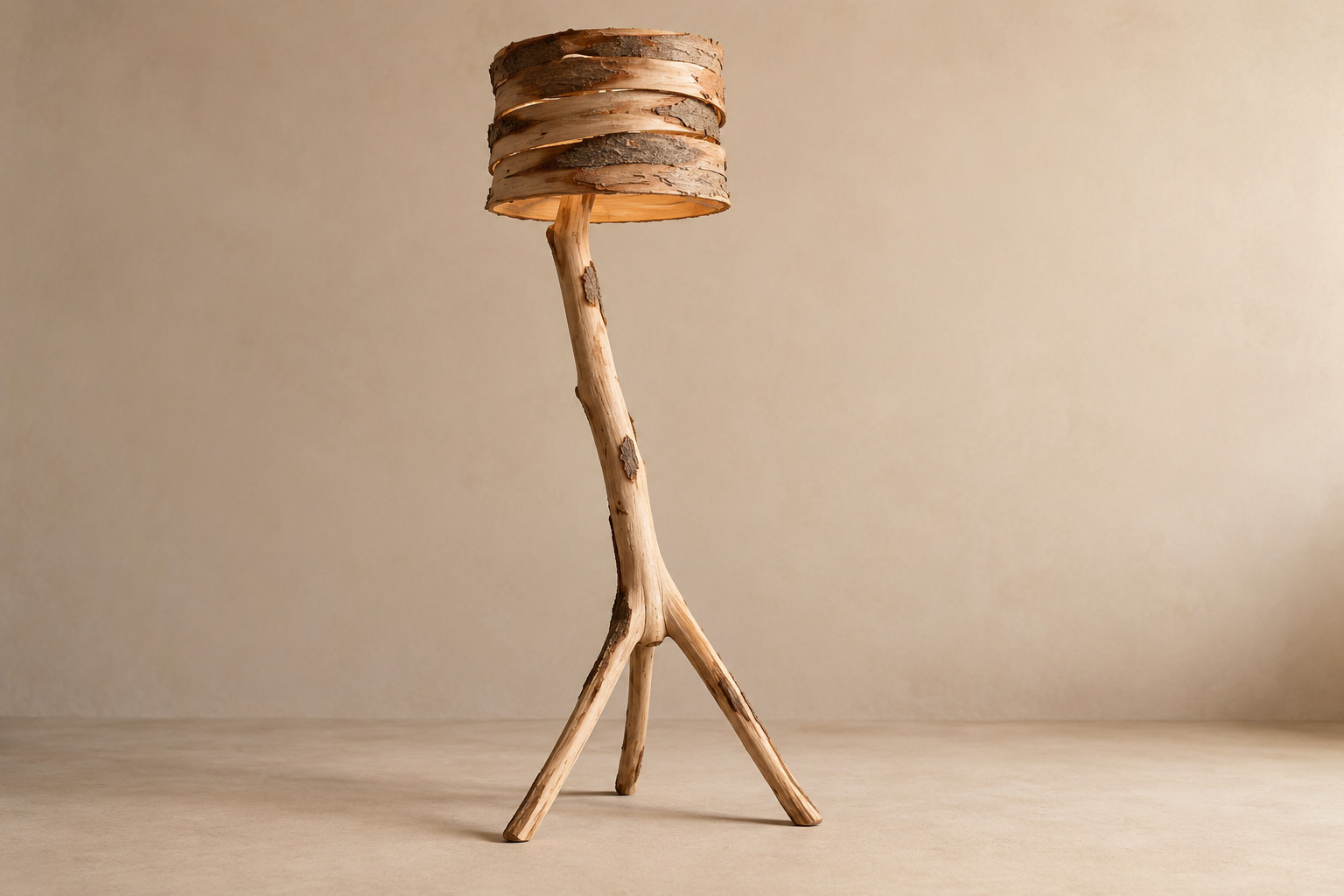
One branch supplies several parts of Floris Wubben’s Stripped lamp. Splitting the lower end creates three supports; peeling and winding the bark makes a shade. The transformations remain close to the original material.

A largely peeled pale branch-like upright divides into three lower supports beneath a wound bark-like shade.
PatinaHall editorial reconstruction. It is not a documentary photograph. Related material takes the roles of support and shade. This interpretation of splitting, peeling and winding is not a construction tutorial, electrical record or exact historic specimen.
On this page
Key facts & takeaways

At a glance

Subject
Stripped lamp
Entry
Design story
Last reviewed
25 October 2026

Three things to remember

  1. A branch supplies both the support and the bark shade.
  2. The lower end is split into three legs in the designer’s account.
  3. The 2012 publication and 2013 competition entry are separate events.

A branch supplies the parts

Stripped begins with a branch and makes a lamp through selective changes. In Floris Wubben's submitted account, the lower part is split to create three legs, while bark is peeled and wound into the shade. The material supplies both an upright support and a covering for the light.1

The sequence is easy to follow because the branch remains recognisable. Splitting, peeling and winding change its form while keeping the origin of the parts close to view.

Each action also changes a part's job. The split end spreads into supports. The bark, once covering the branch, becomes a shade. A familiar natural material moves through several roles within one object.
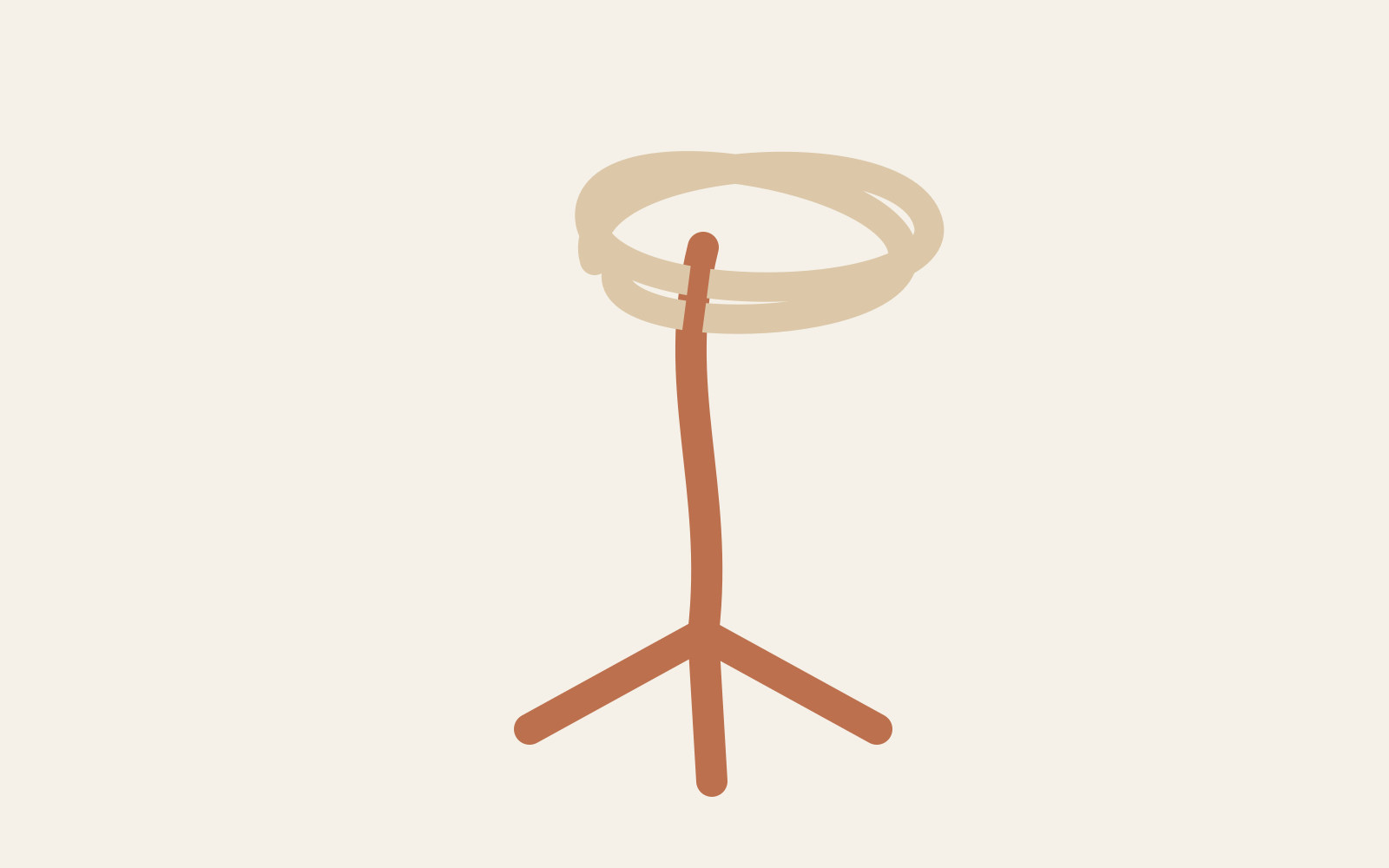
A branch-like upright divides into three supports below a curled bark-like shade.
Related material finds different roles as support and shade. Original PatinaHall schematic, not to scale; it is not an electrical or construction instruction for Stripped.

From bark to shade

The shade is the most surprising turn. Bark begins as the outside of a piece of wood; once separated and wound, it can describe another enclosing form.

That gives the lamp a visual relationship between top and bottom. The upright piece and its shade can be understood as related material, even though they now occupy different places.

This is a useful way into Wubben's material interests. His studio account describes a practice concerned with the relationship between natural materials, making processes and shaped objects. Stripped offers an especially direct version of that question because the original branch remains so legible.3

A published idea with a clear outline

A Designboom article about the lamp was published on 26 September 2012. The designer-submitted account appears in a 2013 competition context. Those publications establish two occasions on which the idea was presented, rather than an exact date when it was first designed.21

At the bottom, splitting lets one piece reach towards three points on the floor. At the top, peeled bark finds a new circumference. The branch gives the lamp a beginning, and the transformations give it its form.

Research notesEvidence, connections and limits

The first-person making description explains the concept, not a construction tutorial or safety certification. The dated publications do not establish an exact design year or current availability.

Evidence map

Connected subjects and evidence

Reviewed connections

  • Stripped lampdesigned byFloris Wubbendocumented

    The designer-submitted statement credits Floris Wubben. The 2013 competition entry and a September 2012 article document different publication contexts, rather than one established first-design year.

    Reviewed 25 October 2026 by PatinaHall editorial.
    • Source 1IDF awards 2013, designer’s own words
    • Source 2Article heading and 26 September 2012 publication date
  • Stripped lampuses techniqueBranch splitting and bark shaping in Strippeddocumented

    Wubben's statement describes splitting the lower branch into three legs and peeling and winding bark into a shade. The branch's own shape guides the resulting form.

    Reviewed 25 October 2026 by PatinaHall editorial.
    • Source 1IDF awards 2013, designer’s own words

Research trail

Sources and further reading

  1. Floris Wubben: Stripped lamp, designer-submitted project statementDesignboomAccessed 25 October 2026
  2. Designboom: Floris Wubben, Stripped branch lampDesignboomAccessed 25 October 2026
  3. Studio Floris Wubben: About the studioStudio Floris WubbenAccessed 25 October 2026

Last reviewed 25 October 2026. Found an error or a stronger primary source? Contact PatinaHall.