Artefact story

Sliedregt 514C: woven cane meets a metal line

A woven surface is made of many small lines. A bent-metal frame can describe a chair with only a few. In Dirk van Sliedregt’s 514C, those two ways of drawing a seat remain visible together: a broad woven field and a spare supporting outline.

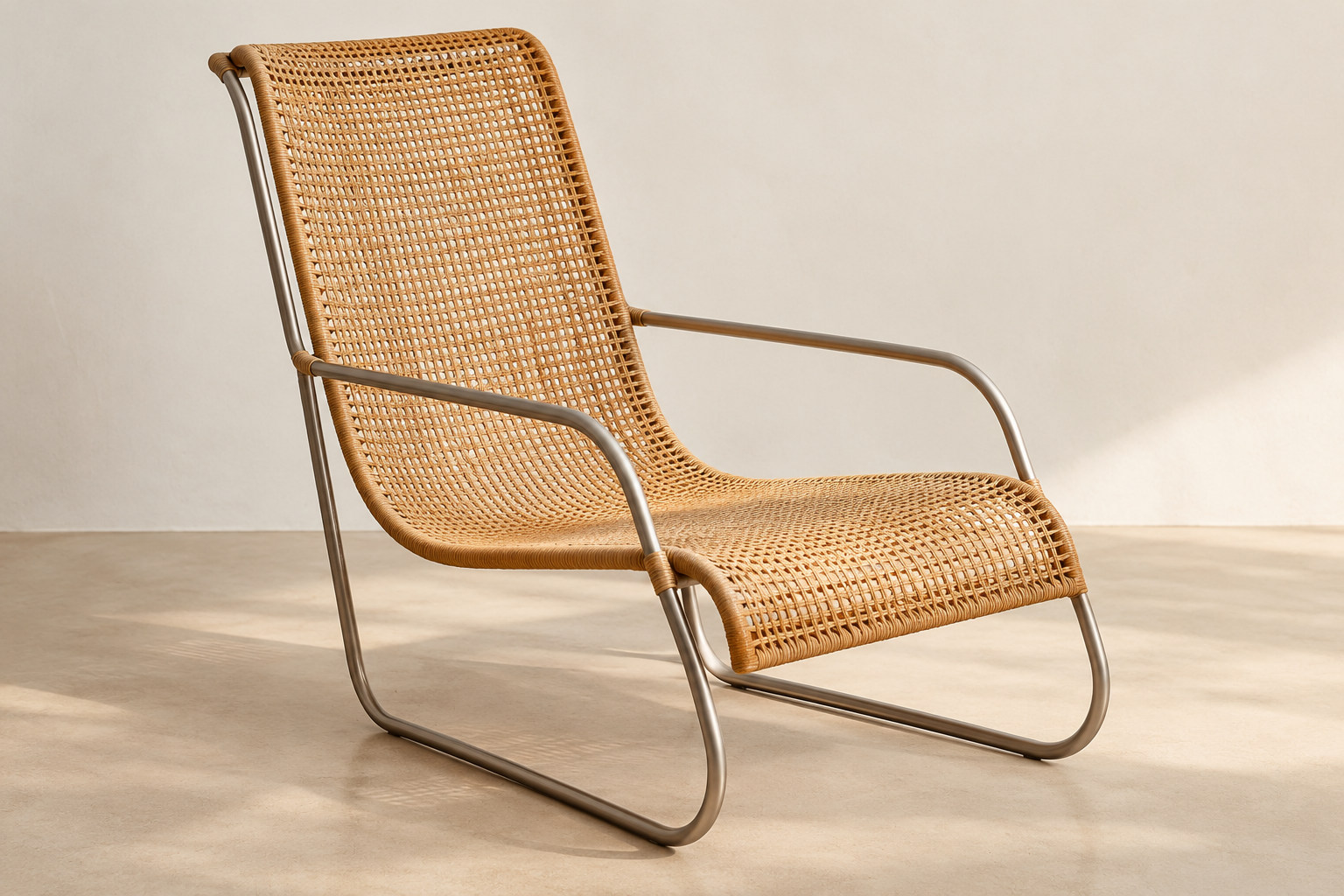
A broad cane-like woven seat and high back sit within a slender curved metal outline.
PatinaHall editorial reconstruction. It is not a documentary photograph. The dense woven field sits beside a much sparer metal line. This is an interpretation of that material relationship, not a record of object 34156’s exact frame or alloy.
On this page
Key facts & takeaways

At a glance

Subject
514C chair, Centraal Museum 34156
Entry
Artefact story
Last reviewed
26 October 2026

Three things to remember

  1. Many woven strands form a broad seat-and-back field.
  2. The museum names Gebroeders Jonkers as executor of this object.
  3. The 1961 presentation note is separate from the object’s 1960–1970 dating.

A field held beside a line

The 514C offers two different densities of detail. Its woven cane asks the eye to follow many strands. Its bent-metal framework supplies a smaller number of longer lines. The contrast makes the chair readable without asking either material to resemble the other.

Centraal Museum records the material as metaal and pitriet, with bending and weaving listed as the relevant techniques. The record credits Dirk van Sliedregt as designer and Gebroeders Jonkers as executor.1

Those details matter because a woven chair can easily be reduced to a general look. This object has a model designation, a particular maker credit and its own museum identity: 34156.

Two kinds of continuity

Weaving gathers separate strands into a field. The individual lines remain visible, but their repetition lets the eye read a larger surface. Following that surface through the seat and back reveals an order built from many small crossings.

Bending gives the frame another kind of continuity. A metal line changes direction while remaining a line, tracing the chair’s limits and bringing its open spaces into view.

Together, the two systems produce a useful visual tension. The woven area looks dense beside the frame, while the frame looks spare beside the weave. The seat becomes more interesting when attention moves between those scales rather than resting only on its silhouette.

The museum dates the object within 1960–1970 and separately notes the first design’s presentation at the Utrecht furniture fair in 1961. That distinction allows a model history and an individual object’s dating to coexist.1
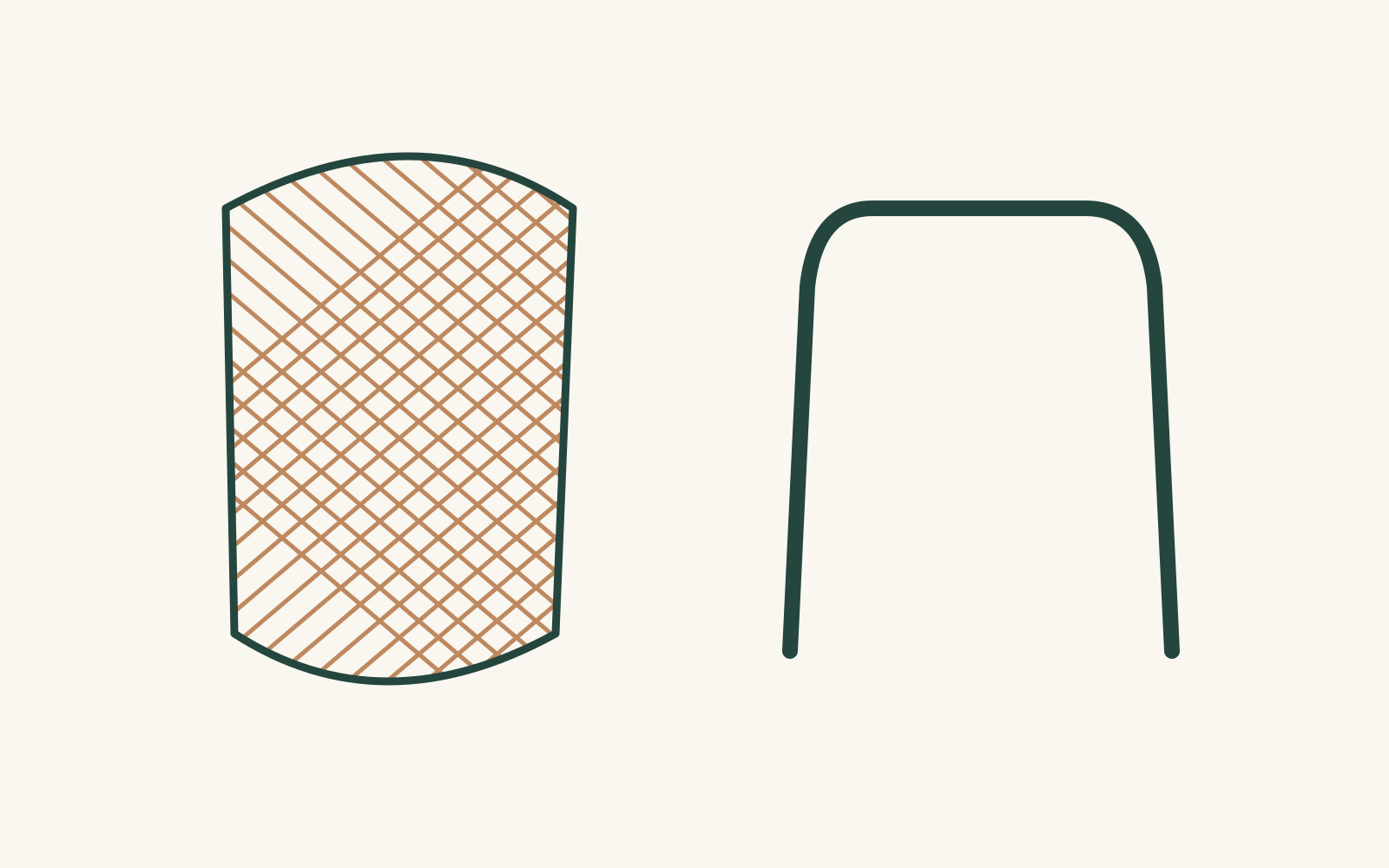
Many fine crossing lines make a broad field beside a much simpler bent outline.
Weaving creates a surface from many strands; bending lets a small number of longer lines trace an outline. These are two visual orders, not an exact 514C frame drawing. Original PatinaHall schematic, not to scale.

A domestic object in a larger exhibition

The museum later included 514C in Dreams cast in concrete, held from 28 September 2019 to 19 January 2020. The exhibition examined Utrecht’s Kanaleneiland and Hoog Catharijne and the hopes attached to postwar urban modernisation.2

That curatorial setting gives the chair a larger conversation to join. Furniture can enter an exhibition about changing ways of living while remaining a small material world of its own.

Here that world is especially legible: many woven lines meet a few bent ones, and the difference between them helps the whole chair come into focus.

Research notesEvidence, connections and limits

The subject is museum 34156, model 514C. Its metal is recorded generically, not as a verified steel alloy. The 2019 exhibition provides curatorial context; it does not prove this chair was designed for or used in the districts discussed.

Evidence map

Connected subjects and evidence

Reviewed connections

  • 514C chair, Centraal Museum 34156attributed toDirk van Sliedregtattributed

    Museum object 34156 credits Dirk van Sliedregt. Its 1960–1970 dating is separate from the stated first-design presentation in Utrecht 1961.

    Reviewed 26 October 2026 by PatinaHall editorial.
    • Source 1Maker; Dating 1960–1970 and parenthetical first presentation; materials/techniques
  • 514C chair, Centraal Museum 34156made byGebroeders Jonkersdocumented

    The exact museum record names Gebroeders Jonkers as executor and specifies woven pitriet with bent metal. Do not substitute Rohé, generic 514 or verified steel.

    Reviewed 26 October 2026 by PatinaHall editorial.
    • Source 1Maker; Dating 1960–1970 and parenthetical first presentation; materials/techniques

Research trail

Sources and further reading

  1. Stoel model 514C, object 34156Centraal Museum UtrechtAccessed 26 October 2026
  2. Dreams cast in concrete: Kanaleneiland and Hoog CatharijneCentraal Museum UtrechtAccessed 26 October 2026

Last reviewed 26 October 2026. Found an error or a stronger primary source? Contact PatinaHall.