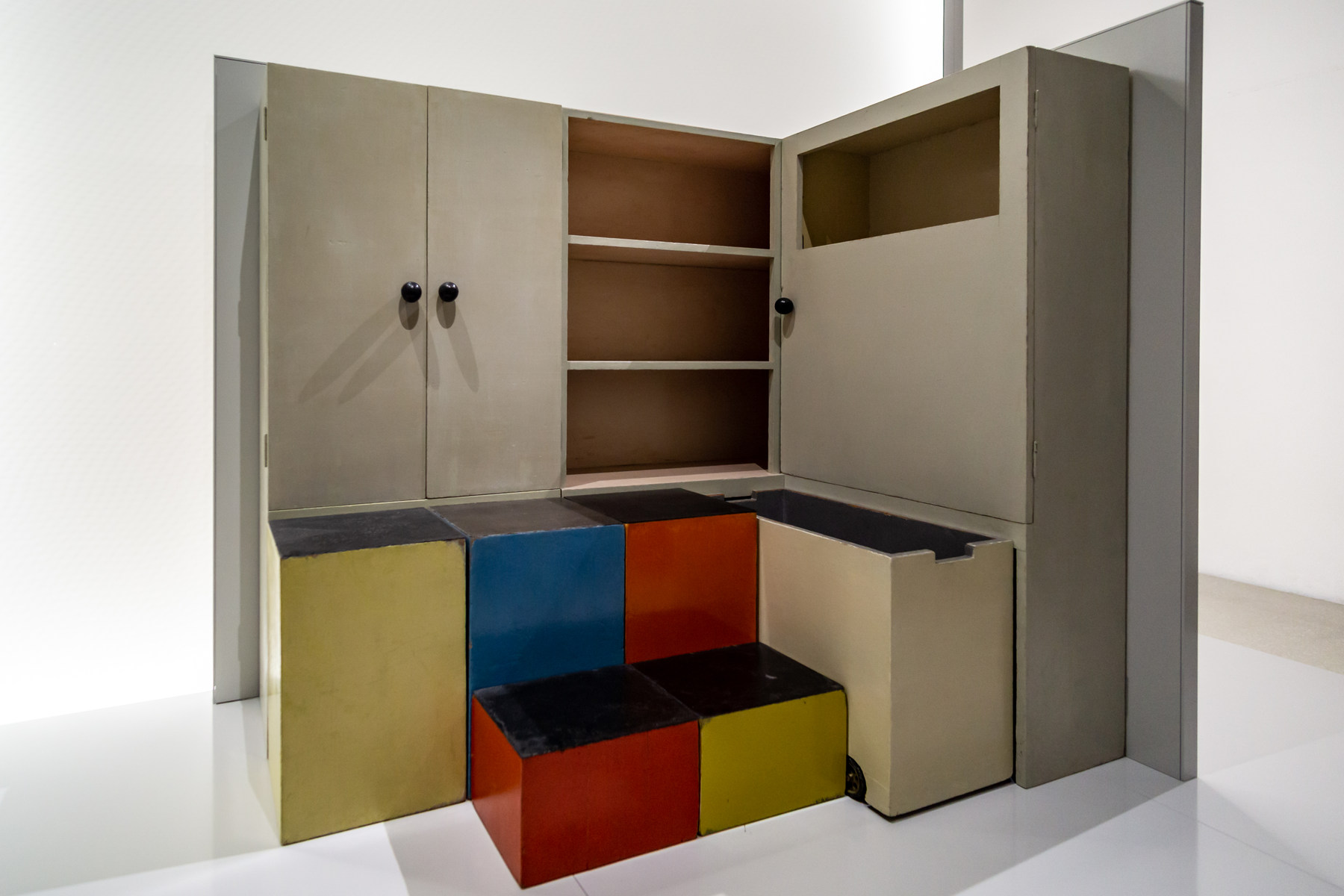
Storage that can become a seat
The coloured boxes in Alma Siedhoff-Buscher’s play cupboard can leave their places. A removable part can become a seat or something to arrange in a game. A door opening can serve as a puppet theatre.1
The museum photograph catches the idea in motion, with boxes pulled away from the cupboard’s neat outline.4 Put them back and they help store things. Take them out and the furniture offers another activity.
That is a substantial change from giving a child a small version of an adult cupboard. The design makes rearrangement an intended use. Tidying up is only one of its possible states.
A whole room on one sheet
Siedhoff-Buscher developed the furniture for the children’s room at Haus Am Horn, the experimental house exhibited in Weimar in 1923. Bauhaus workshops contributed to the house as a way of testing ideas for domestic life.2
Her surviving design sheet moves between a room plan, wall elevations and smaller furniture studies.3 Those views answer different questions: how much floor remains free, where storage sits and how a child might use the pieces.
The drawing gives the cupboard a setting. A box pulled out from the cabinet needs somewhere to go. Planning the open floor is part of planning the furniture, especially when that furniture is expected to move into a game.
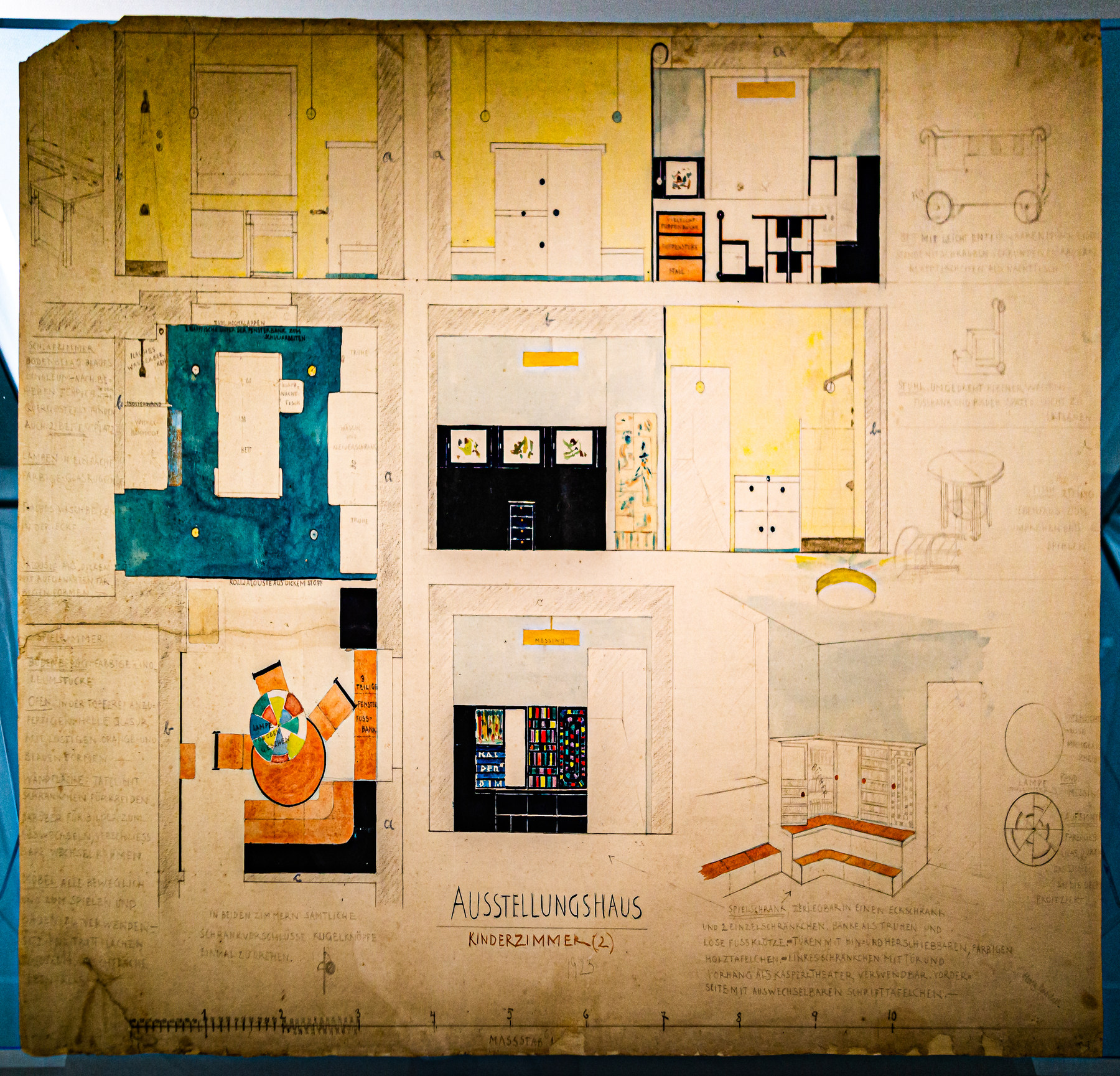
An open door becomes a stage
Klassik Stiftung places Siedhoff-Buscher among the relatively few Bauhaus women whose work extended beyond the weaving workshop.1 Her children’s furniture gave her room to think about construction, space and play together.
The original house furnishings dispersed after the 1923 exhibition. For its 2019 reopening, a reconstructed cupboard helped visitors understand the children’s room again; the historical museum example shown here has its own separate history.5
The design survives that change of setting because its possibilities are so legible. An opening in a cupboard can frame a performance. A box can move from storage to seating. The parts remain simple while the child decides what happens next.
At the end of a game, everything can return to the cupboard. Tomorrow the same pieces are available for a different arrangement. Siedhoff-Buscher designed a place to keep things that also gives them permission to come out.

